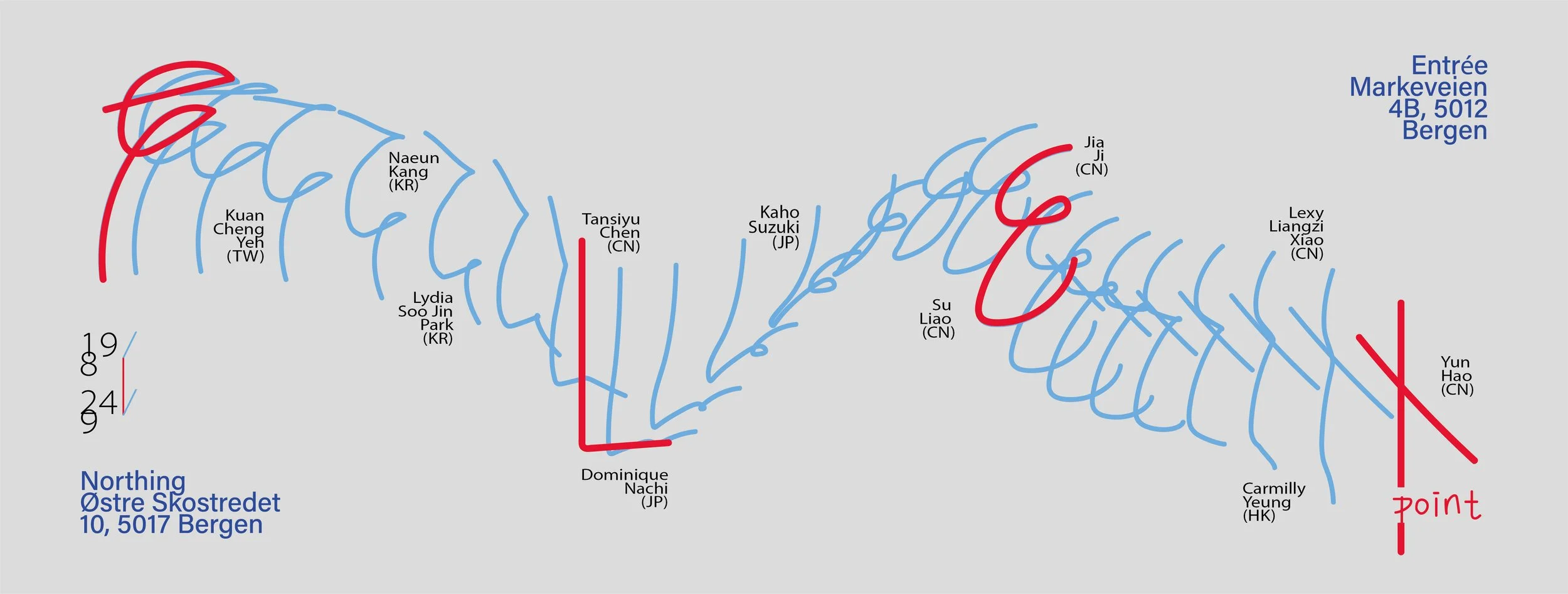
Flex Point
-
was born in Hong Kong, and currently living in Bergen, Norway. She received her bachelor degree in Visual Arts from the Academy of Visual Arts at Hong Kong Baptist University in 2018. She just graduated from the MFA program at MA Fine Arts at the Faculty of Fine Art, Music and Design at the University of Bergen.
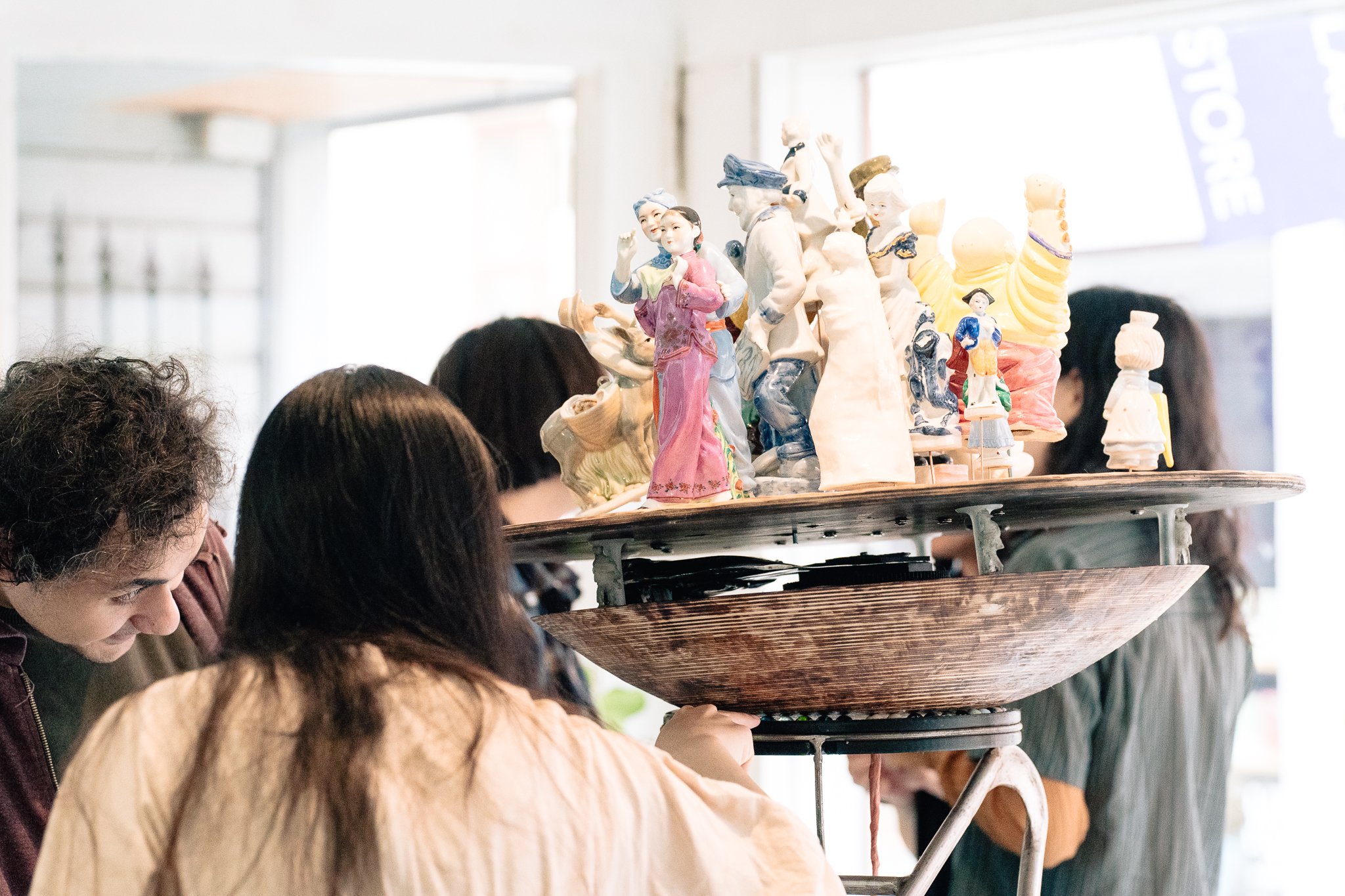
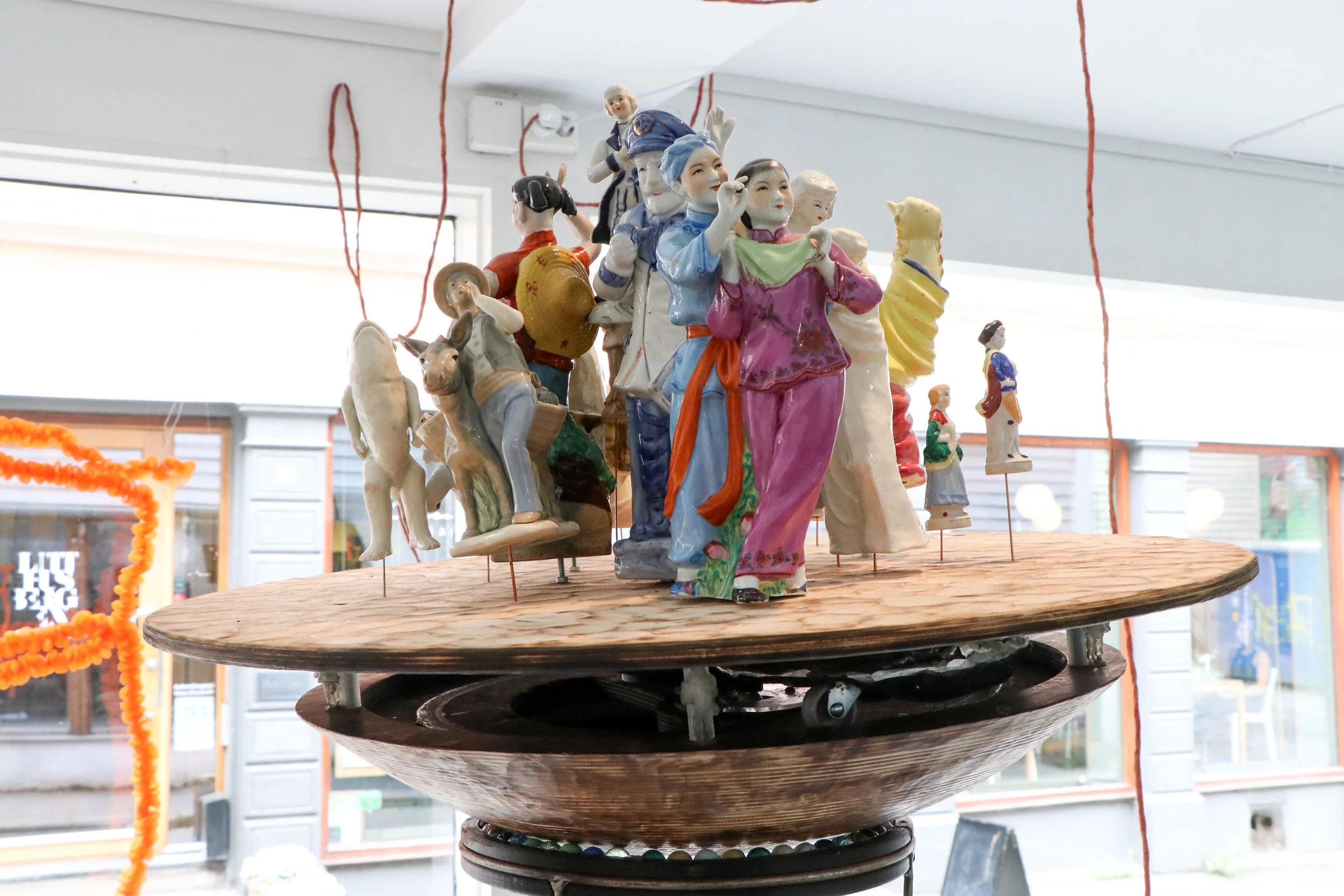
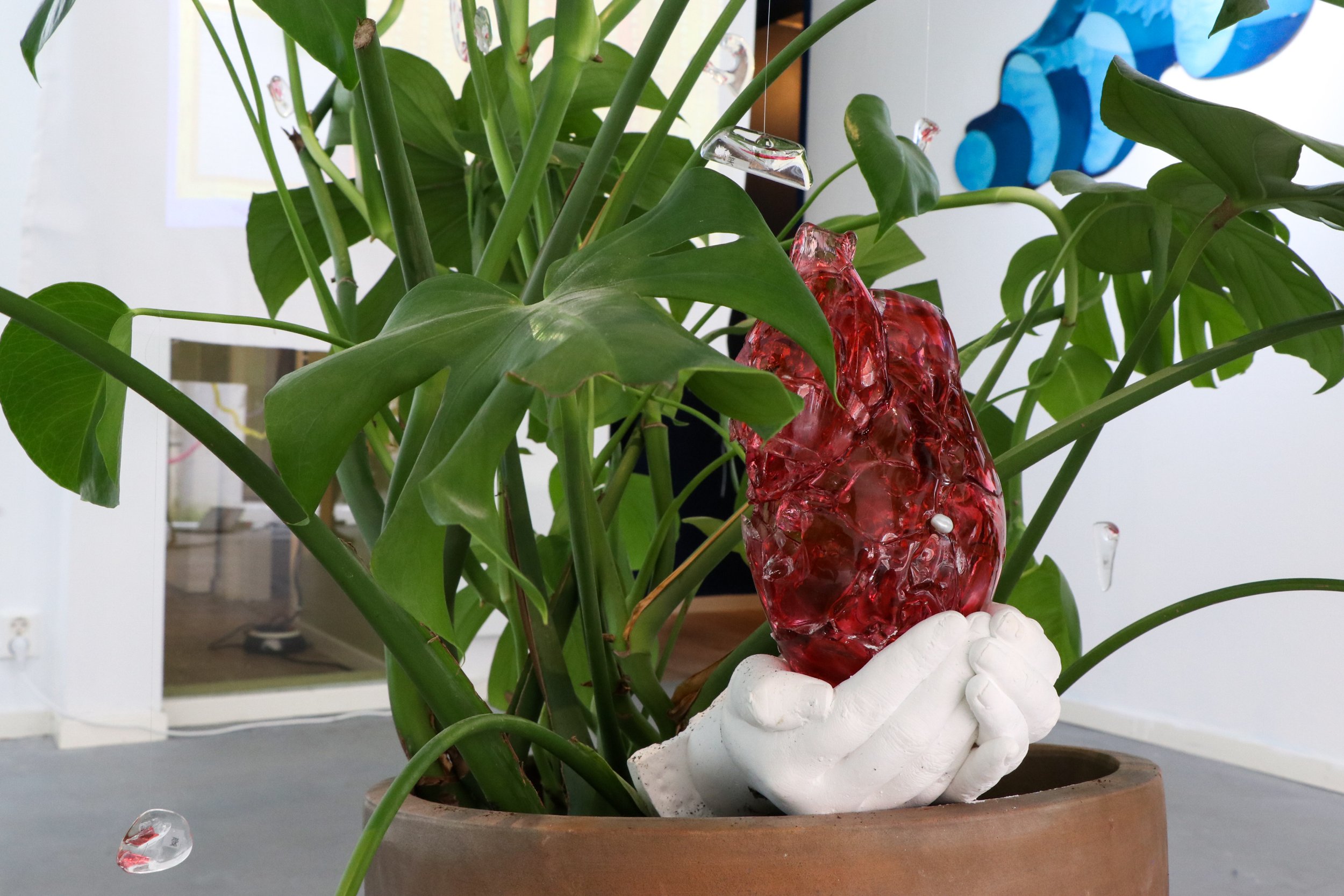
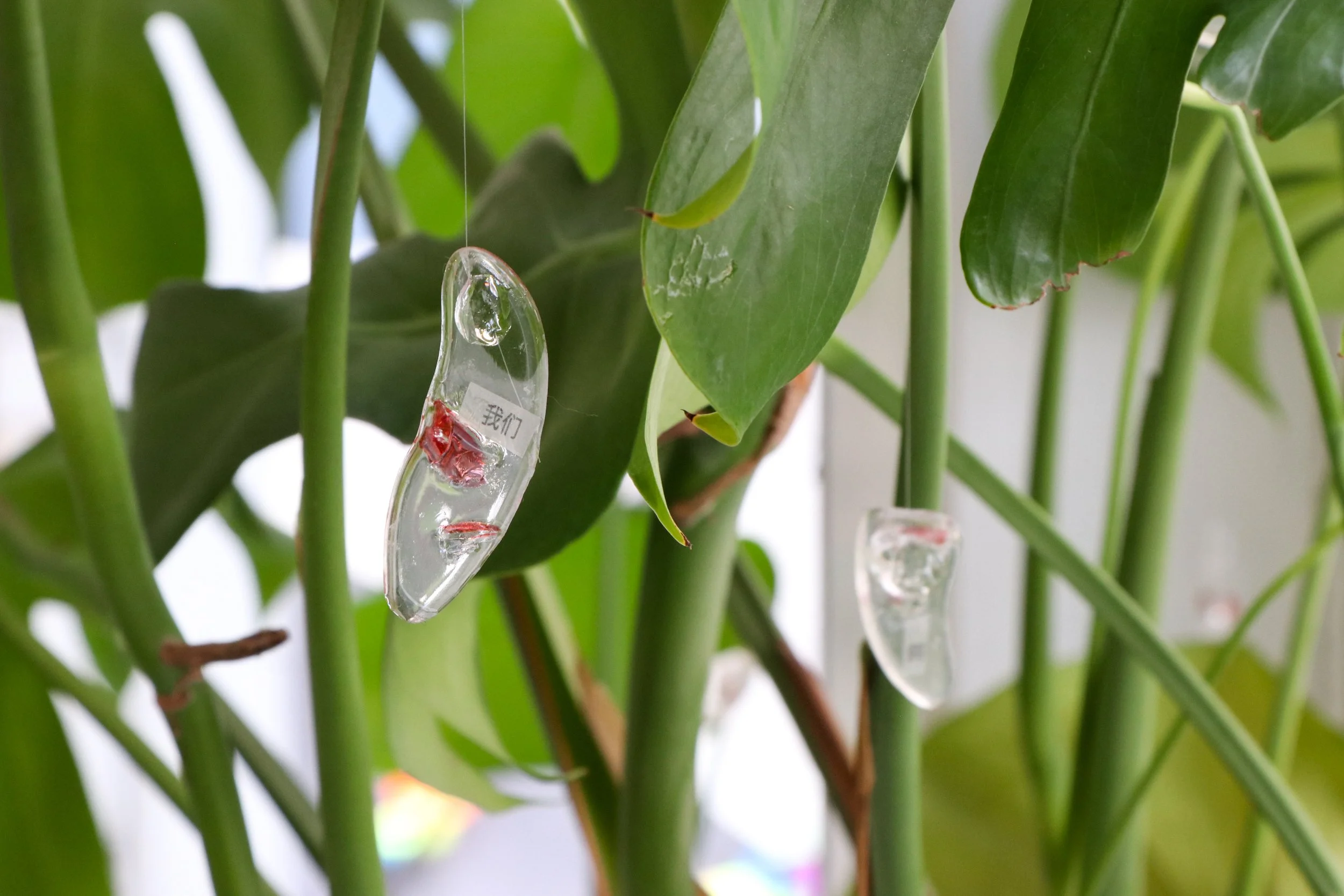
Yeung's works are usually in the form of sculpture or installation. Her inspirations are always from the observation of humans and their identity (socially and politically), sometimes her works ask questions as simple as "what it means to be a human?". Impacted by the social unrest in Hong Kong during 2019 and 2020, she started a series of political works as a record of the events that happened in the period and mockery of social injustice.
-
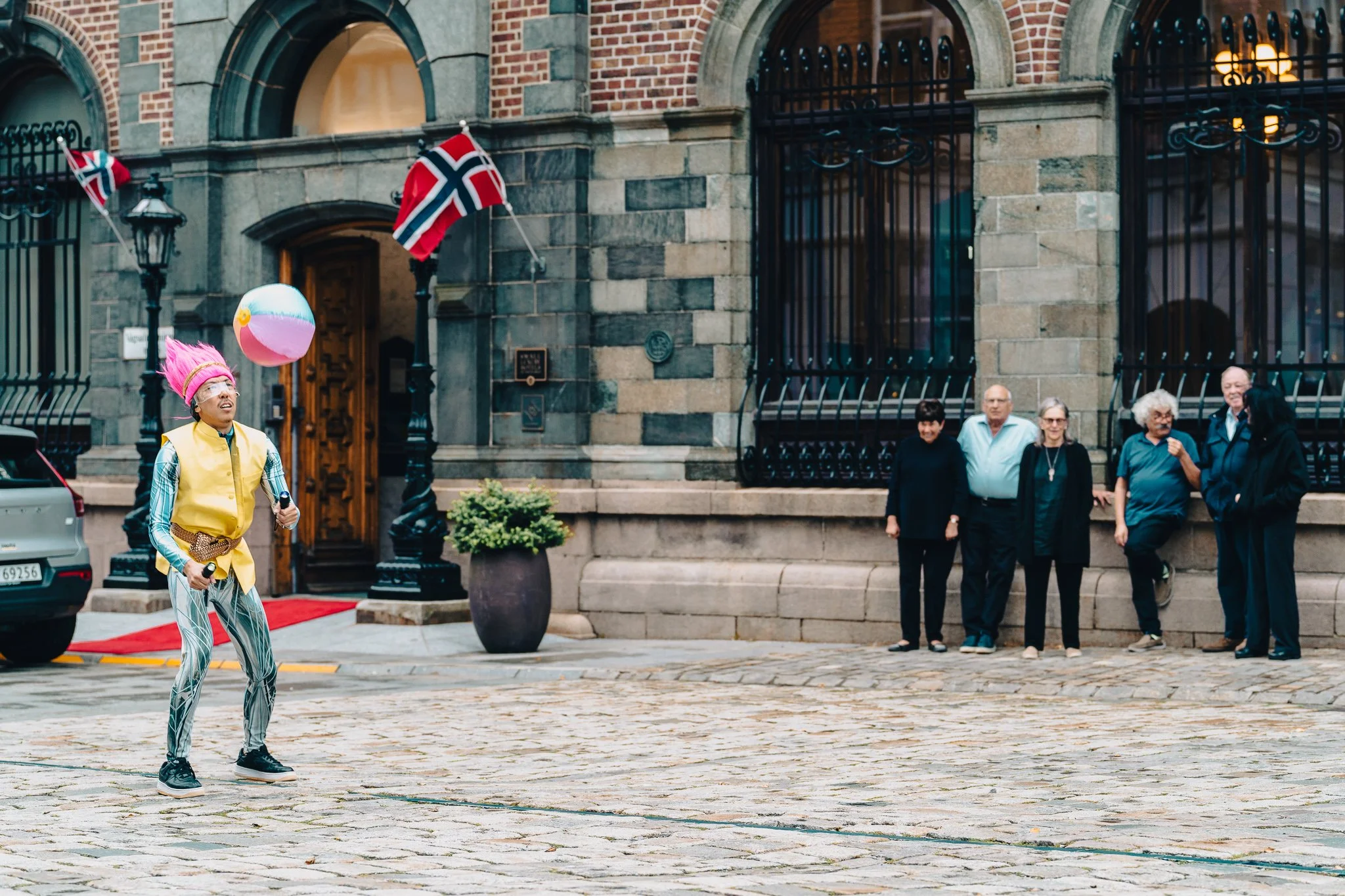
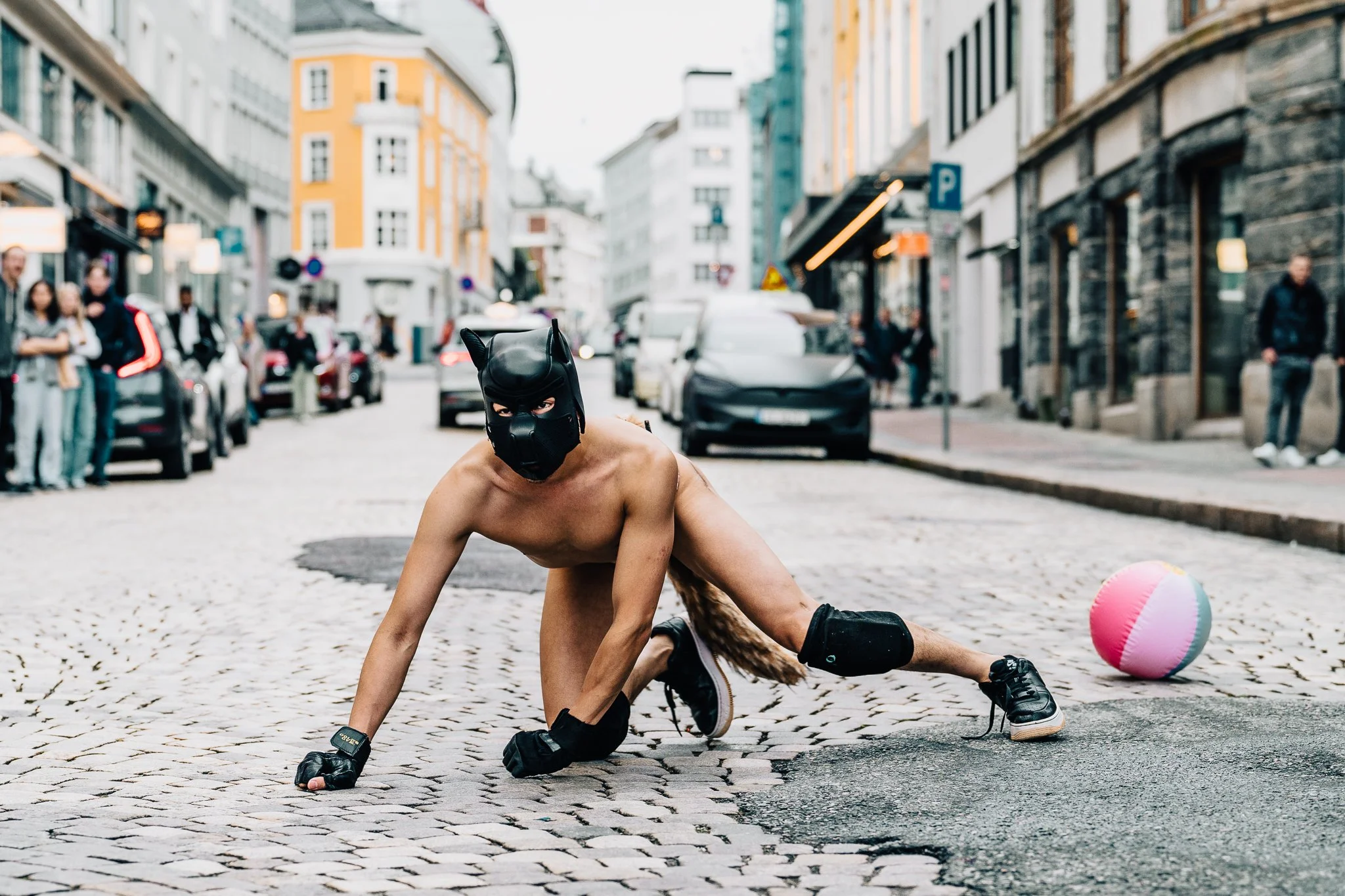
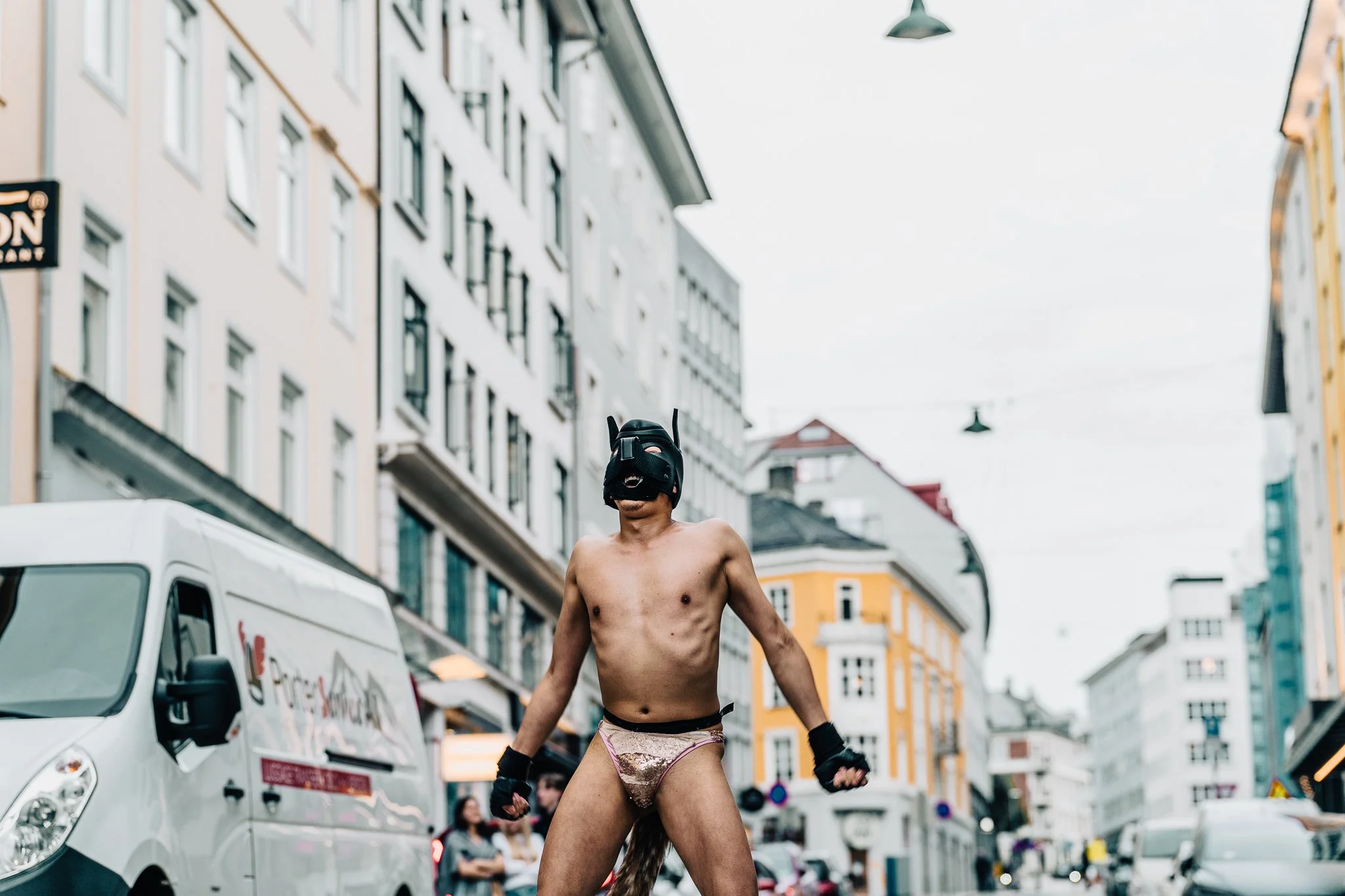
is a Japanese artist from Kochi who mainly works with performance and film. He performs several characters, incorporating with dance, animation and the story of fictionalized reality. In his work, Dominique explores the idea of appropriating cultural forms, hybridity, and multi-naturalism.
Dominique has an MA in Fine Art from the Faculty of Fine Art, Music and Design (KMD) at the University of Bergen and a BA in Fine Art from Central Saint Martins College of Arts and Design at the University of the Arts London, where he also received the First Class Honours.
-
The conceptual-based practice of Ji Jia involves site-specific installation, performance, and video. She uses her own body and ready-made daily life materials to intervene in space and architecture. Through the construction of subtle interventions, she breaks the audience's habitual cognition and alters the existing environment. She uses black comedy as her aesthetic basis, putting the audience in familiar yet exceptional situations, thus triggering thinking, criticism, and questions.
-
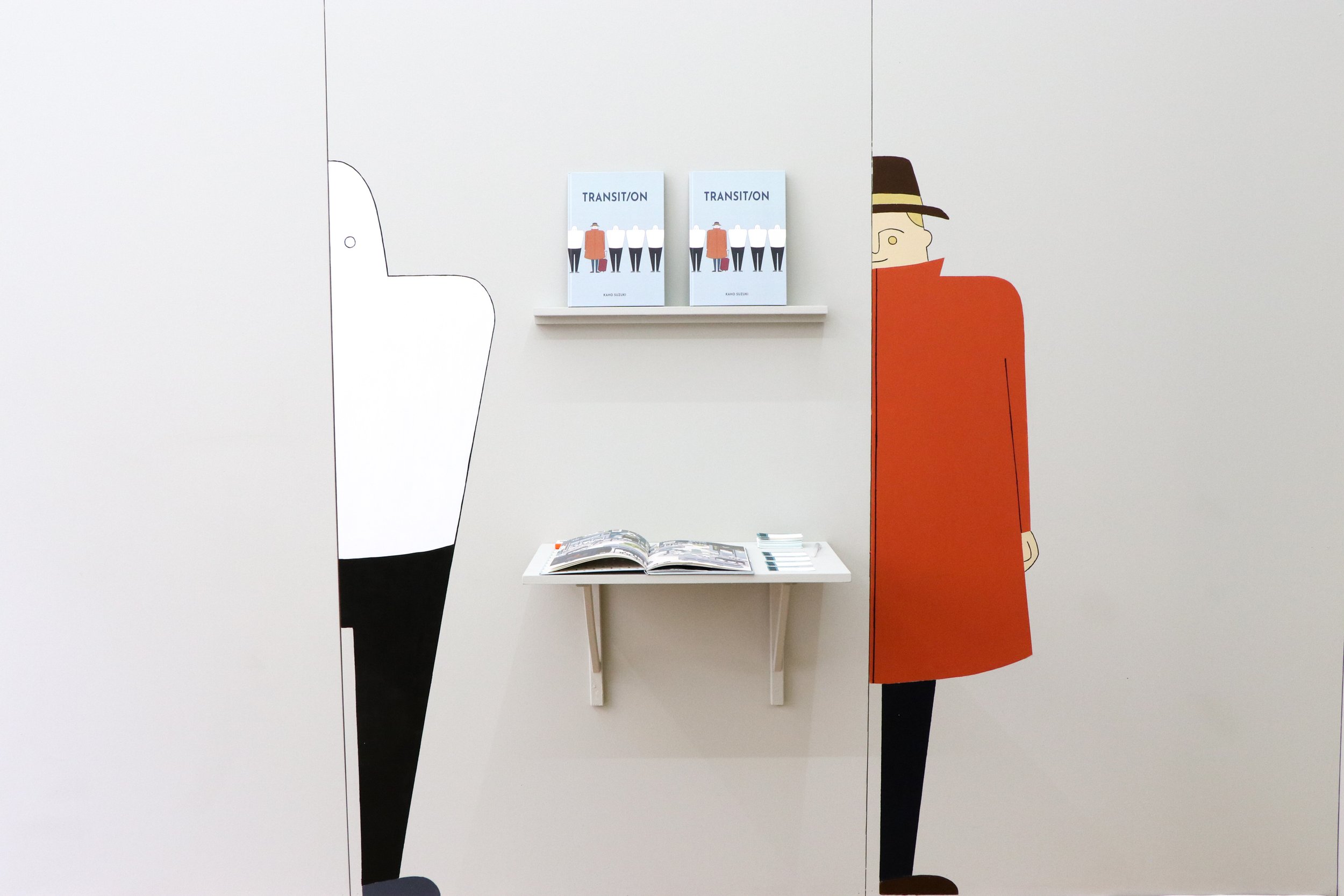
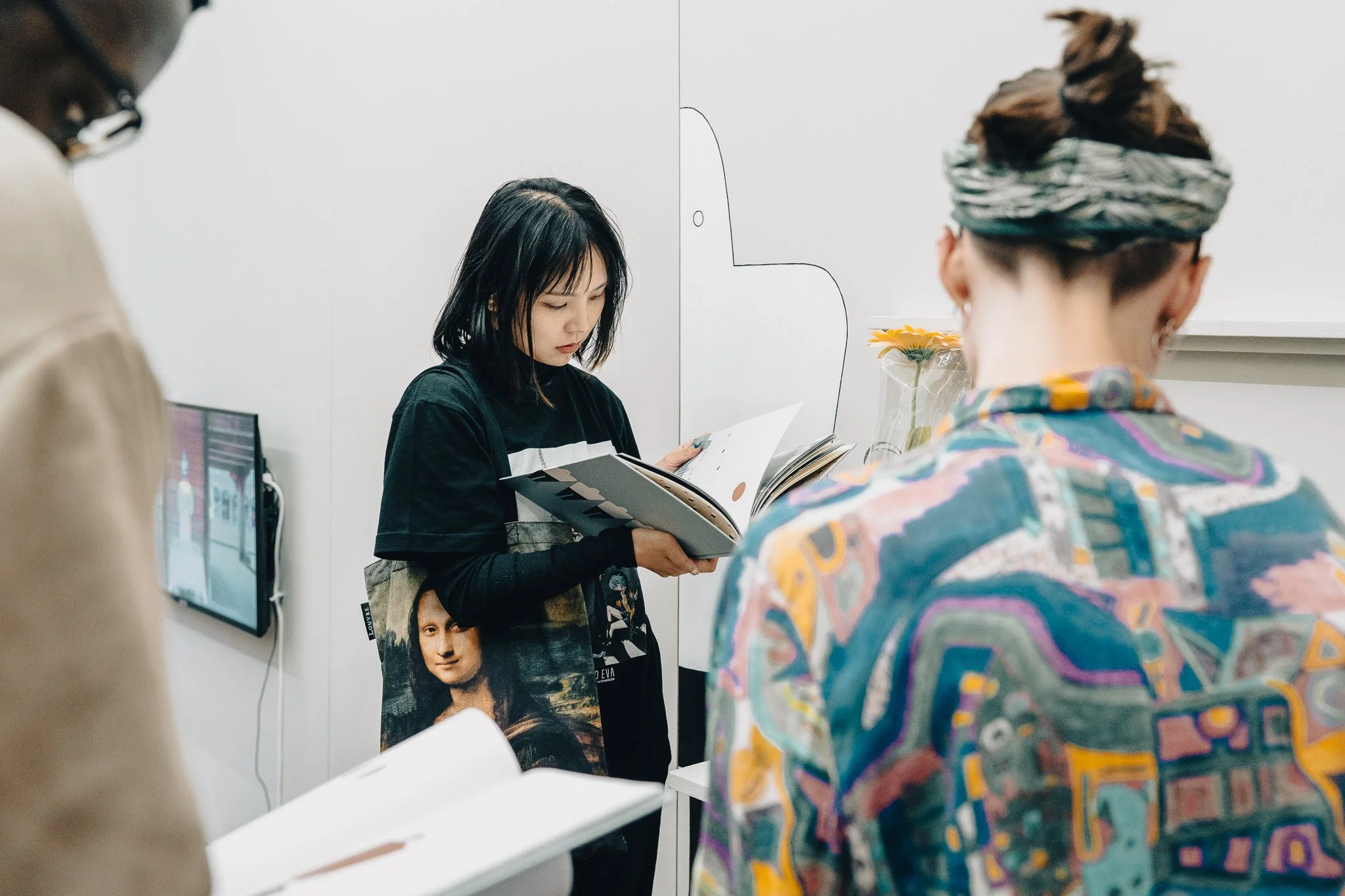
Japanese illustrator , with this project, explores ways of storytelling without words and the social value of illustration. TRANSITION is a silent book, that is, a picture book that the story is told only with illustrations. The story relates to the issue of “uniform society” and “majority and minority.” It is about a man who moved to a city and tells how he becomes “anonymous” in their society. There are many different visual clues in the story, and they encourage the reader’s visual literacy. In other words, it might change into different stories depending on how the reader interprets them. Also, the story has no specific ending, and it would be created by the reader.
-
is a Bergen-based motion designer, graphic designer, and a happy guy who loves dogs, coffee and nature. He has a BA in filmmaking from Taipei National University of the Arts, School of Film & New Media and an MA in visual communication design, University of Bergen, Faculty of Design. Storytelling is the core of his practice. His works traverse between digital and analogue mediums through the use of different materials, colours, and shapes.
-
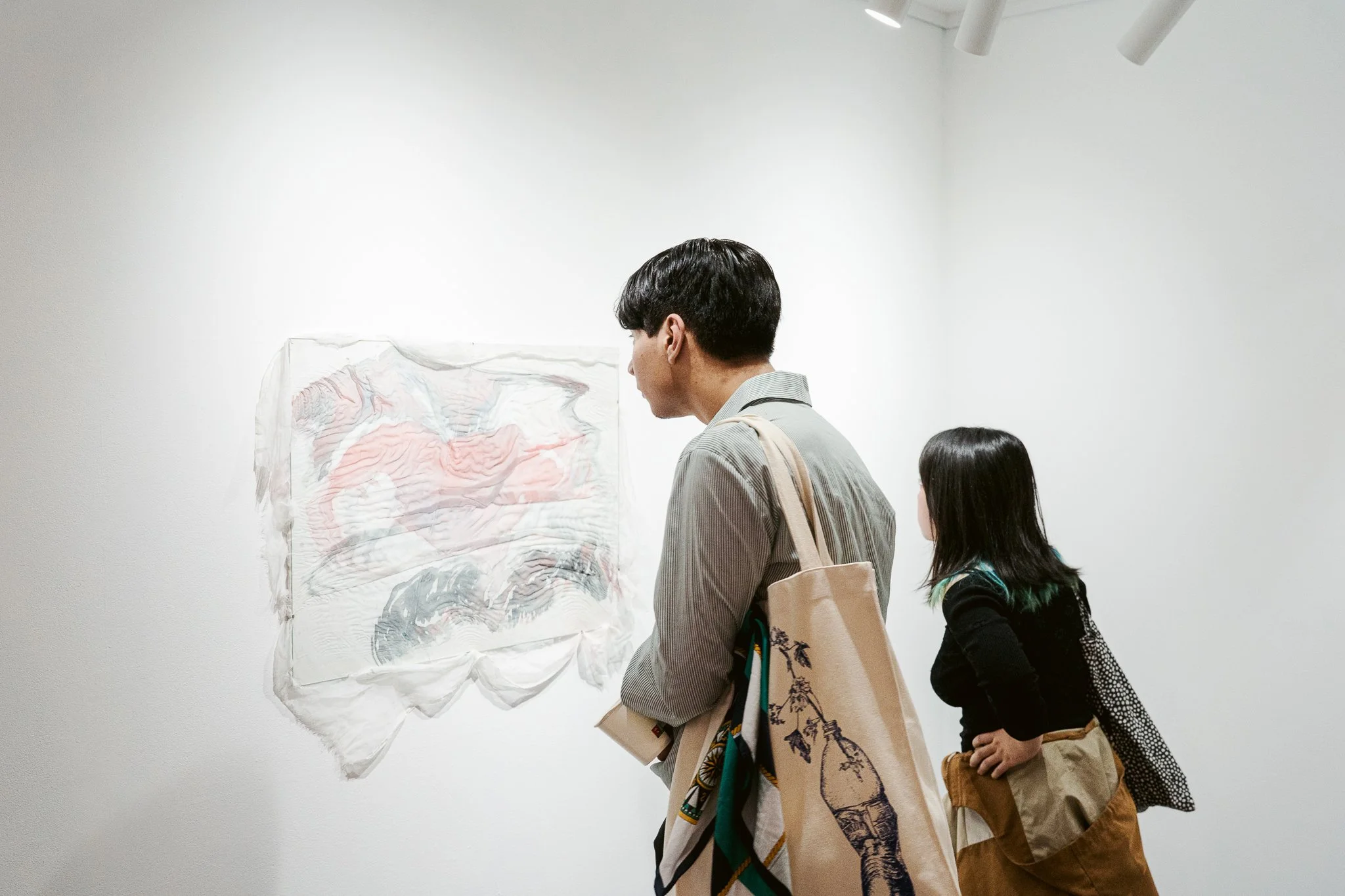
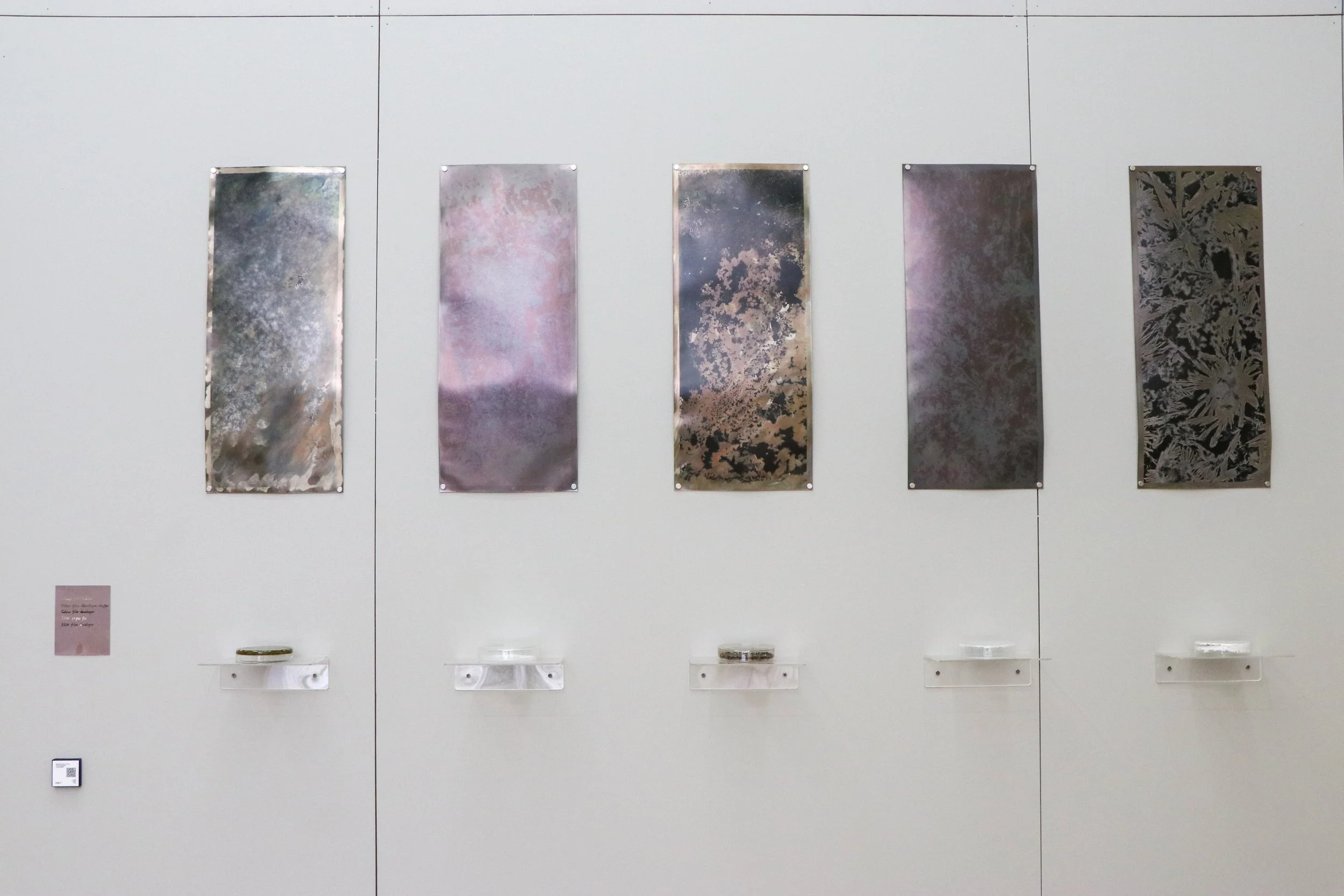
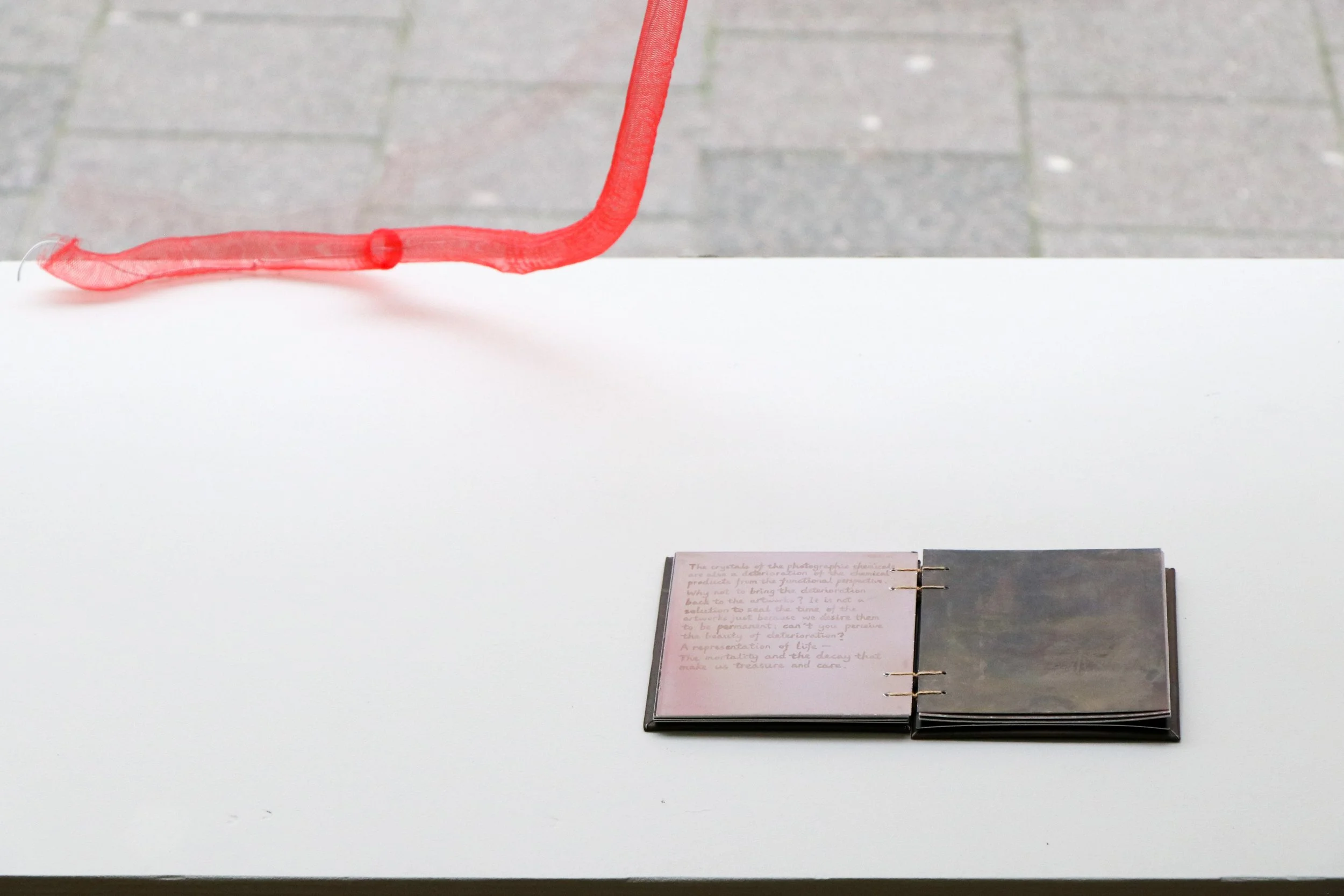
Born and raised in Beijing, Lexy (also known as Xiao Liangzi) is an artist and researcher, currently based in Bergen and London. She works with alternative photographic processes, textile, and moving images, regarding photography as performance and action above the content of the image. She sees her artistic practice as a way to reach self-awareness and self-transcendence. She is interested in repetitive gestures, durational performance, materiality, exploring how time, perception, and repetition can produce a form of visibility and aesthetic experience. Her practice is about experimentally performing the making processes- a repeated working process, investigating the ways to interpret pairs of paradoxical ideas around repetition, such as degradation and superposition, interruption and continuity, permanence and impermanence. She tends to interpret her investigations in a philosophical way, trying to build a connected, consistent and poetic theory system through her artistic practice.
-
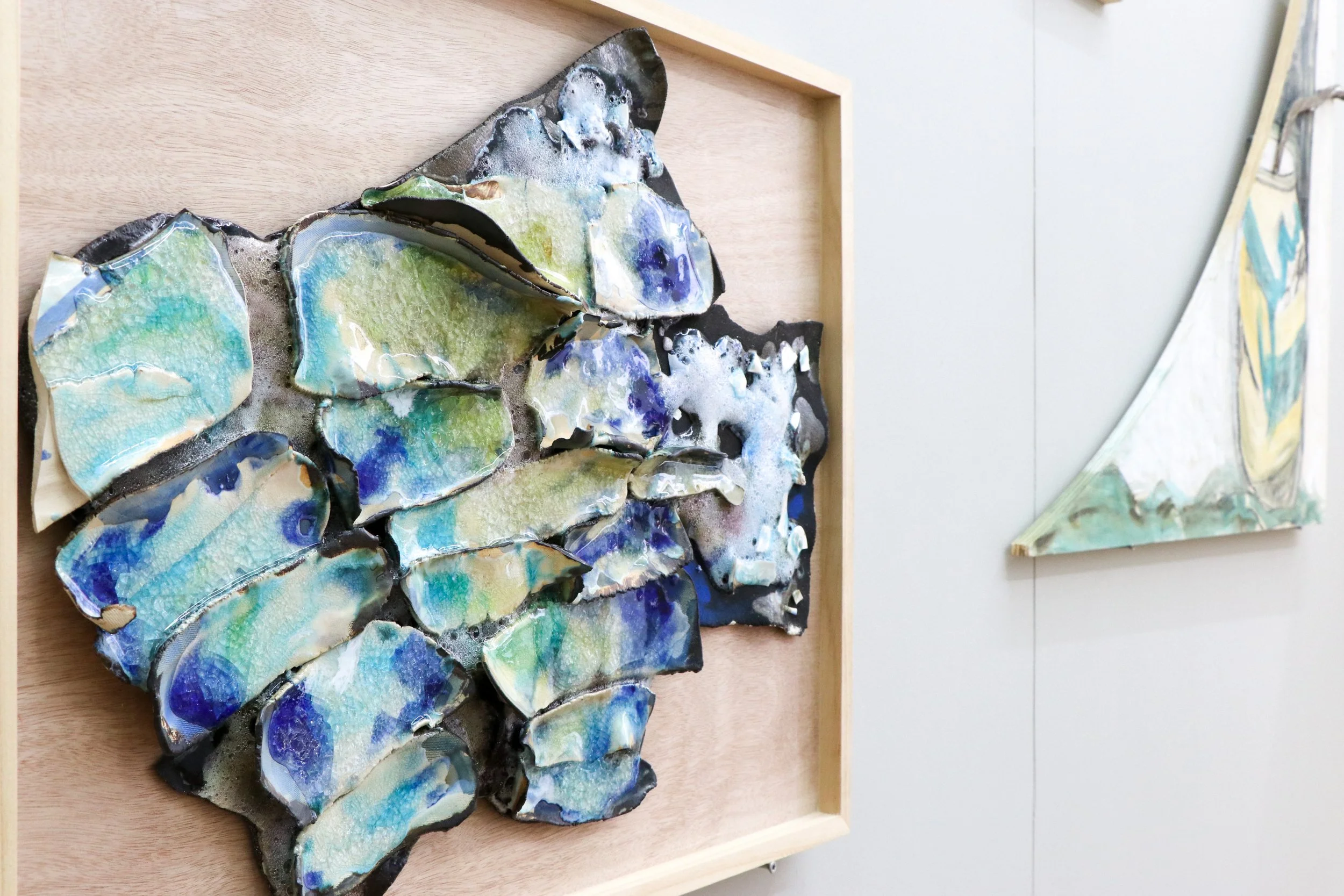
is a ceramist from South Korea. She came to Oslo to pursue her studies with the love of nature. She has developed a new perspective towards her artistic practice and personal philosophy, while finding the originality of an object or a phenomenon or nature from everyday life. Her value on memories and emotion from all situations are the driving force in her practice. She holds a BFA at the School of the Art Institute of Chicago, and a MFA at the Oslo National Academy of the Arts.
-
is a Korean artist currently based in Oslo. She is interested in exploring human experiences, interpersonal relationships, general awkwardness of existence, and fleeting things such as emotions and daydreams. Her practice is driven by an urge to communicate complex feelings and situations visually because these things are often difficult to convey through words.
She holds an MA in Fine Arts from the National Academy of the Arts (KHiO) in Oslo, Norway and a BA from the Royal Academy of Art (KABK) in The Hague, Netherlands.
-
is a Chinese artist living and working in Bergen, Norway. She describes herself as “a person who wanders between reality and nothingness, always attracted by the little ‘happenings’ in daily life, a lost soul on the way of finding and accepting through art and life, a life liver and art maker.” Su holds an MA in Fine Art from the Faculty of Fine Art, Music& Design (KMD) at the University of Bergen and a BA in Fashion and Accessory Design from Donghua University in Shanghai.
-
is a Chinese artist currently living and working in Oslo. She graduated from Oslo National Academy of the Arts with a master’s degree. Before coming to Norway, she worked as a volunteer for an NGO that advocates gender equality in Yunnan. Her diverse working experiences provided her with multiple skills, such as painting, drawing, sculpting and animating. Her topics focus on individuals as well as political criticism. She has had several exhibitions in public spaces in Oslo, including Deichman Bjørvika (Library) and Kunstnernes Hus.
-
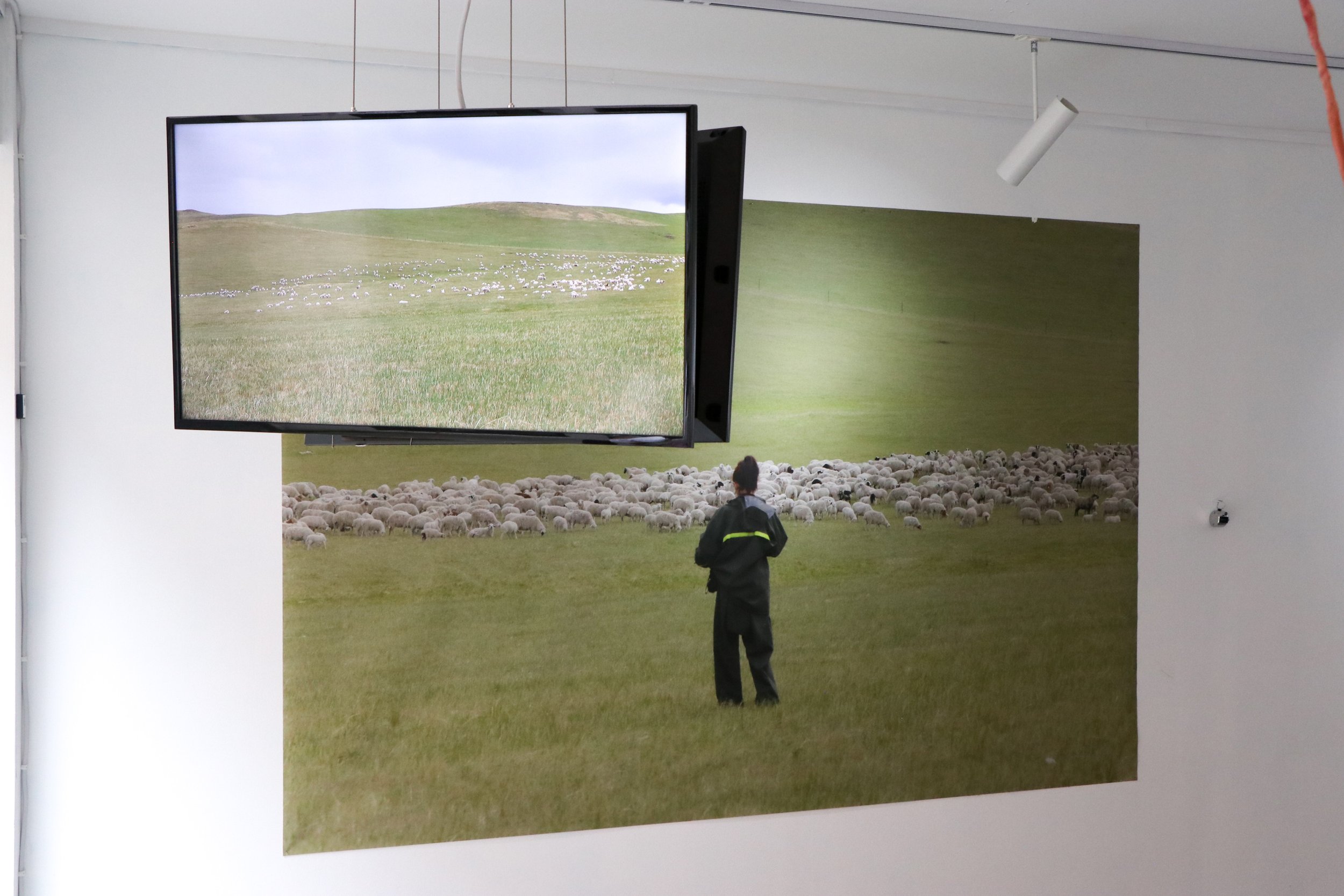
comes from Inner Mongolia, China. She graduated from the Oslo National Academy of Arts (KHiO) in Norway with a master’s degree in Fine Arts and holds a BA in Public Art from the Central Academy of Fine Arts, Beijing.