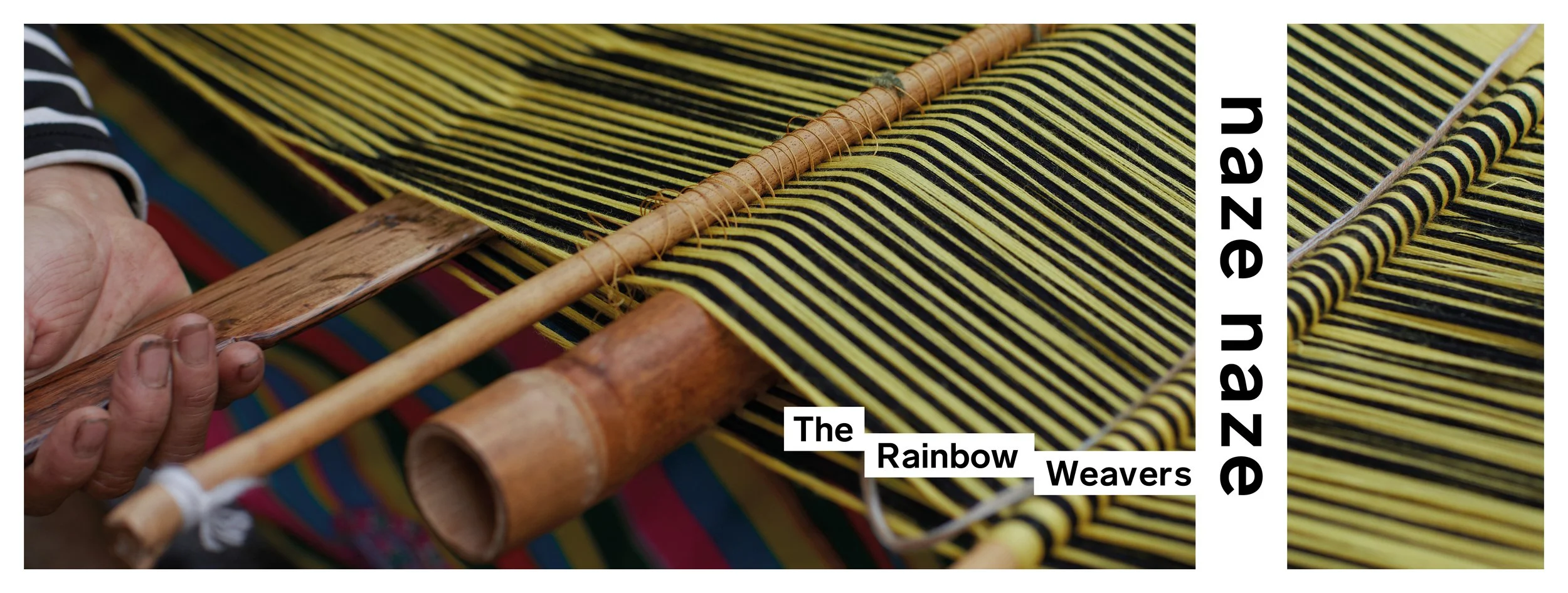
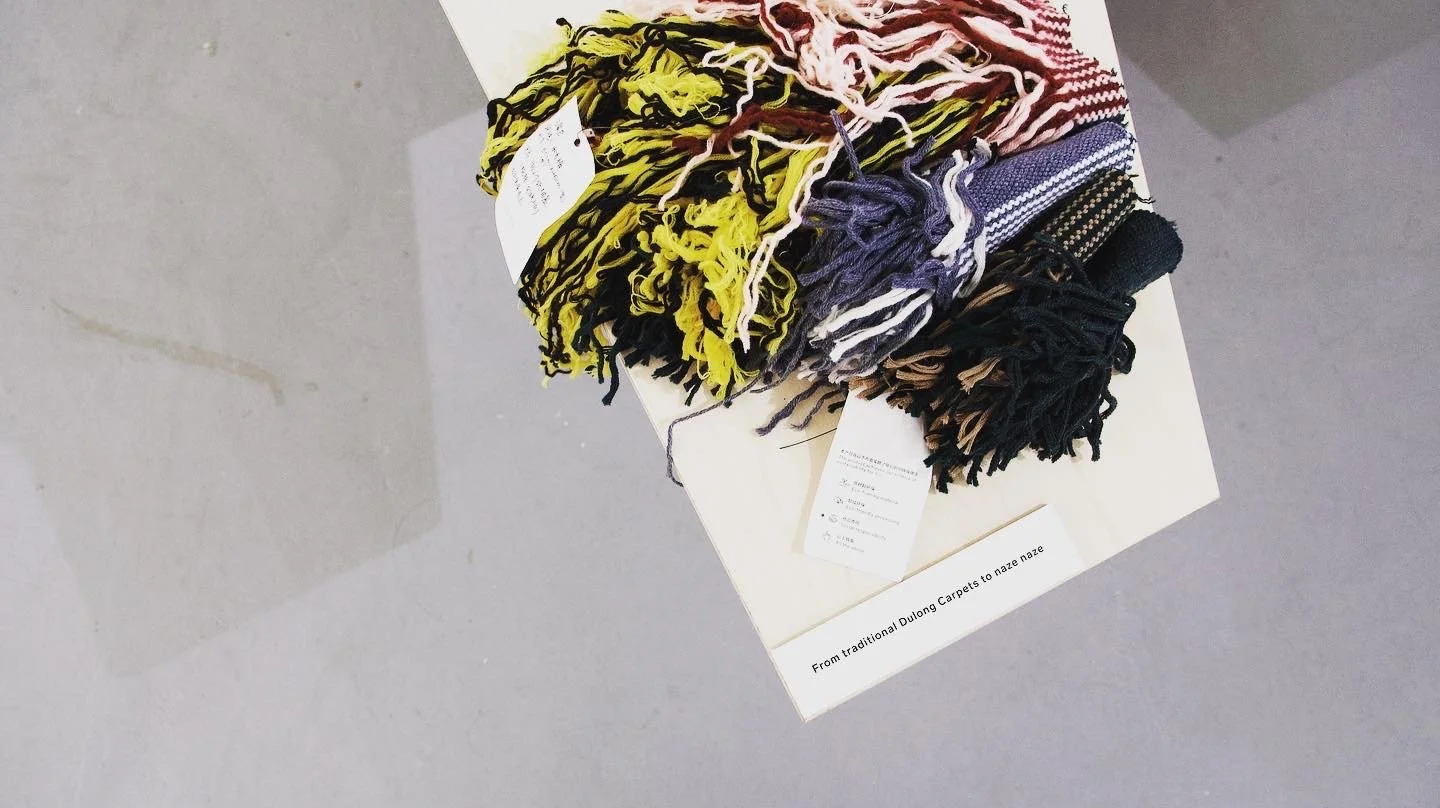
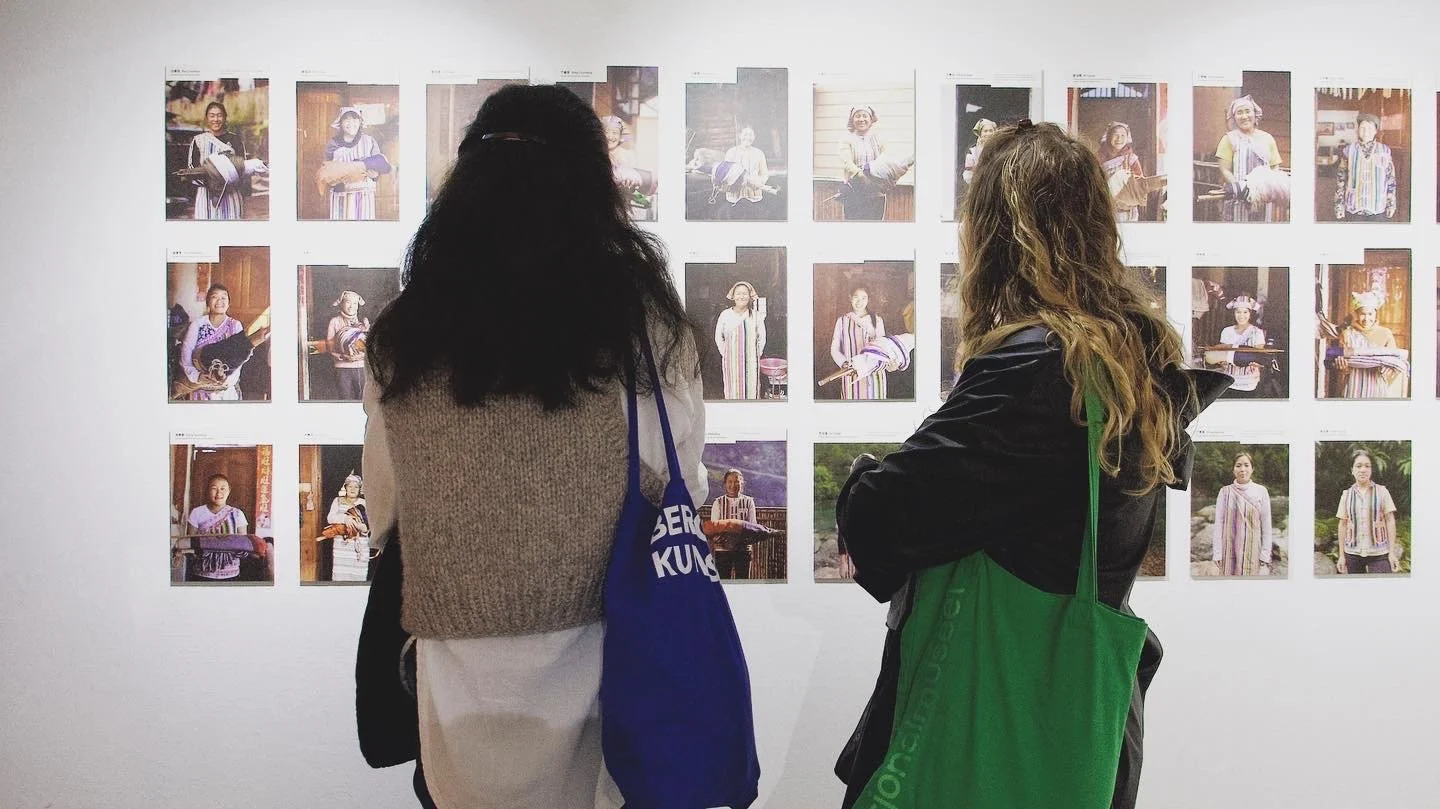
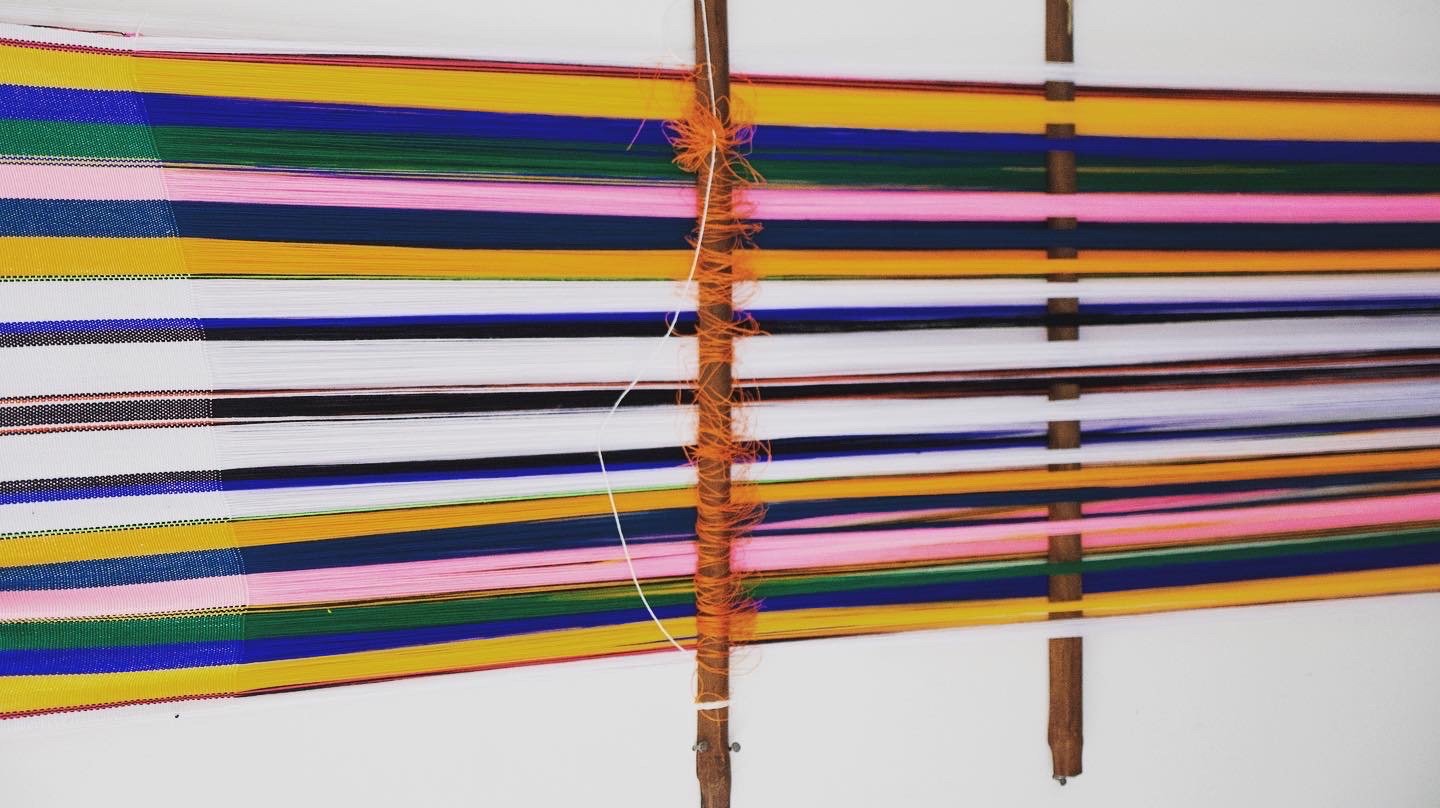
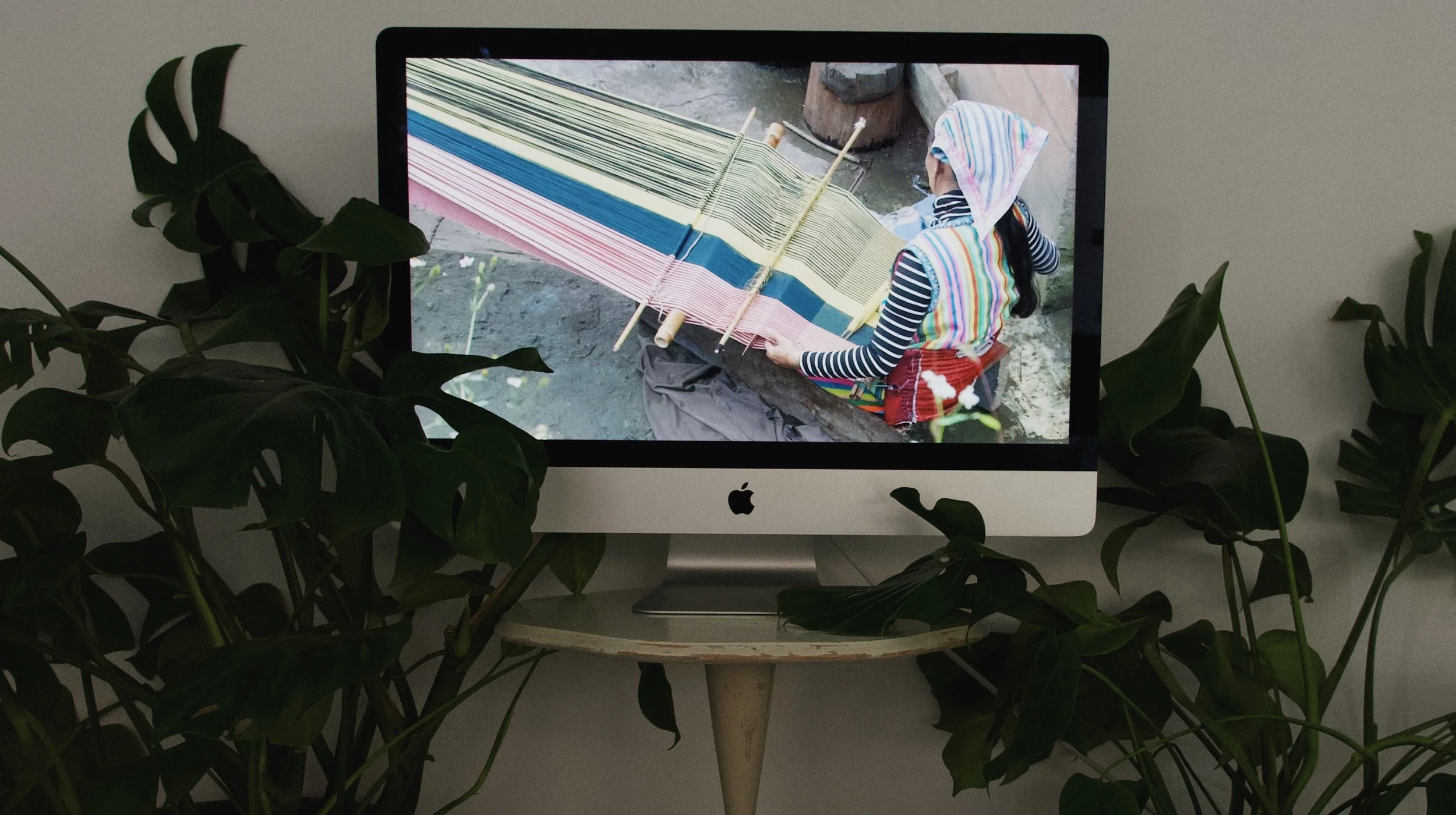
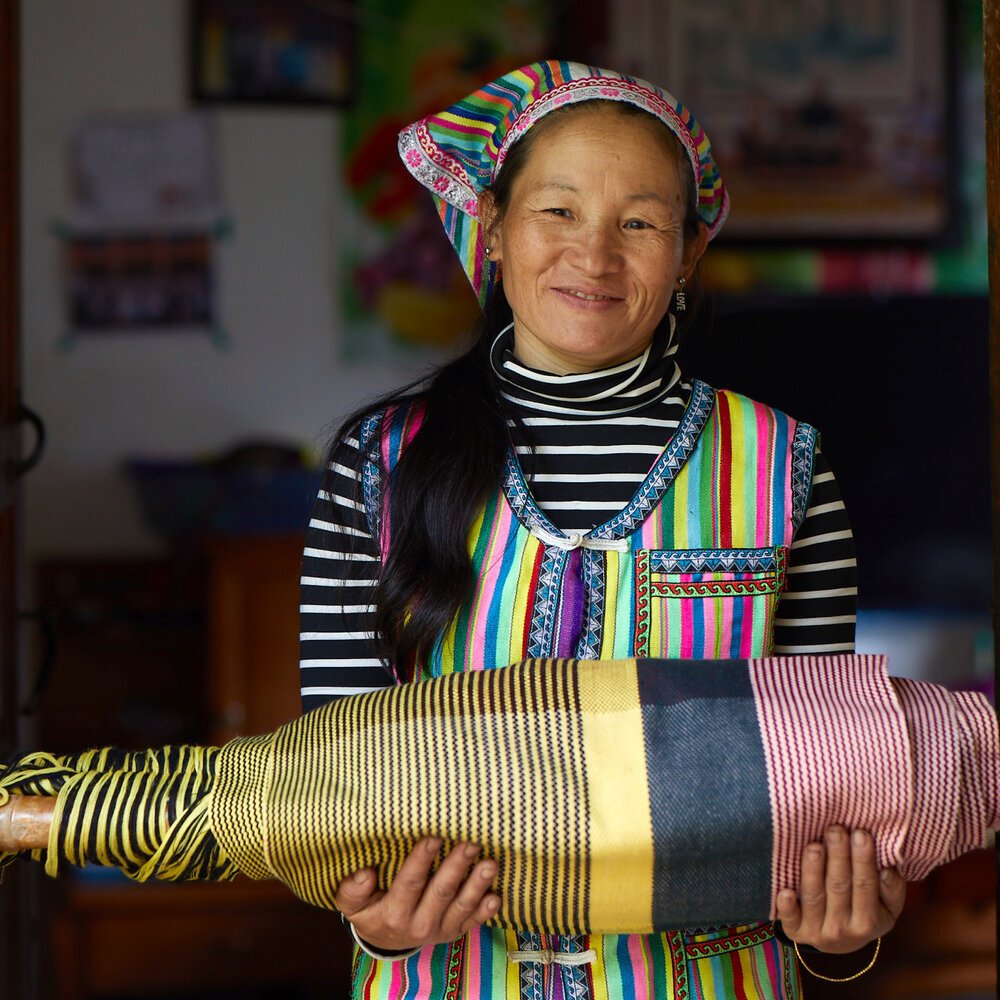
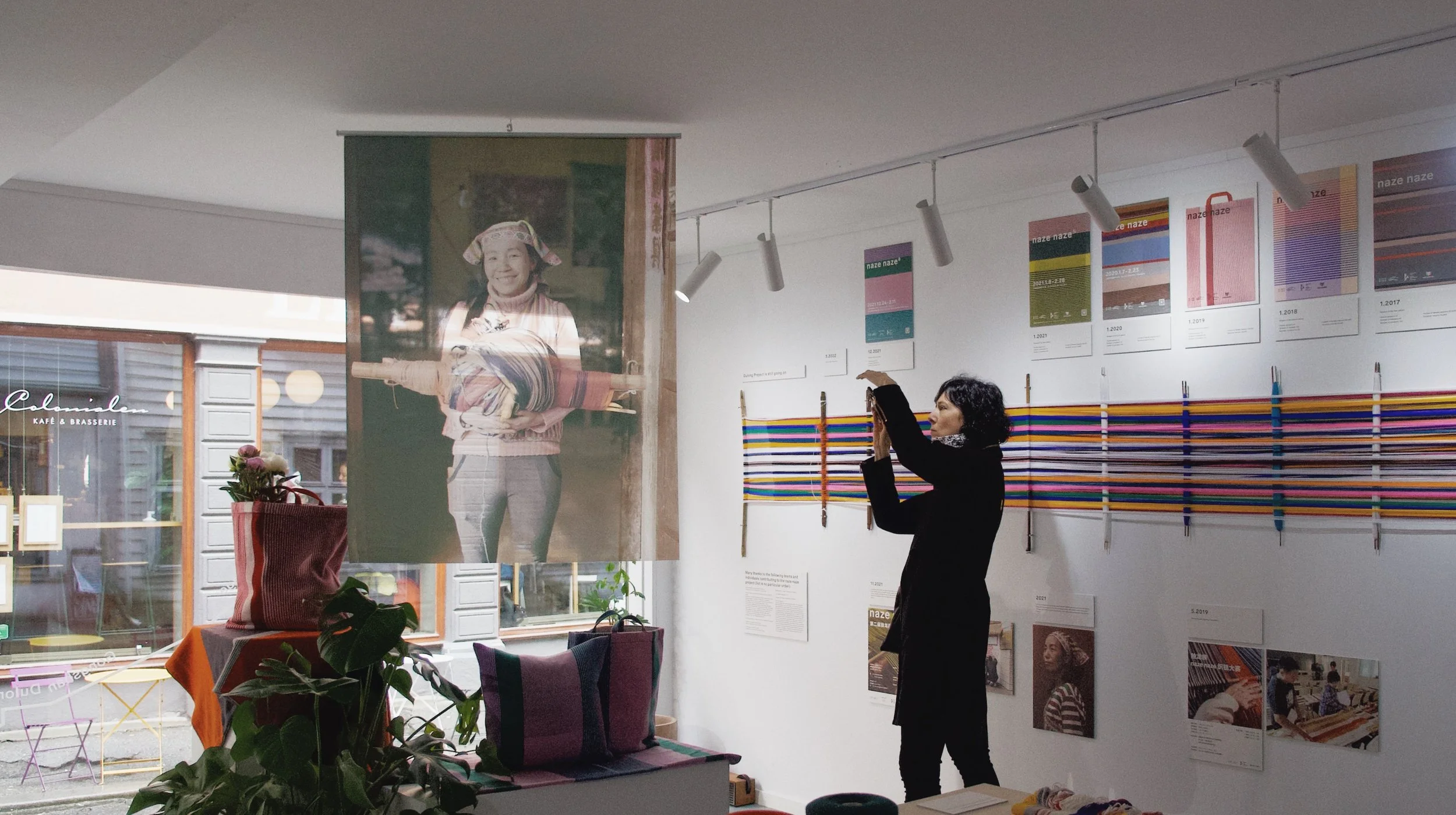
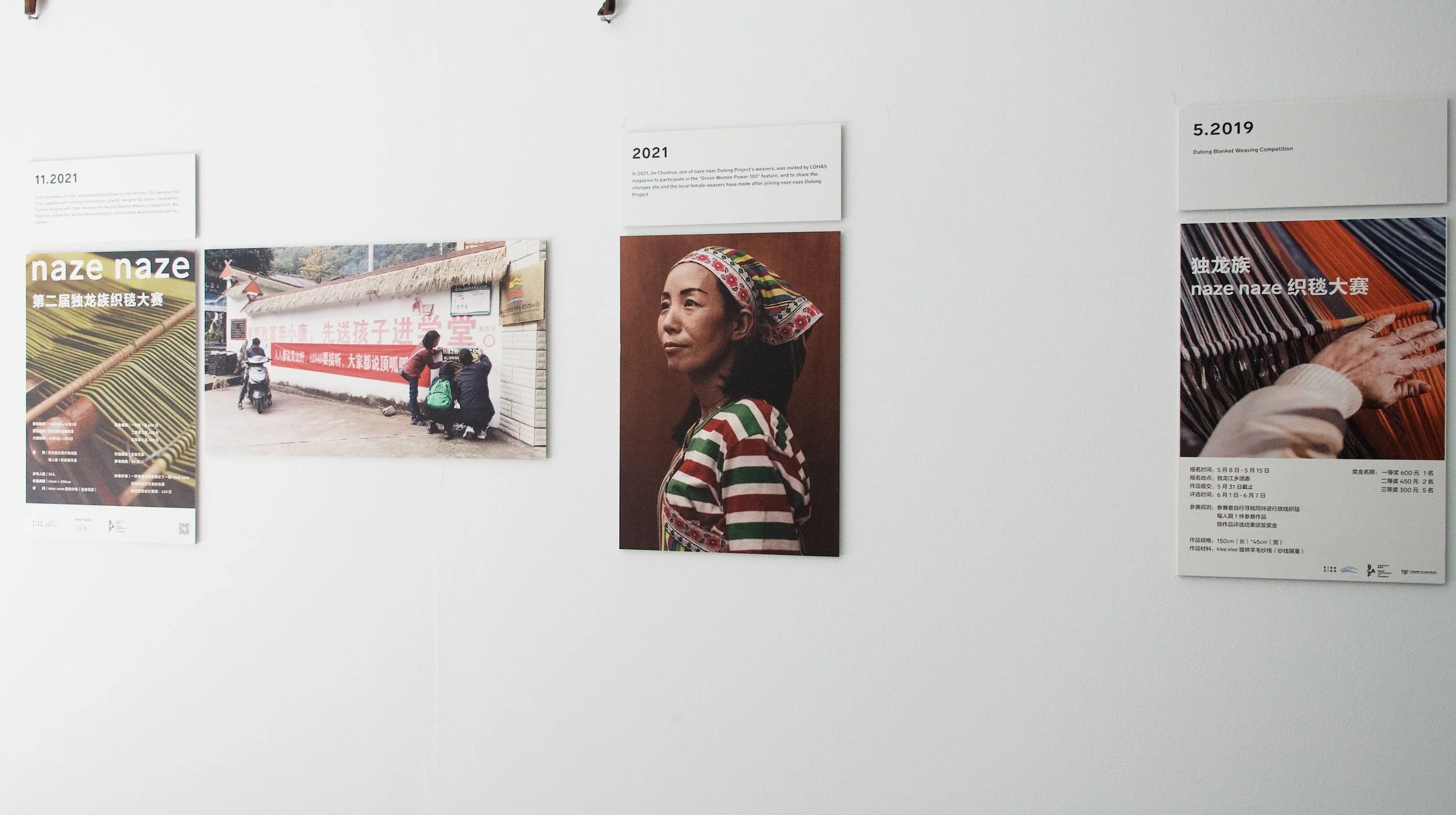
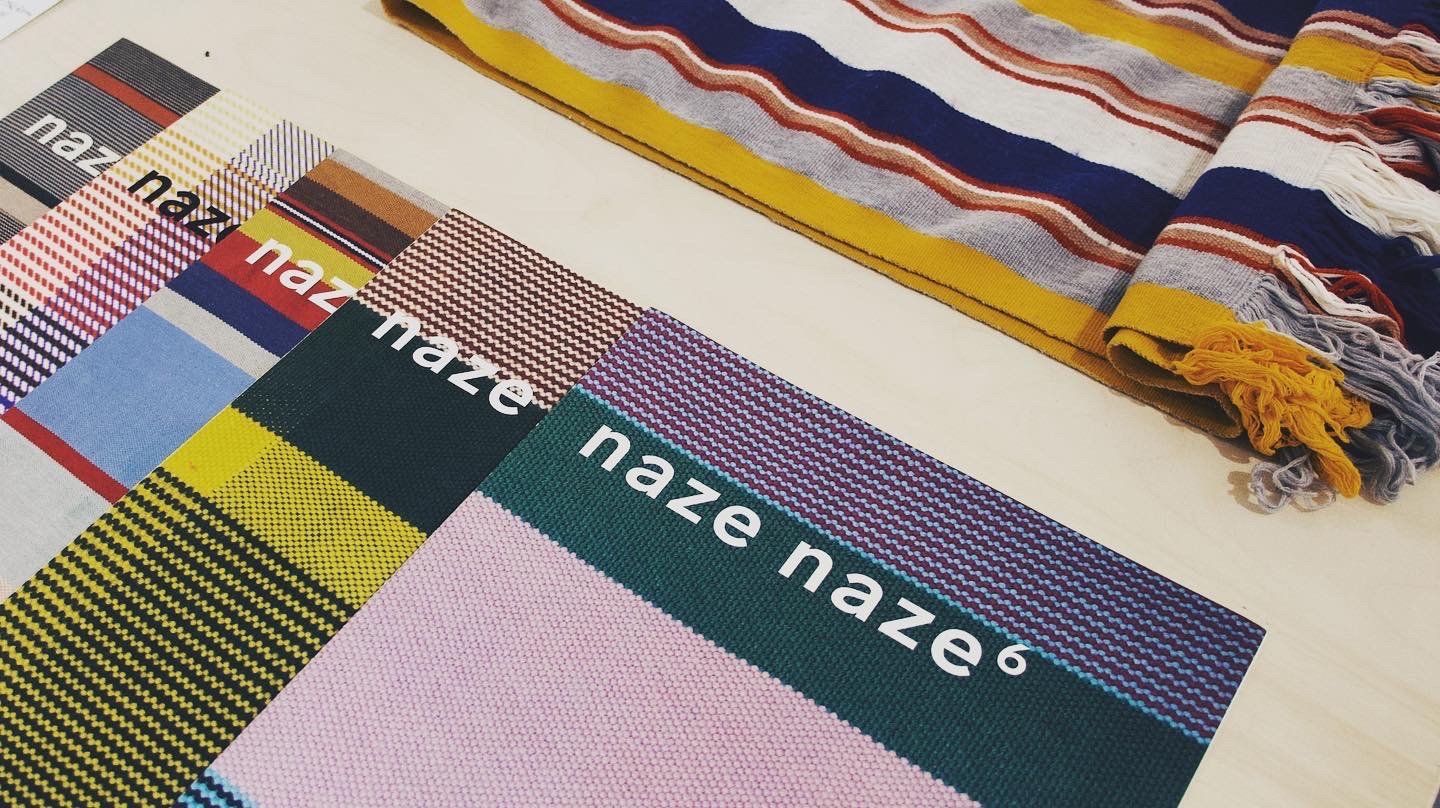
As we promised at the Bergen International Literary Festival, we are now opening the exhibition for the rainbow weavers of Derung people and the beautiful “rainbows” they weaved.
The name “naze naze” comes from the phrase “naze naze brao”, which means “to weave slowly” in Dulong (also spelled Derung) language. In 2015, klee klee’s design team and members of the Beijing Contemporary Art Foundation (BCAF) visited Dulong communities living near the China-Myanmar border. The story of naze naze thus began.
“Weaving has always been part of the Dulong people’s lives. In the past seven years, we have been working with Dulong women to develop an urban-rural partnership. Time has forged a tight-knit bond between us. We talk about eve thing from colour combinations, weaving techniques, fabric tightness, to the goings-on in our own lives. Mutual trust expends to every aspect of our partnership. As they took part in the project, Dulong women of different villages came together to form new connections and support networks.”
As the Dulong project advanced, klee klee’s team ventured into more areas with well-preserved weaving traditions and befriended more people committed to supporting local development. It was in this context that the naze naze textile studio came into being. Its aim is to link urban lifestyles with rural weaving techniques and increase mutual understanding between communities through woven goods. As a philanthropic organisation, 100% of the studio’s profits will be reinvested into the sustainable growth of the project itself and into the local community.