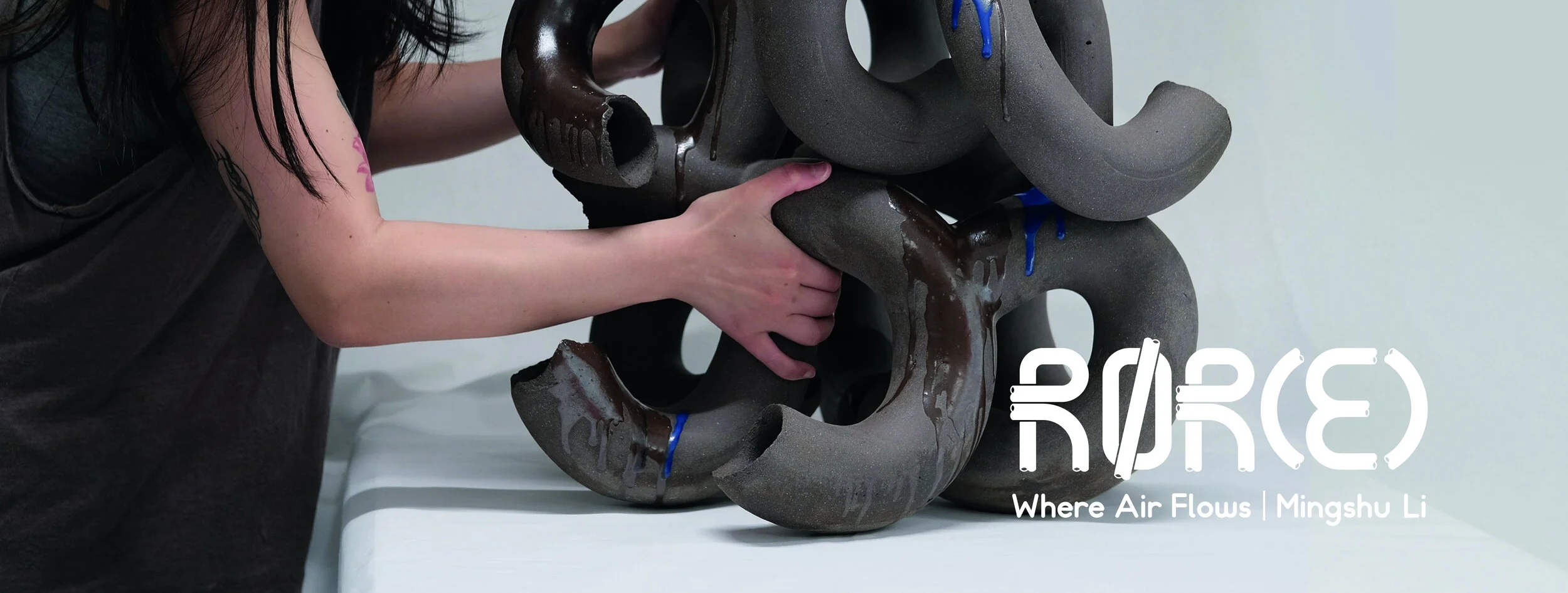
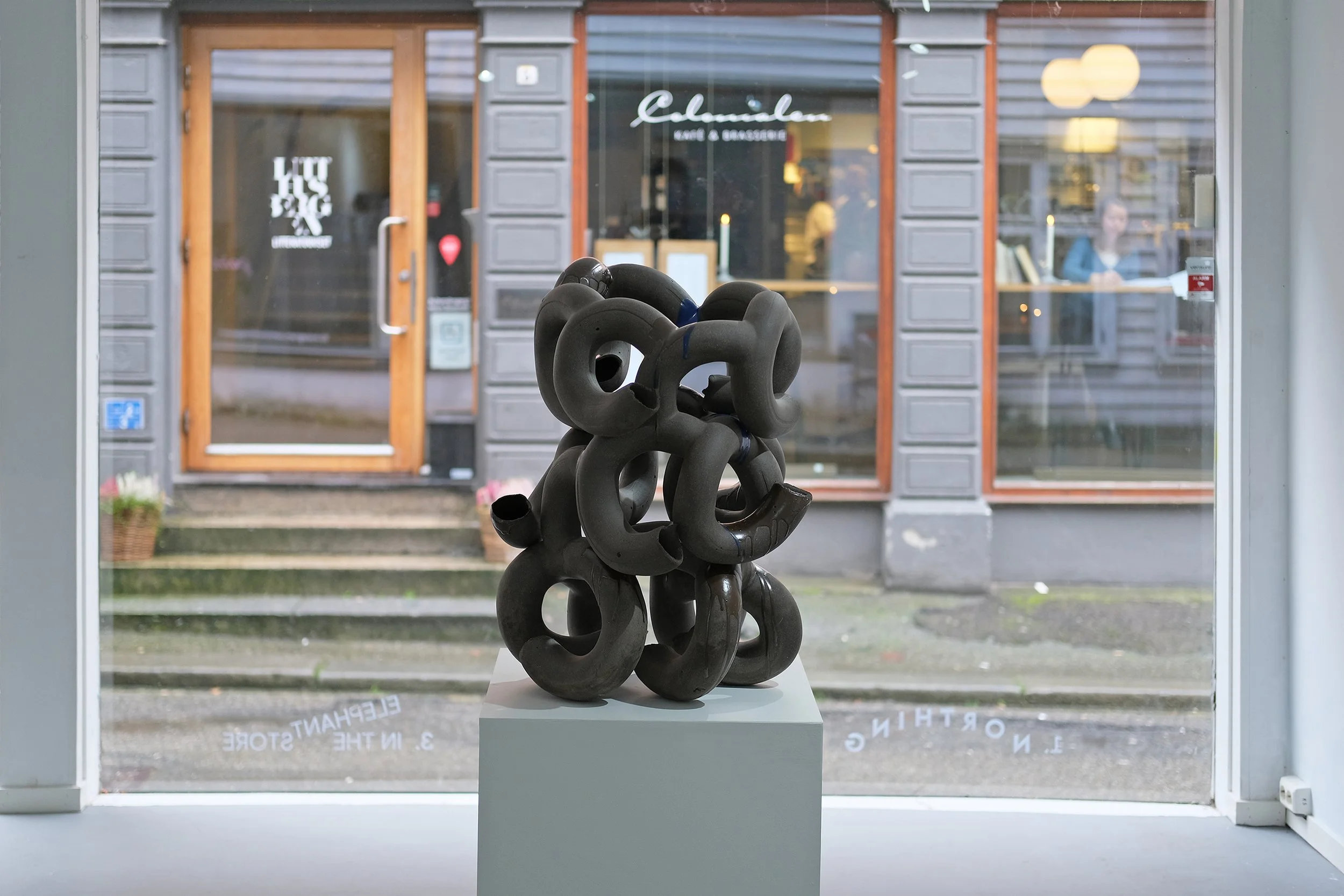
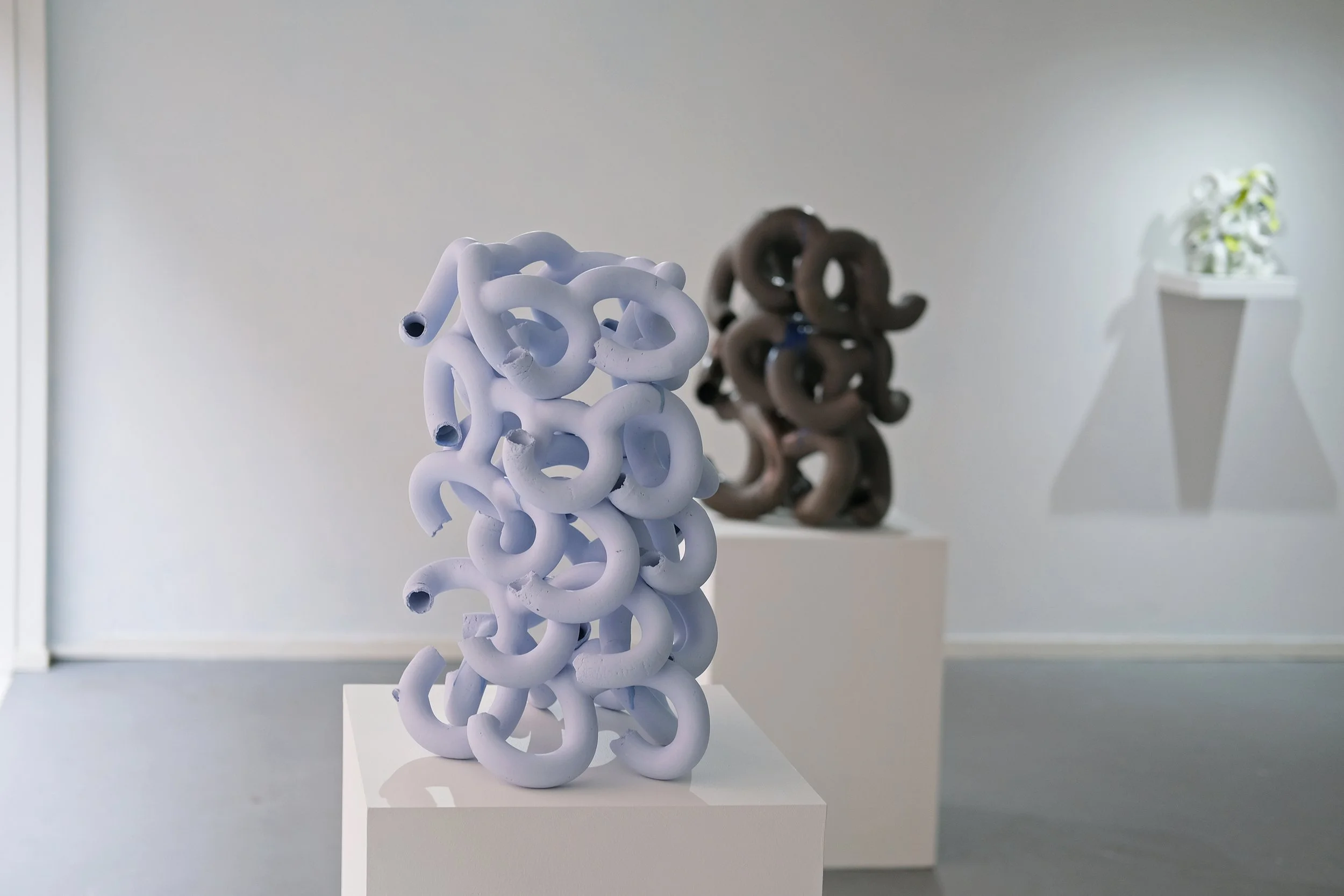
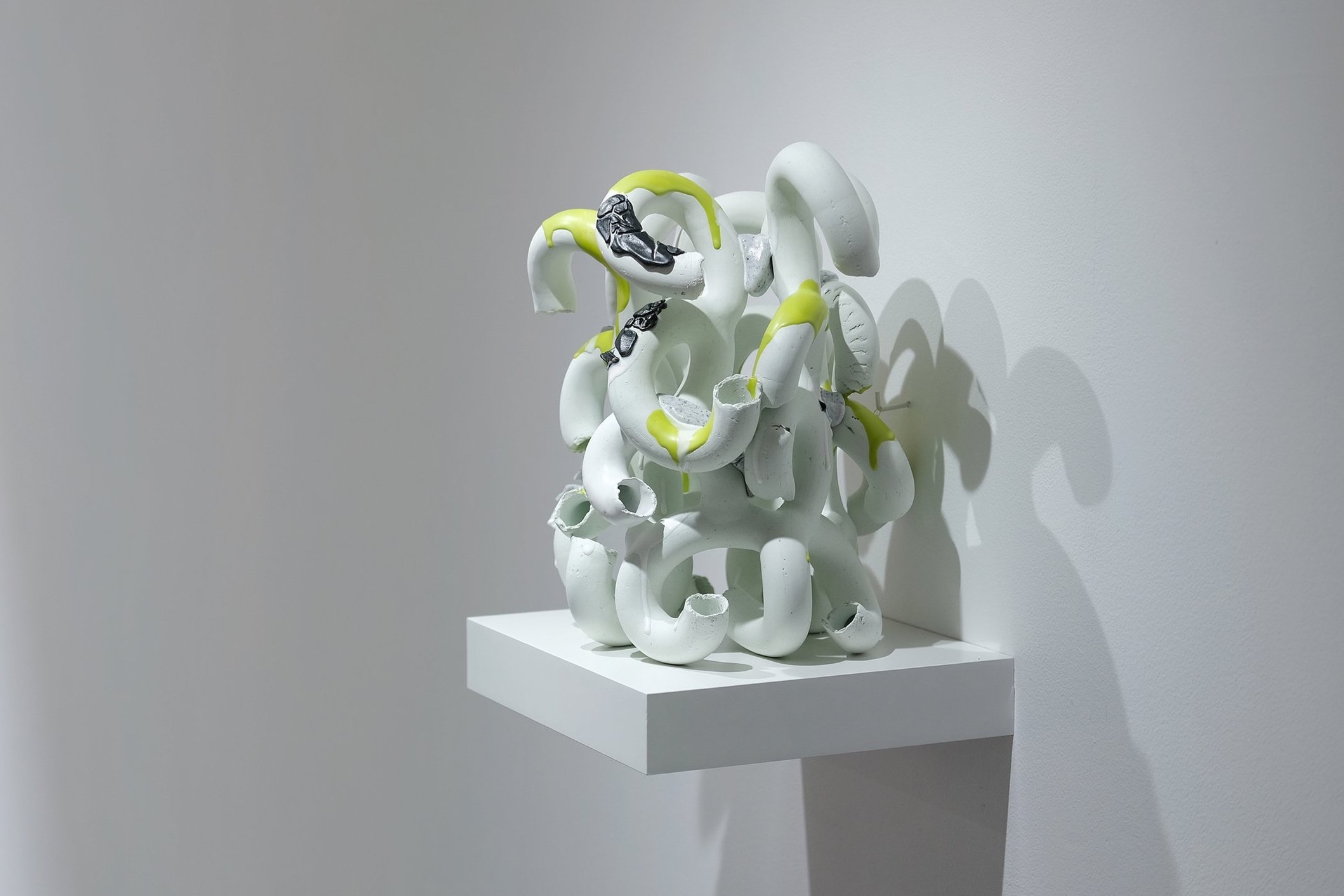
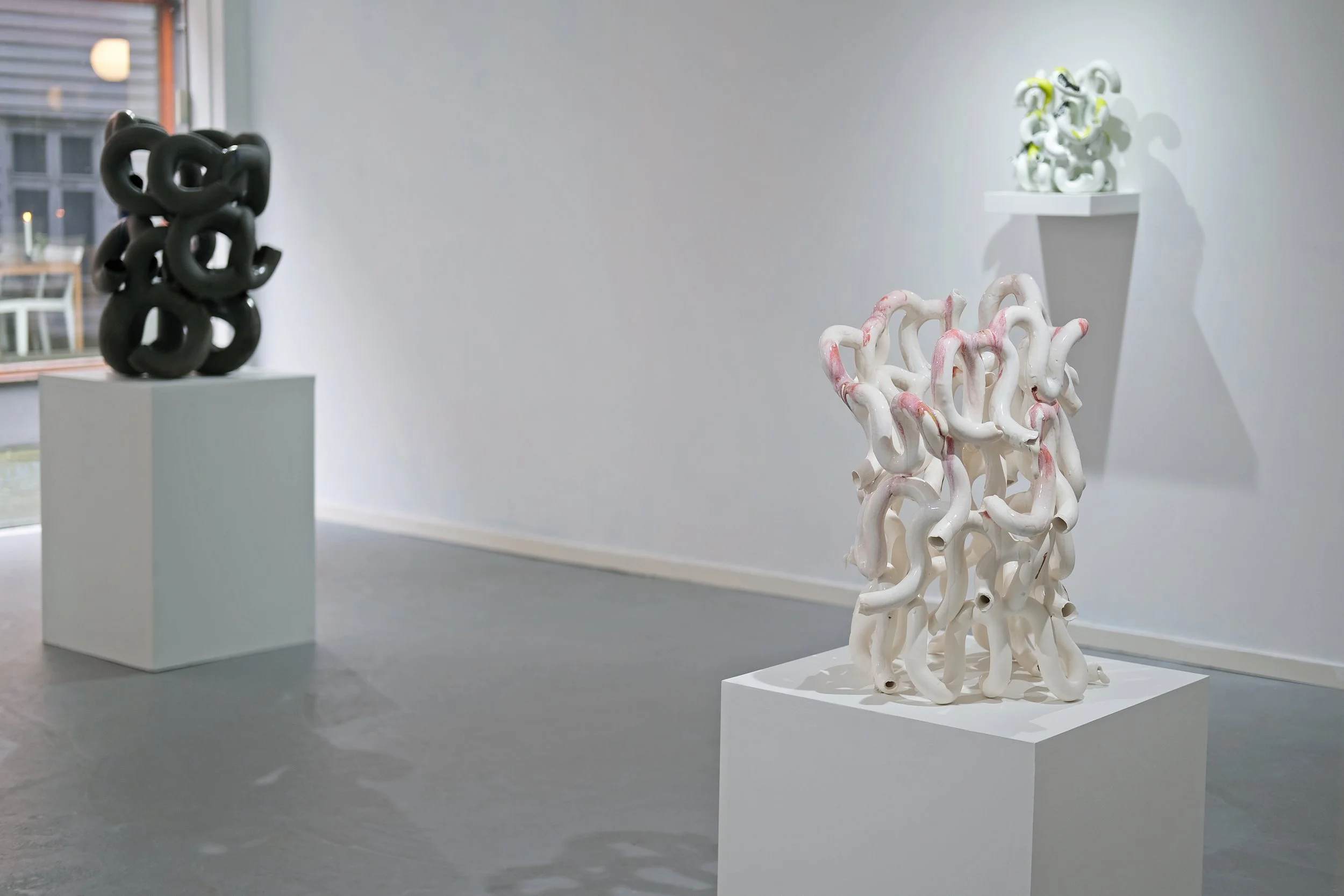
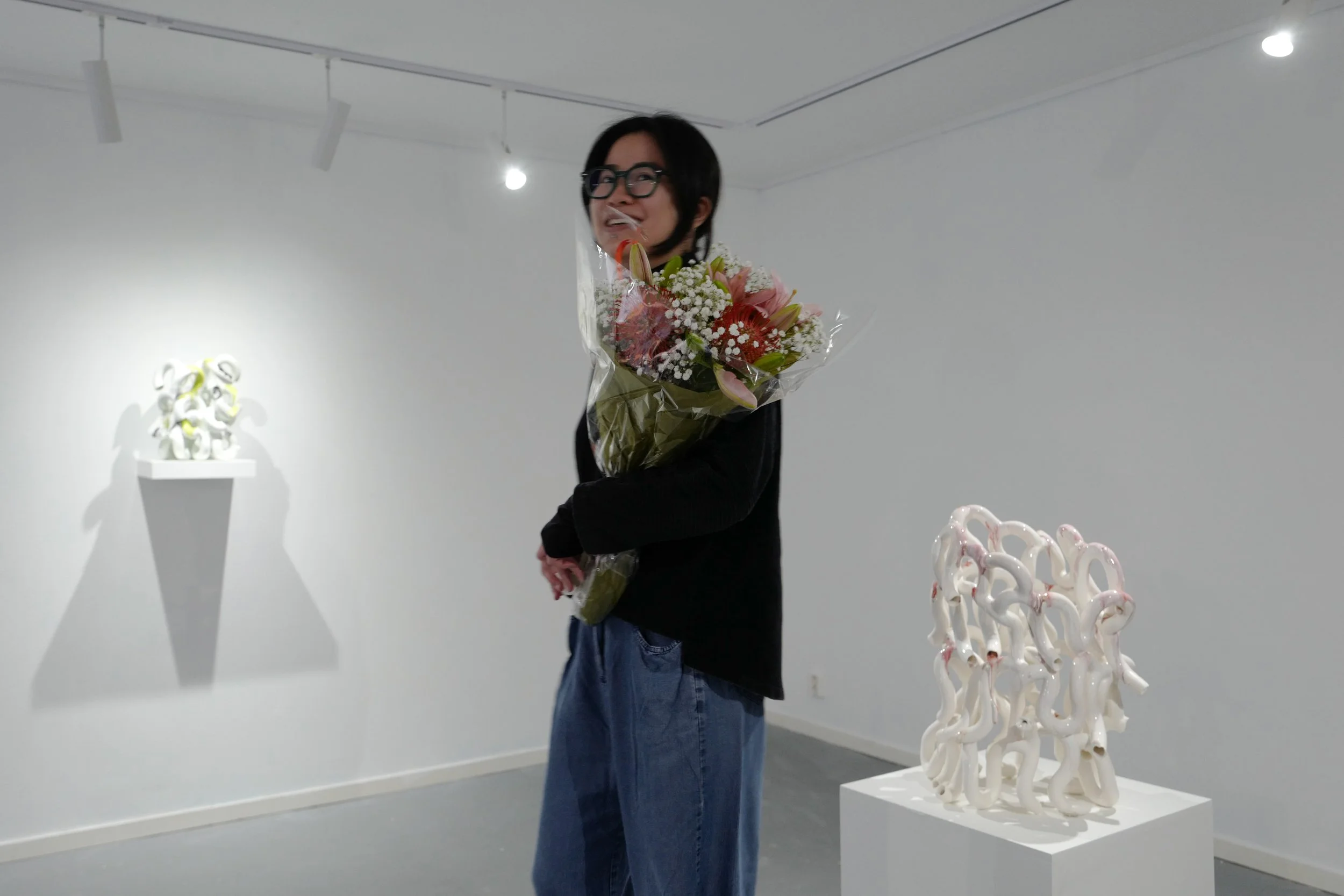
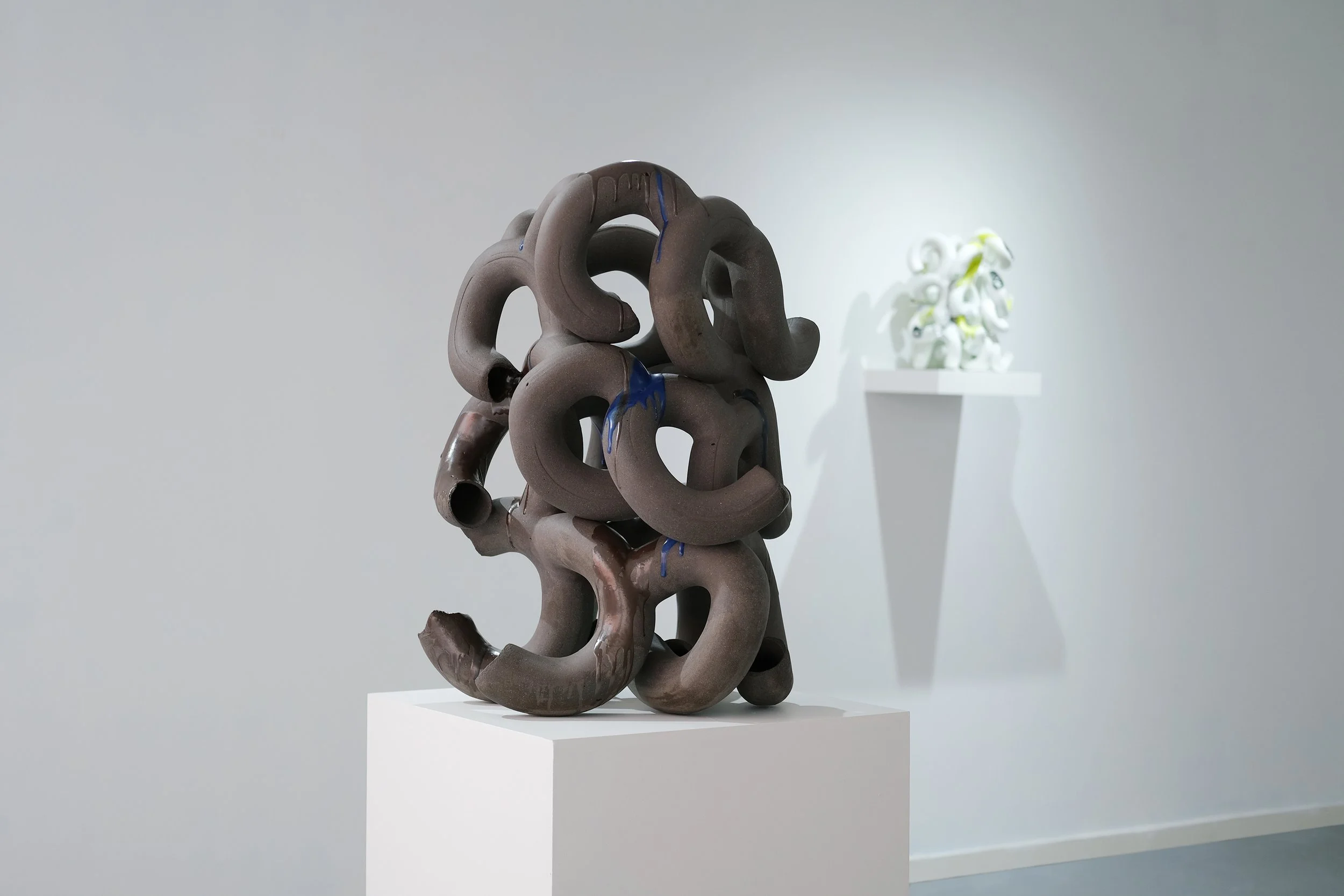
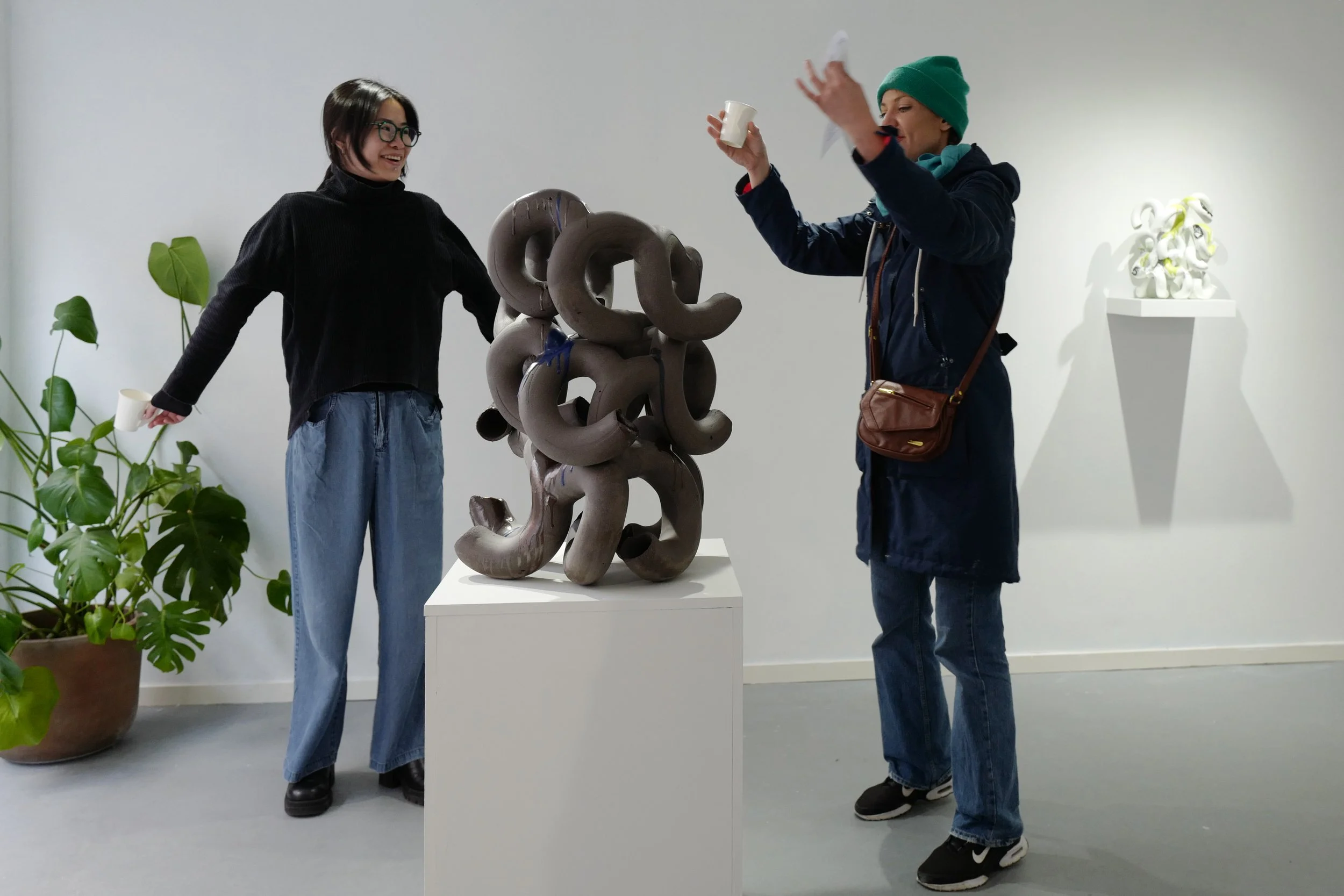
Mingshu Li's artistic practices are centred around ceramic sculptures, each imbued with a captivating interplay of form and space. Her creations are anchored in two foundational themes: "holes" and "airflow."
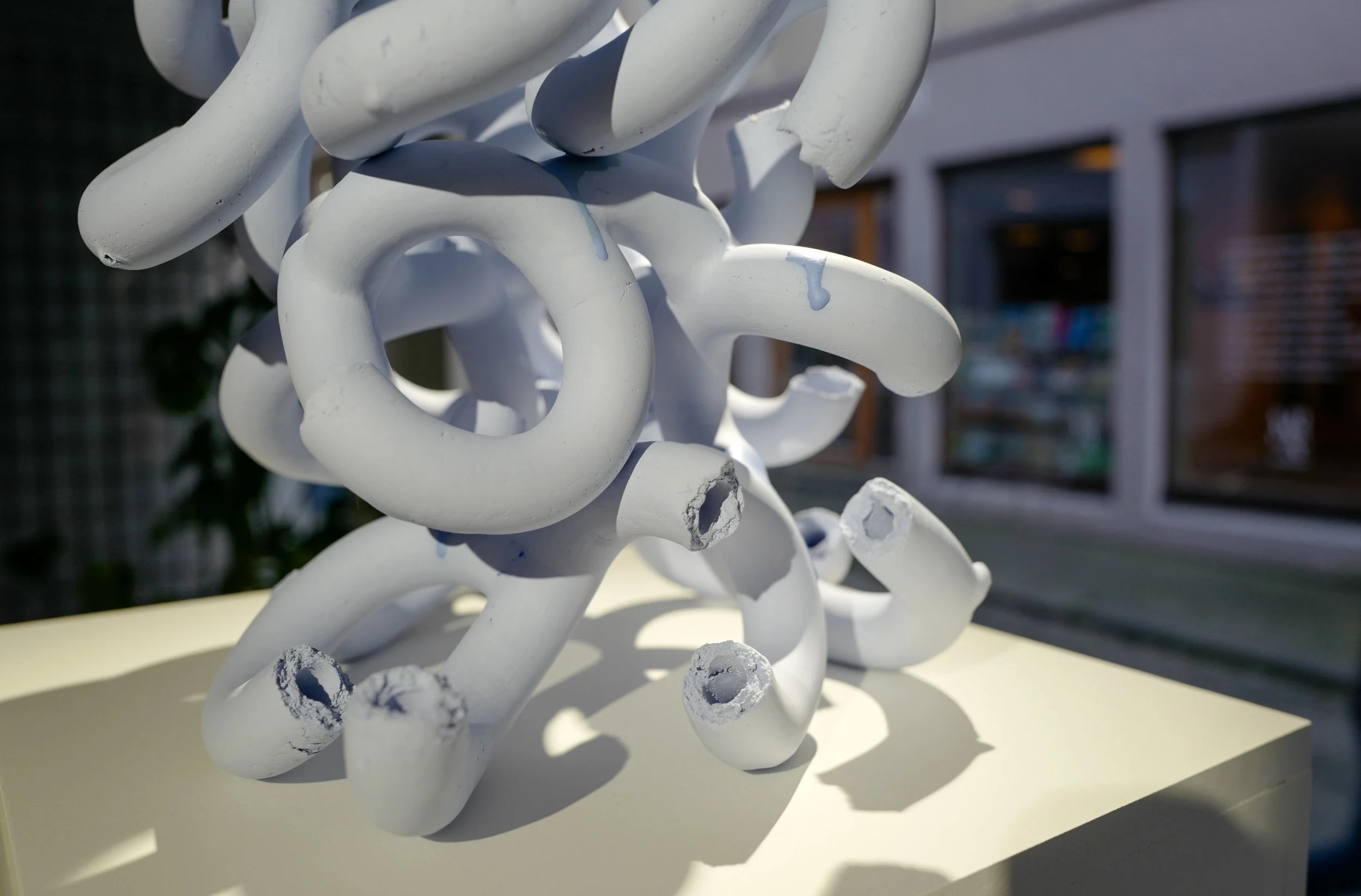
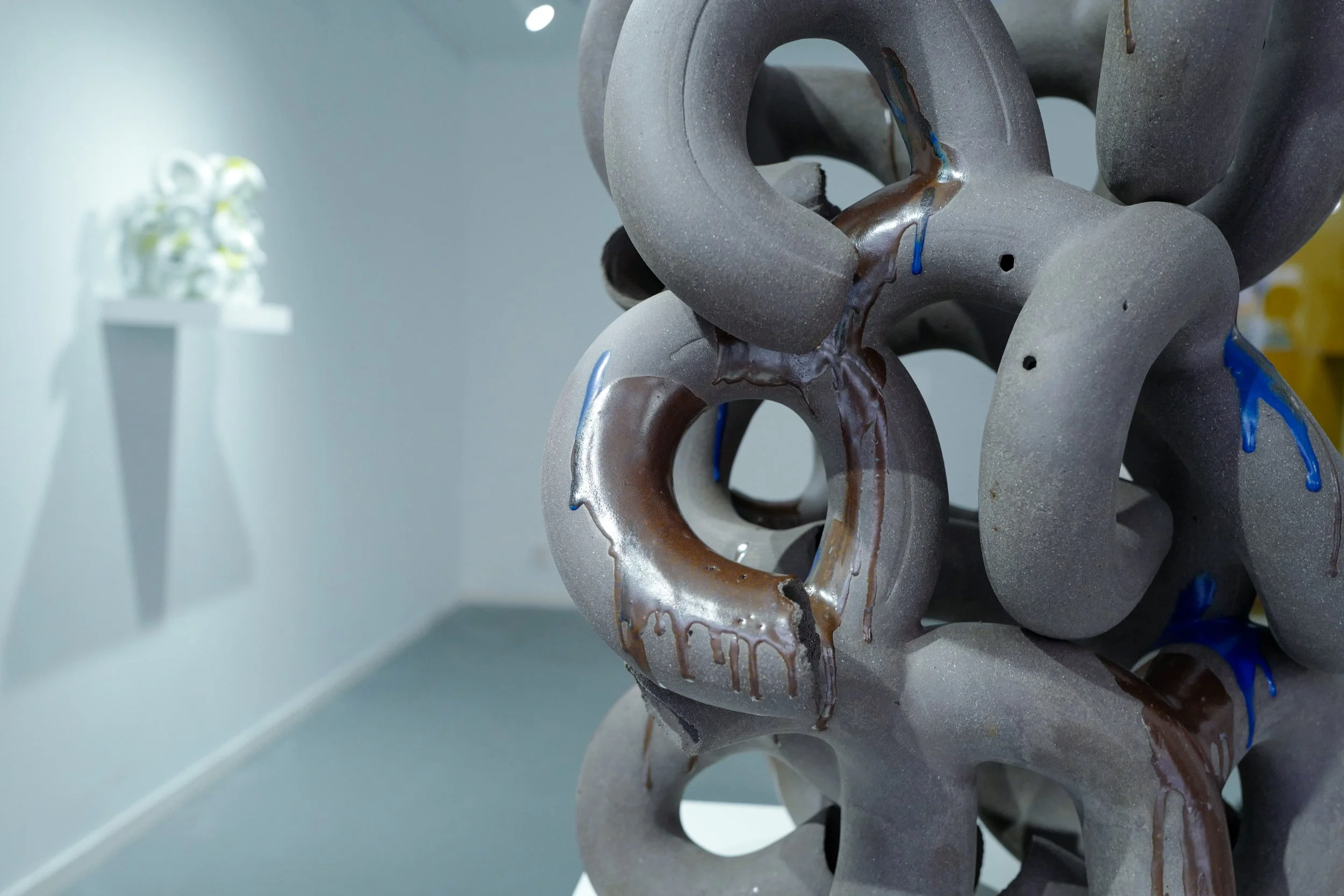
In Li's creations, "holes" hold a significance akin to the blank space in a painting or the pauses within piano compositions. Just as a solid form does, a "hole" carries its own shape and meaning, bending and stretching to expand the sculptural surface within defined limits. These holes serve as connectors, sparking conversations between the inside and outside, guiding gazes to overlooked empty spaces. In this manner, "holes" expand the scope of sculptures without relying on mass, transforming the air around the sculpture into a part of her work.
In the context of Chinese culture, "Qi" signifies the essence of air. This concept symbolises breath, energy, and the flow of vitality. Li channels these dynamic energies through "holes," conveying the very essence of "airflow." Her exploration extends beyond kilns, encompassing physical exhibition spaces where interior and exterior realms reconnect. The emptiness within a ceramic sculpture integrates with its form, as Li detects the rhythmic pulse of "Qi" in the sculptures, a shared respiration uniting everyone.
Embracing the expansive nature of ceramic materials, Mingshu Li ventures into diverse clay-shaping techniques. After encountering the clay extruder, a pivotal revelation emerged: the extruder is a tool that seamlessly merges "holes" and "airflow" in one fluid motion—extrusion. As clay meets the extruder, its reaction reveals its inherent strength. Air bubbles burst within, etching airflow tales onto the tubular form. Li shapes the tube's curvature by adjusting clay plasticity and the extruder's die kit angles. Yet, its specific form remains an enigma, a product of the intricate interplay between elements, adding an element of unpredictability to Mingshu Li's artistic process.