Cosmic, Bodily, Seeded

I was suddenly alive. It happened in the summer.
Now I have some wild crocuses (white and purple) in my garden. I wasn’t the one who planted them; the seeds were blown in from the neighbour’s garden.
I germinated in the womb of my mother, but I didn’t spread to the rest of her body; when I was born, we split in two. Sometimes it’s her great sorrow, other times it’s mine.
– Fredrik Hagen


At the door, I met Shuo on his way out. He told me Yilei was having a meeting with a young girl. I came in and met the back of 52-year-old Trine Lise, still straighter than many of the young girls. She was here to discuss her new publication, which will be published through our Kinakaal Forlag. (Working title: Player)

Trine Lise has been travelling the world and has sojourned in art capitals such as New York, London, and Berlin—not without leaving footprints. In recent years, she returned to her hometown, Bergen, with her husband and children, and continued working in peace among mountains and seas. Last year, her solo exhibition was featured not only in the cultural section of the local newspaper Bergens Tidende, but also made it onto the social news section—some individual with a discerning eye had stolen a pair of glass eyeballs from the exhibition. The Bergen police, whose case-solving rate had practically hit rock bottom in the past, somehow managed to return the eyeballs to their rightful owner in just ten days. Rumour had it the eyeballs, before being recovered, were nestled in a vase at the offender’s house—without a scratch. Trine Lise then commented: Now they have seen it all.

Right before Christmas, we visited Trine Lise’s new home for the first time. On the wall in front of the dining table was a photo by Shanghai photographer Maleonn from 20 years ago. In another version of the story—or in another parallel universe (what’s the most trendy way to put it now?)—it should have been a child-faced Yilei in the picture, as the happy ending of this long text. But in our world, it was another photo from the same series Yilei also modelled in—this time with another girl stuck in the same glass greenhouse brimming with blossoms.


Skin: The outermost layer of skin always falls off, as if we are constantly getting closer to the true innermost part of the body.
– Fredrik Hagen


Though it has long moved away from the city centre, Gyldenpris Art Centre was still well-visited, even in such blizzarding weather. Daniela was clearly the shining star in the first group show this year, titled Glitch in the Forest. Five years ago, in the pop-up exhibition curated by Canadian curator Michael Laundry at our Space—which lasted only three evenings—those gash-like, unsettlingly beautiful works were still lying timidly in vitrines borrowed from KODE Museum. Now, the sculptures with that same eerie quality were poised in the heart of the exhibition hall with graceful gravitas, receiving the admiration of visitors from the entrance.

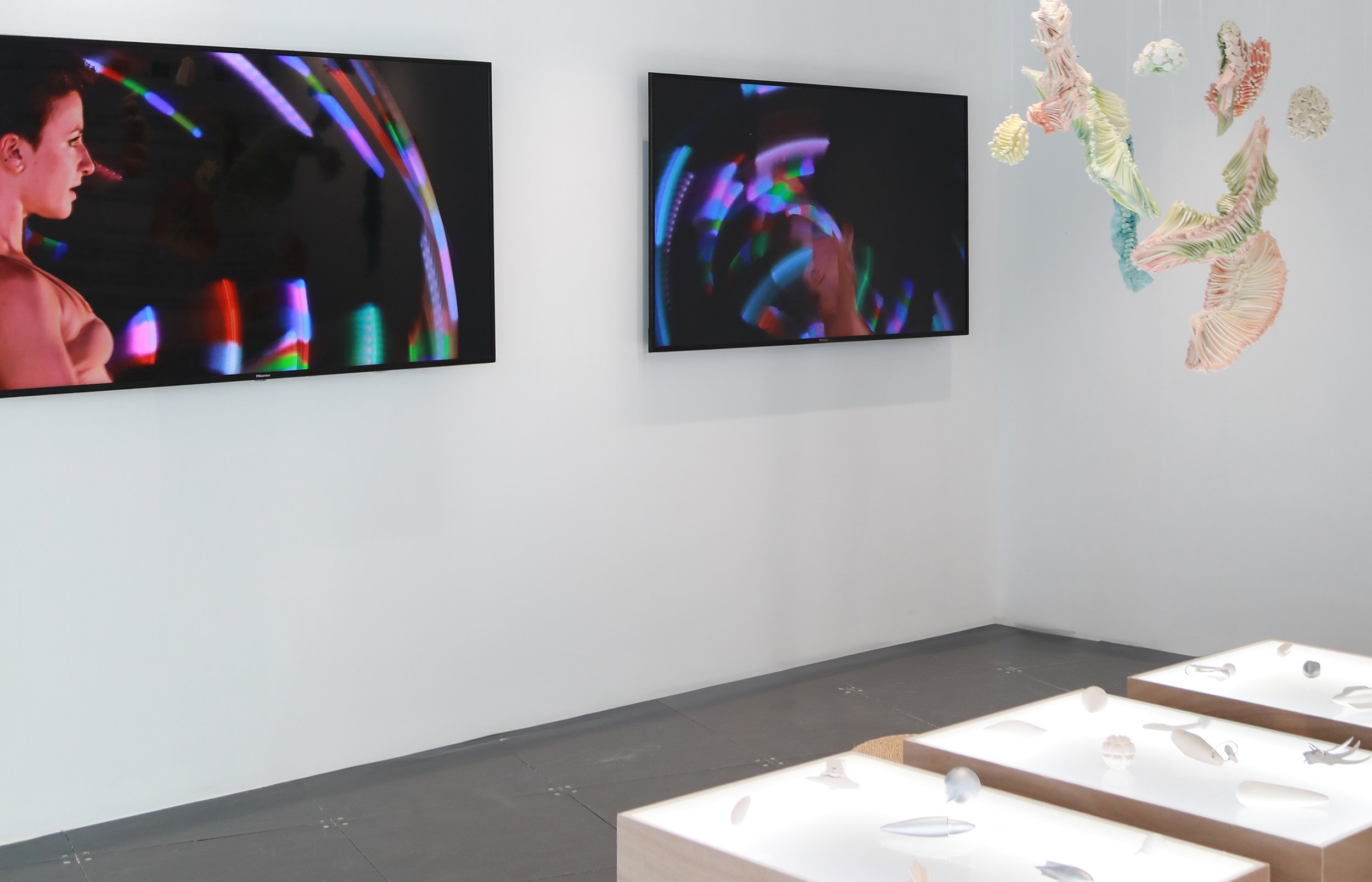
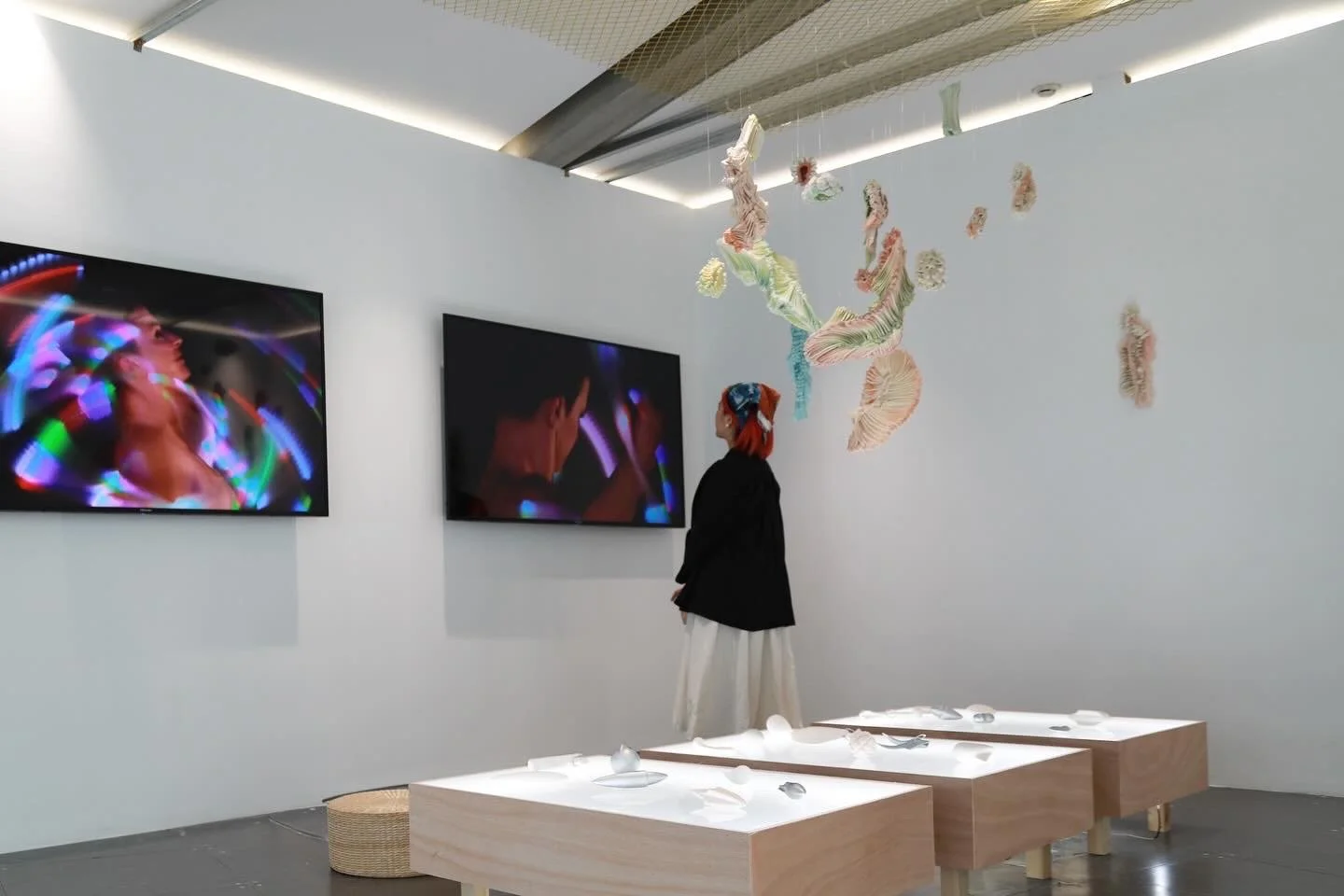
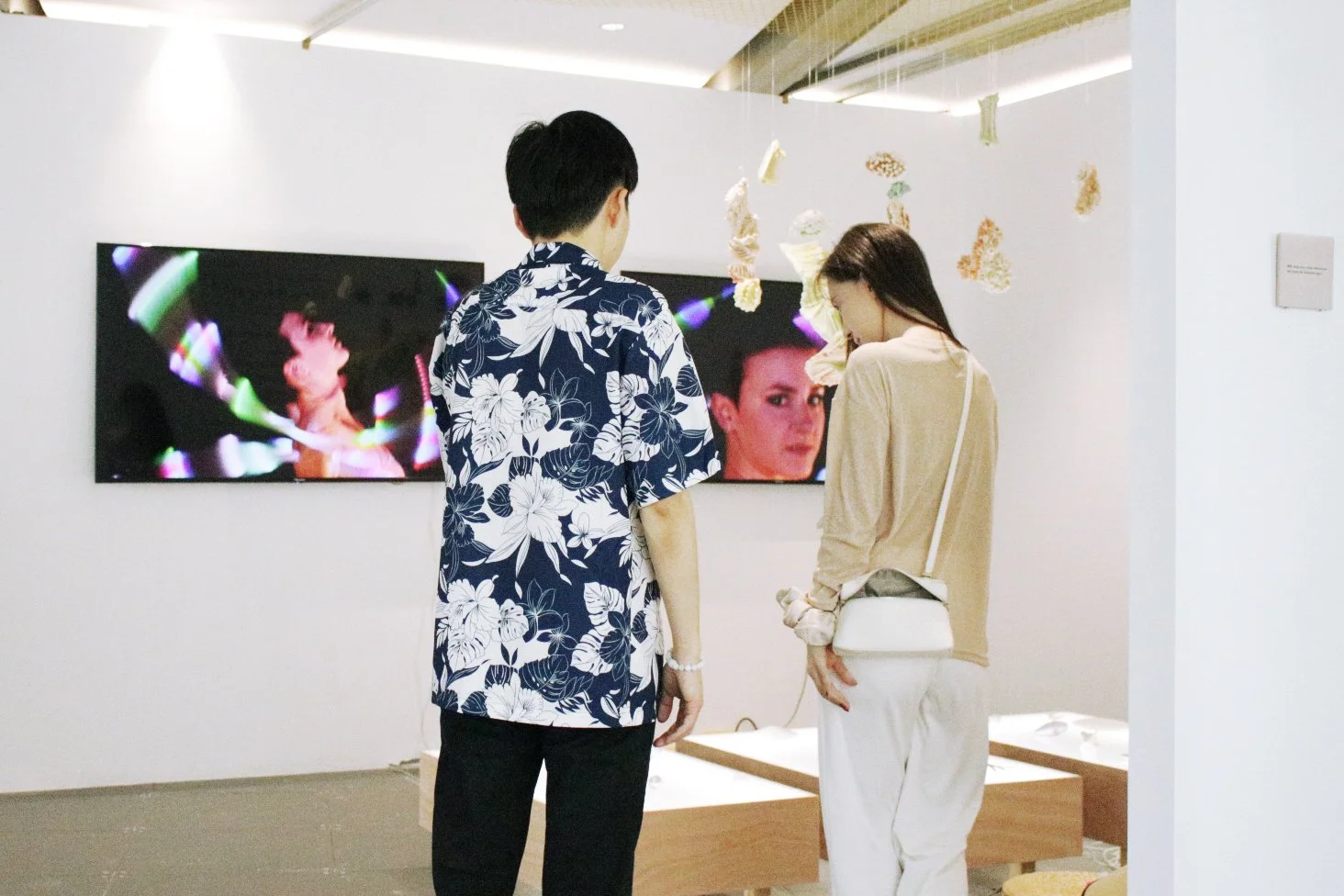
With the crisp collision of ceramic shards, one piece in the shape of a cobra—scaled and horned—suddenly came alive over the shoulder of Japanese dance artist Yohei Hamada. As the opening performance, Yohei explored every possible way to relate his body to the piece under the audience’s scrutiny. The sound of the ceramic shards became the background music: brittle, yet unshatterable. Gradually, the sculpture became a part of him—a fifth limb—as if separating them would be a drastically painful operation.

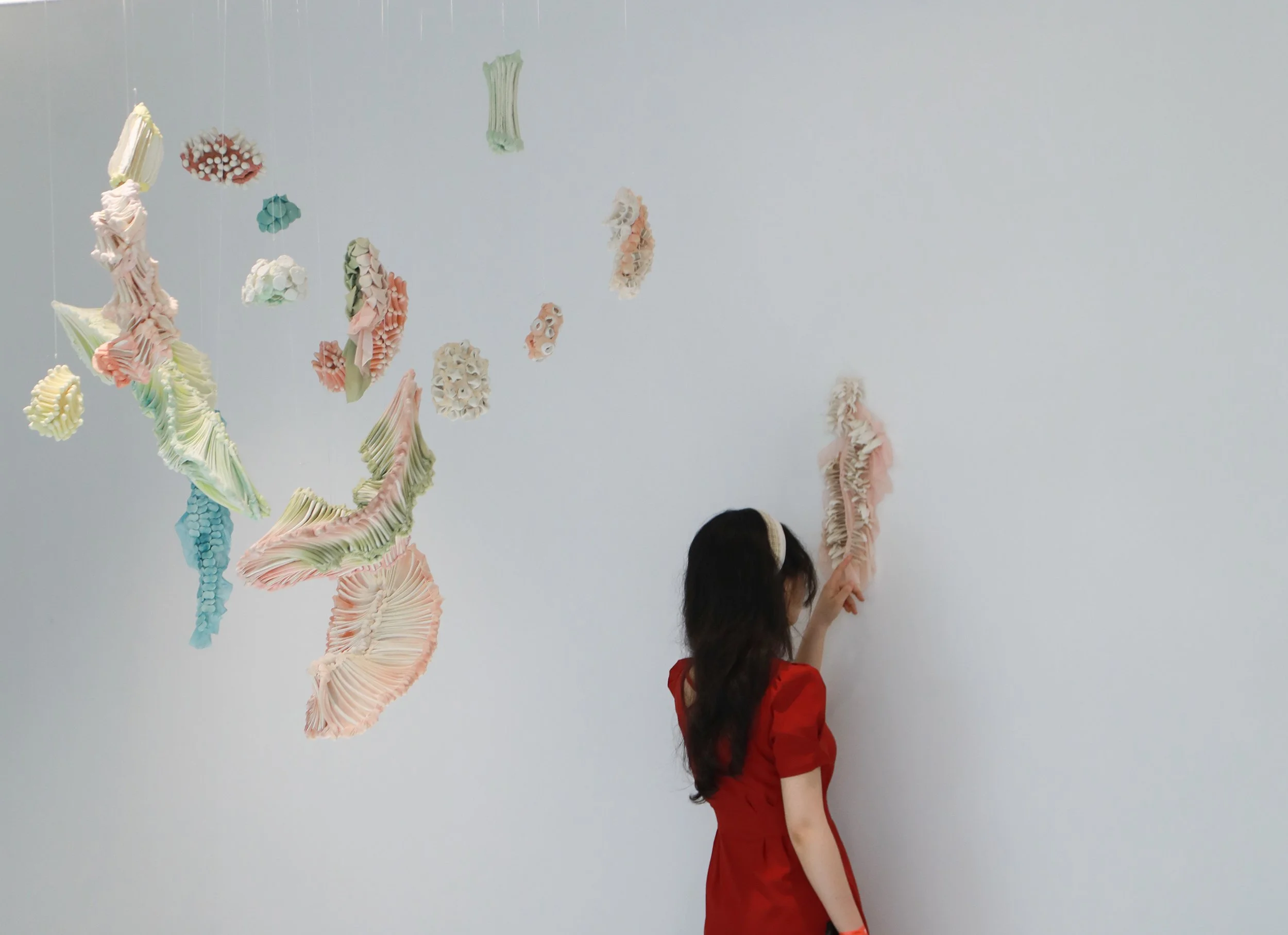
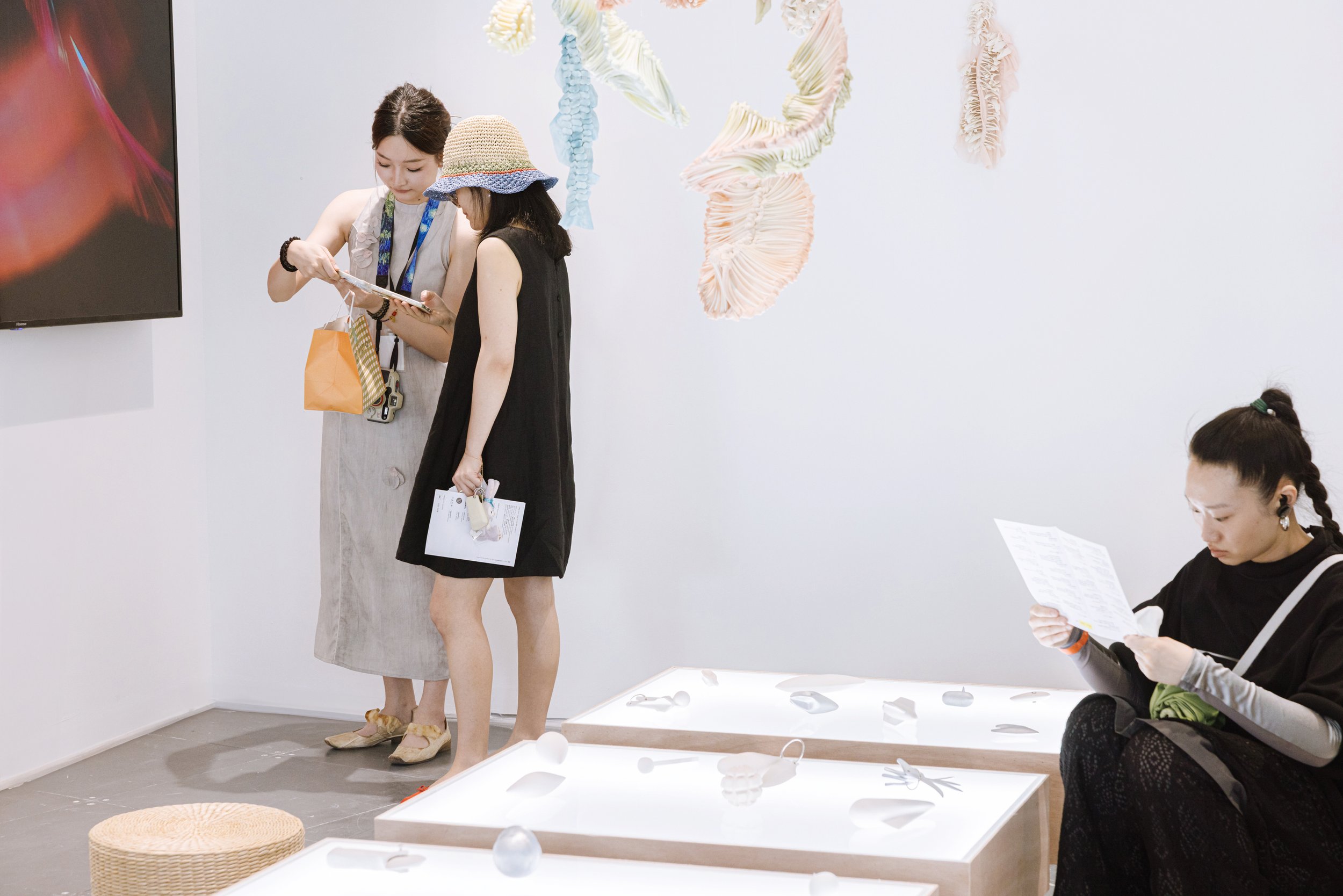
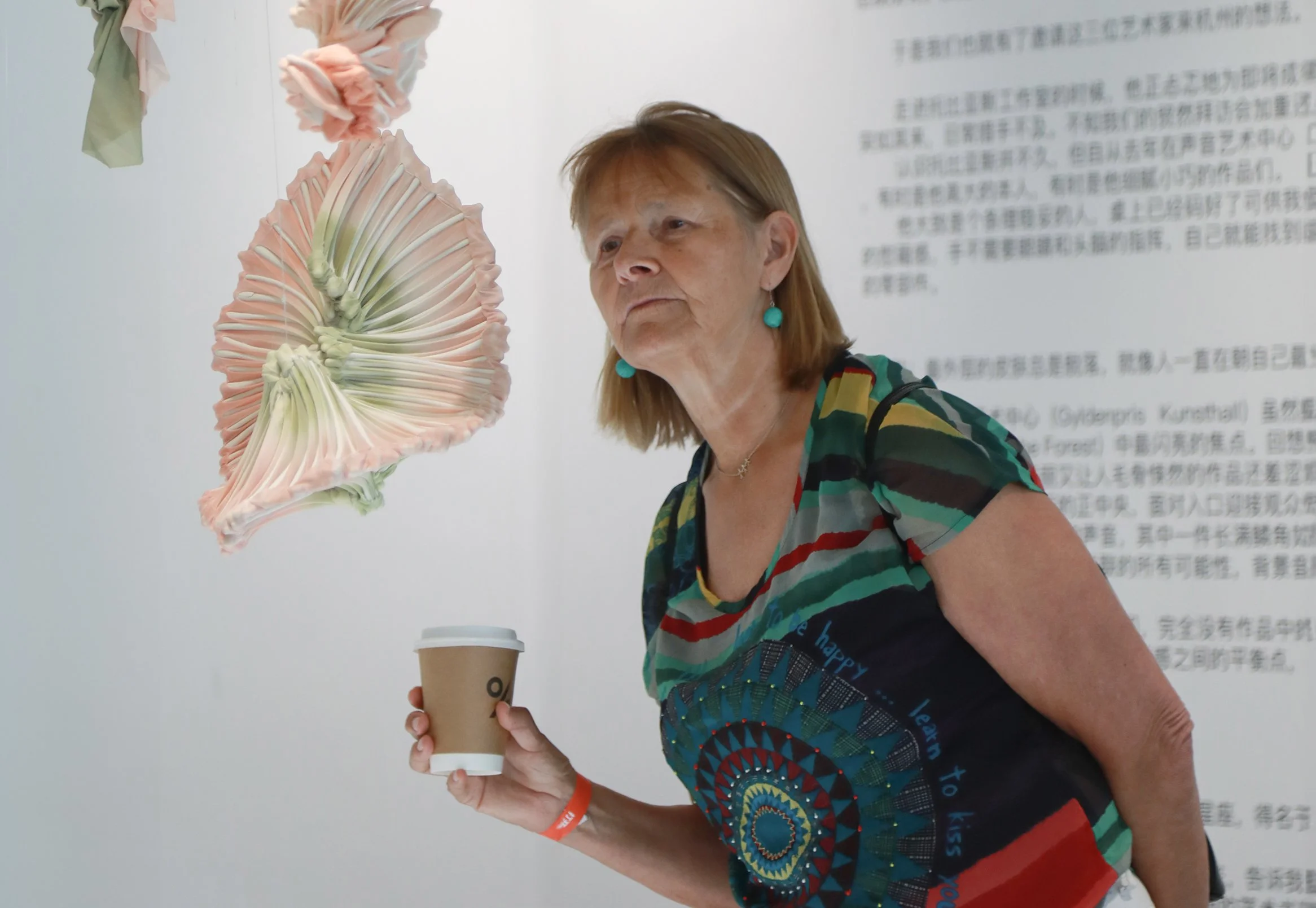
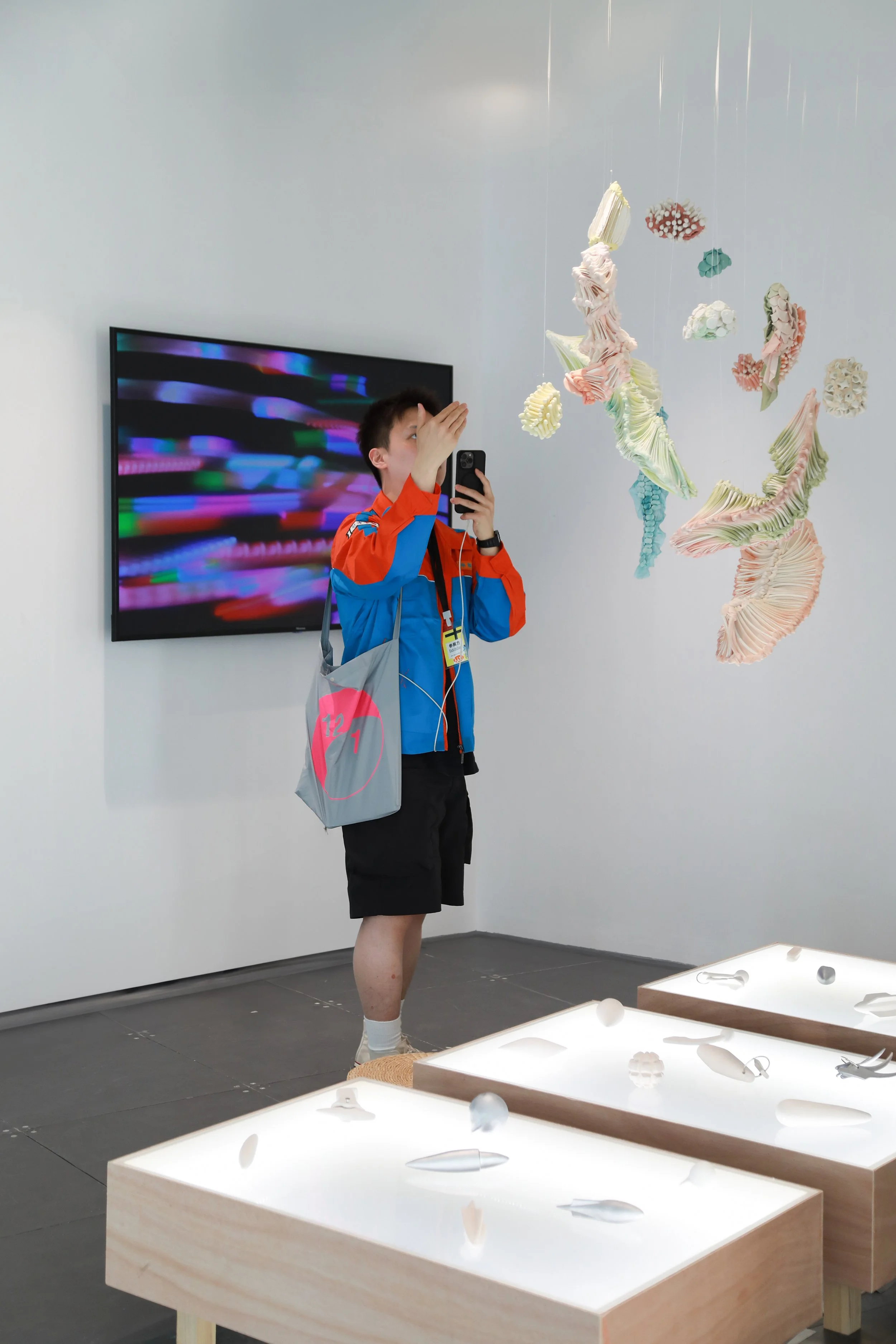
Daniela, in the studio, on the other hand, was shy and peaceful, with little of the uncanny quality that the works bring about. However, she was honest about her curiosity and fascination with the inner structure of the body since childhood. She has ever since been striving to reinvent a balance between what is repulsive and what is beautiful, by incorporating soft textiles and jagged ceramic shards, to blend the sensations of seeing and touching, and to cure—once and for all—everyone’s trypophobia.


…from the stars we resemble a star,
in other skies our sun is a part of constellations that have got names after animals we cannot imagine.
– Fredrik Hagen


Therefore, the idea of curating an exhibition with three Norwegian artists under the Open M Art Fair came to us quite out of the blue. The seed of the thought, following the spring drizzle of Bergen, entered our minds and rooted, germinated.

Tobias was packing for his residency project in China when we pushed open the door to his studio. The slight fidget in the air reminded me of the days before the first time I came to Bergen – much anticipated, but it still felt abrupt when the time arrived, constantly on edge. I don’t know whether our presence would aggravate or relieve this big boy from Northern Norway of his anxiety.

It wasn’t long since we first met Tobias by chance at Lydgalleriet (Exhibition Platform for Sound Art in Bergen) – he was helping another artist set up her exhibition. After that, we ran into him on many different occasions – sometimes himself, with his impressively tall build; sometimes his sensitivity, represented by his delicate work.

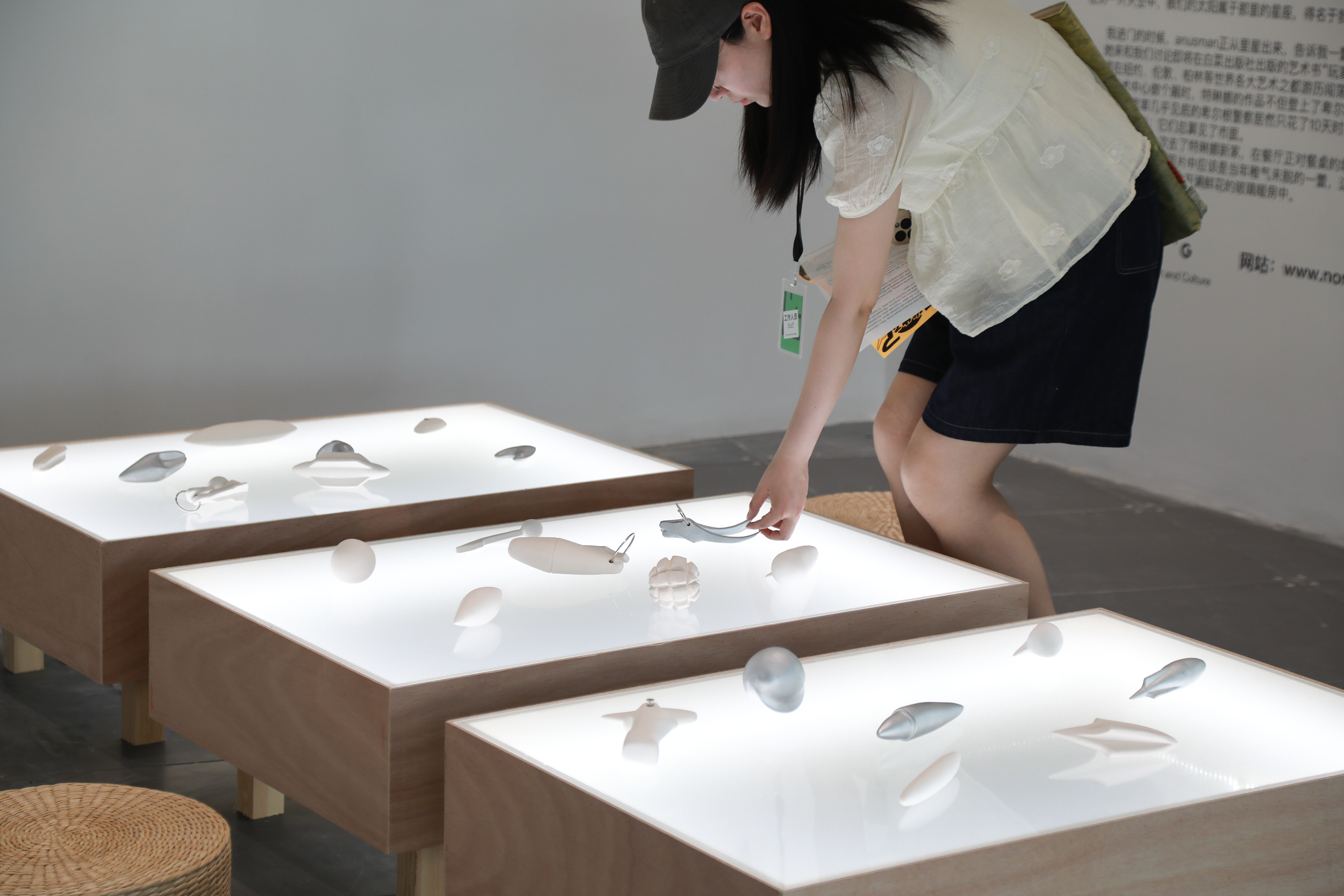
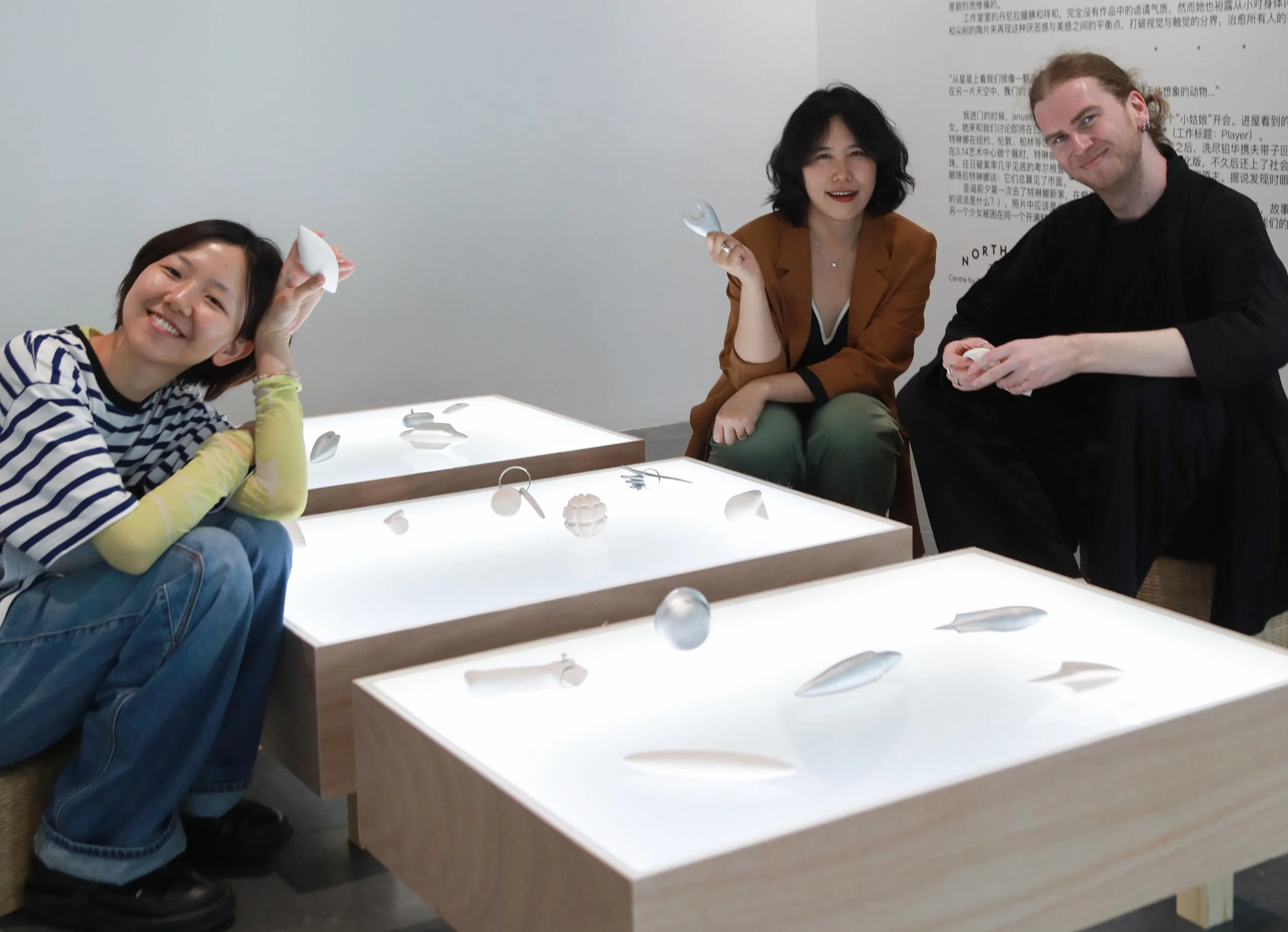
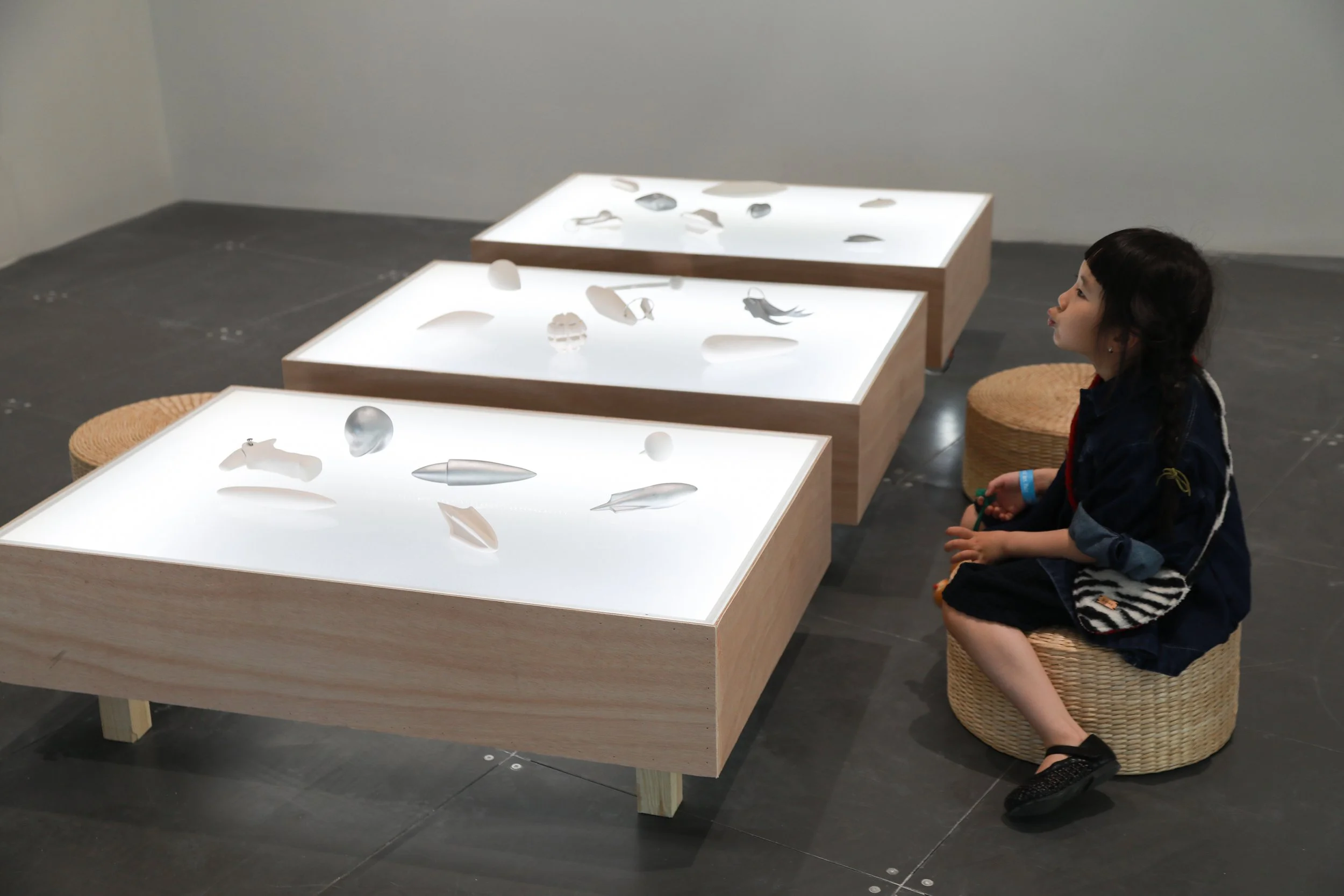
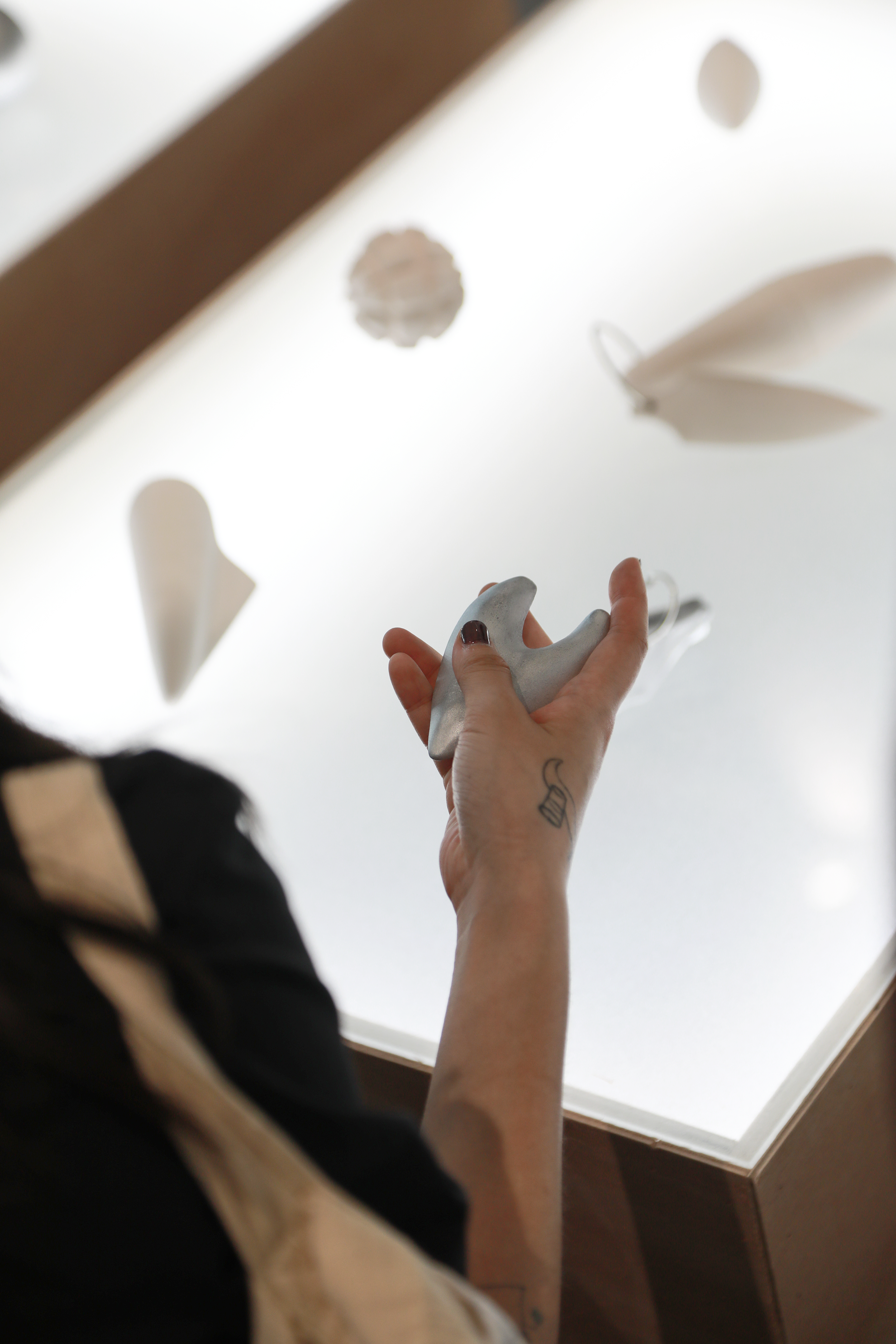
He must be very organised: the sculptures for us to choose from were already knolled on the table when we entered the room – seeds like weapons, or weapons like seeds. Every piece gave a unique sense of solace in the palm. The hand didn’t need to receive orders from the eyes or the brain to find the most comfortable and apt angle – like caressing a long-lost friend, or a toy reunited with a part missing since childhood.