From the Thousand-Island Nation of Norway to Taiwan: Northing x Hiro Hiro Art Space x Taipei Art Book Fair 10th Anniversary Special Exhibition One Thousand and One Islands — From materials to sensory experience
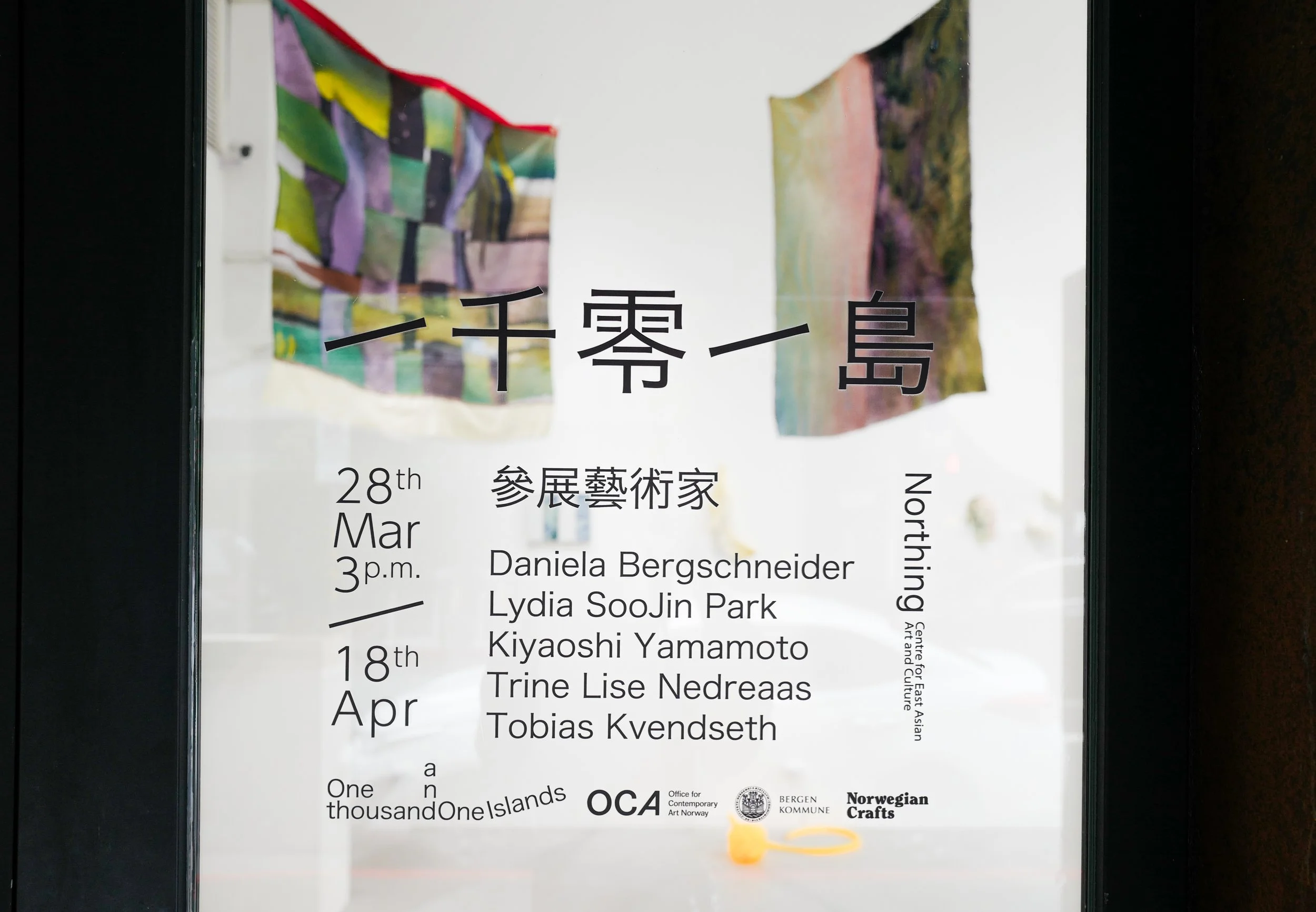
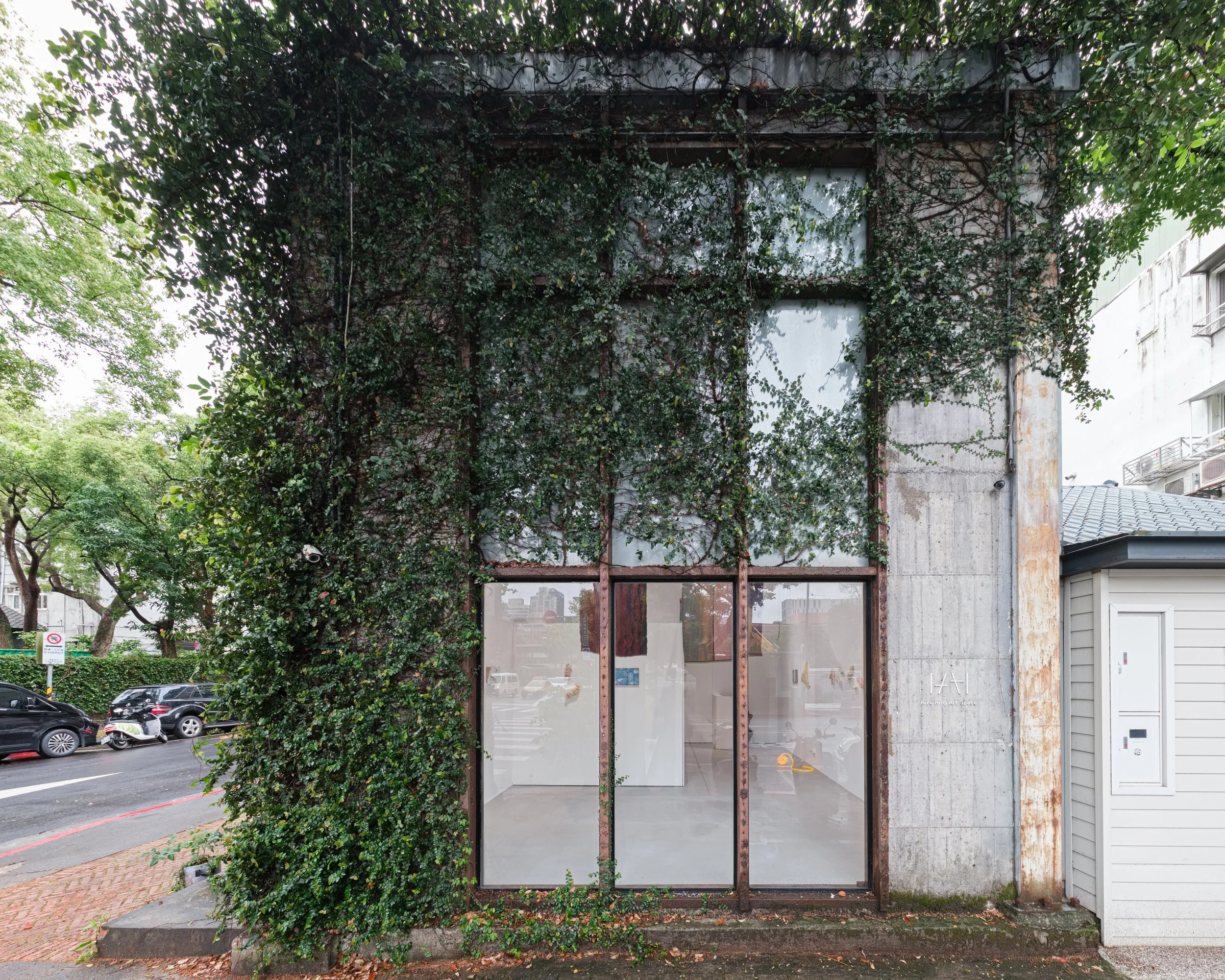
When the distant Nordic “nation of a thousand islands”, Norway, crosses geographical borders to meet Taiwan, what kind of artistic spark might emerge? As Taiwan’s landmark art-book fair Taipei Art Book Fair (TABF) celebrates its tenth anniversary, this year it has invited the Norway-based cross-cultural art institution Northing to jointly initiate the curatorial project One Thousand and One Islands. During the exhibition, five interdisciplinary and cross-cultural artists—who have been making remarkable impressions on the Nordic contemporary art stage—will be presented to Taiwanese audiences, offering a fleeting yet intense glimpse of sensory tension and cultural reflection.
“To achieve true diversity, including is not enough. We have to use our imagination to create new ways of coexistence.” This remark by Ravi Agarwal, curator of the 2025 Bergen Assembly, became a key inspiration for One Thousand and One Islands. The project does not simply “transport” artworks from Norway to Taiwan; rather, it proposes a vivid cross-cultural encounter of perception. The title One Thousand and One Islands evokes the gathering of artistic energies across overlapping archipelagos, while also suggesting an ongoing cultural dialogue—suspended in anticipation, like the stories of One Thousand and One Nights, never quite reaching an end.
Kiyoshi Yamamoto ——
No matter where I’m from, I’m not your exotic.
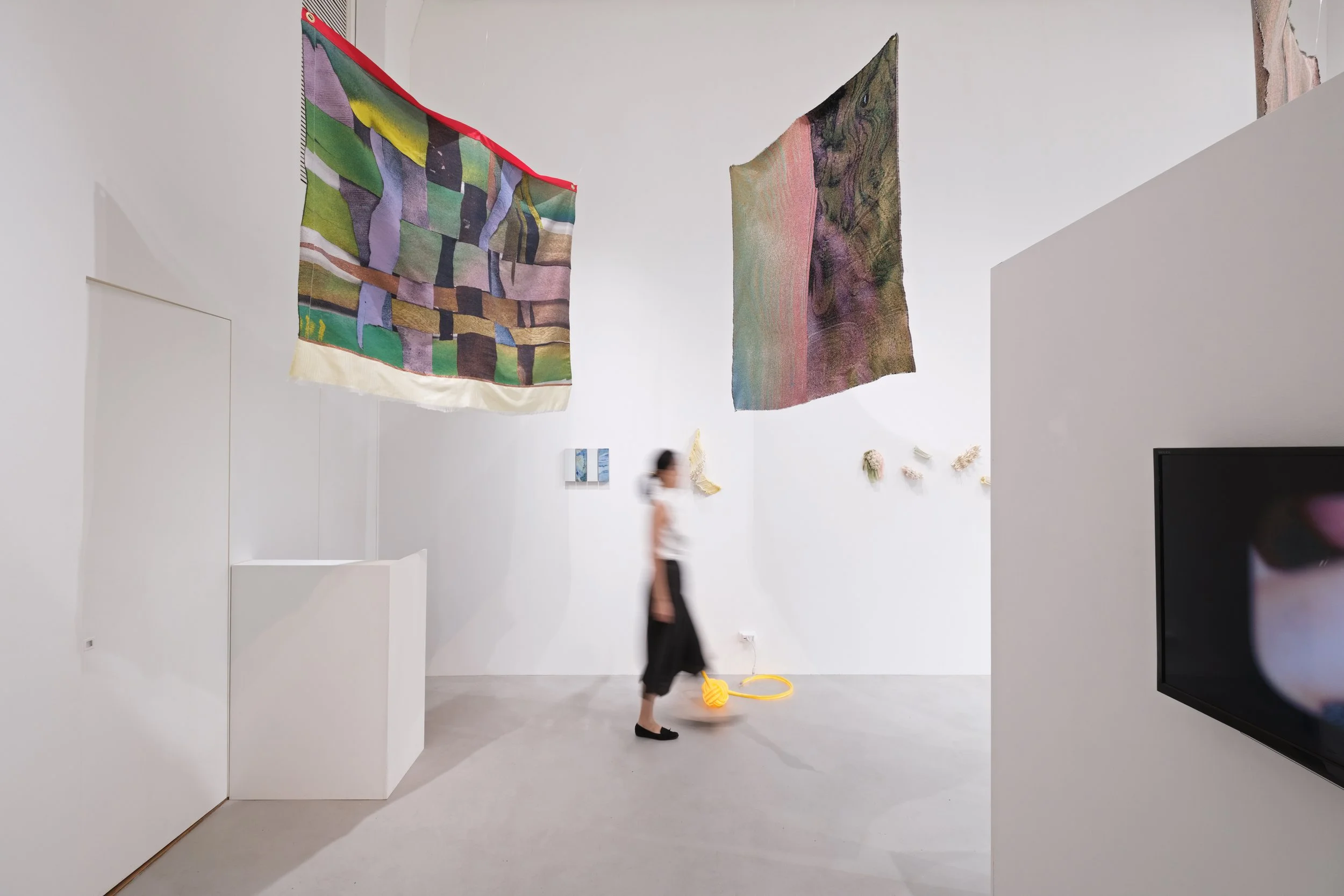
Born in Brazil, shaped by Japanese heritage, and ultimately rooted in Norway, Kiyoshi Yamamoto’s practice is a flamboyant rebuttal to the label of “exoticism”. Refusing to be categorised as a compliant cultural specimen, he instead deploys intensely saturated dyes and the tension of textiles to weave a form of political rhetoric with palpable weight. The vibrant fabrics capture the heat of social conflicts, transforming complex negotiations of identity into powerful sensory encounters that compel viewers to confront the cultural wounds and struggles for power concealed beneath their dazzling surfaces.
Yamamoto has held numerous solo exhibitions, including at Buskerud Art Center, Heimdal Kunstforening, Norske Grafikere, and Soft Gallery. His works are held in several major collections, including Nordenfjeldske Museum of Decorative Arts in Trondheim, KODE Art Museums of Bergen, and the Royal Norwegian Embassy in Brazil.
Lydia Soojin Park ——
The indelible fragility, layers after layers.
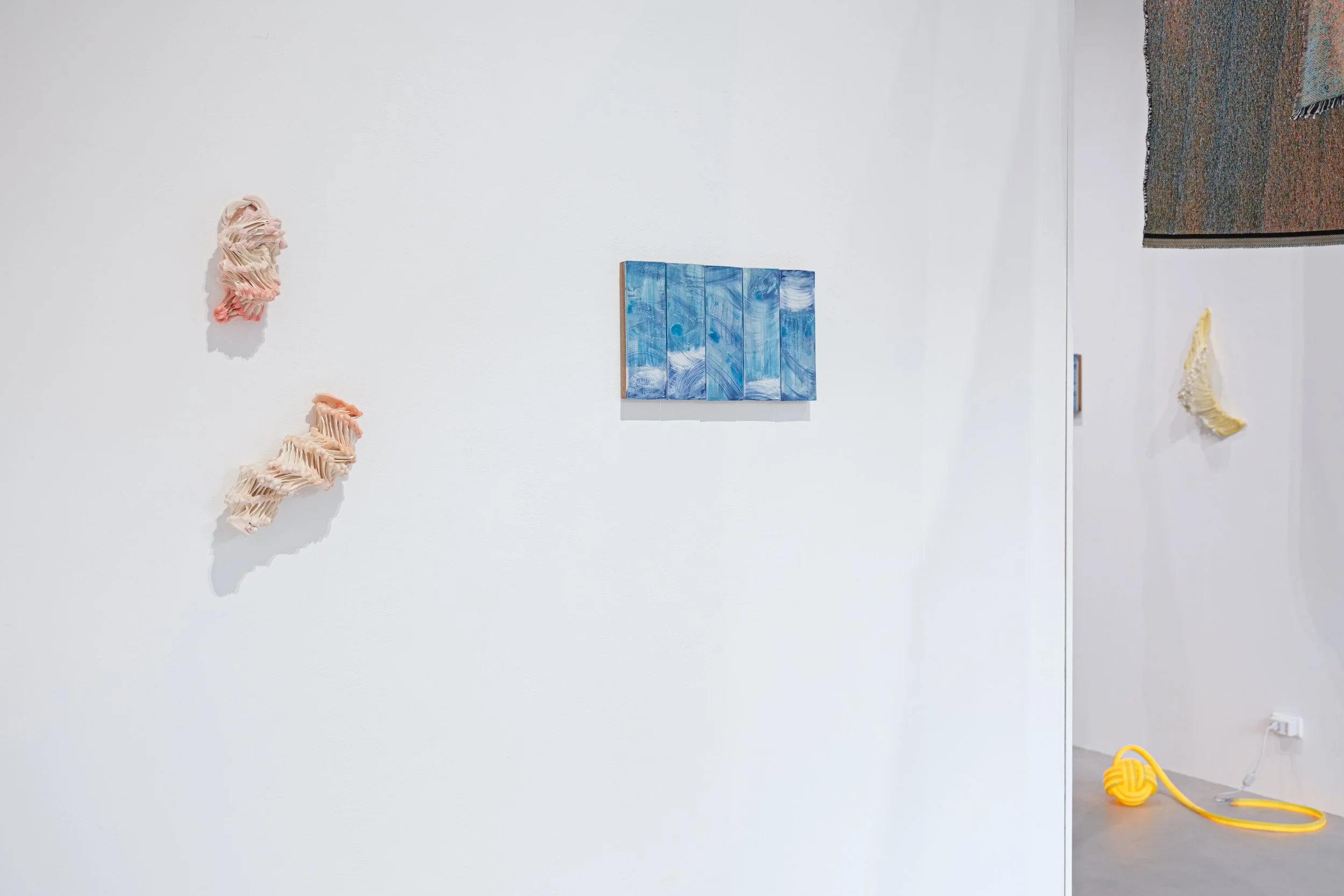
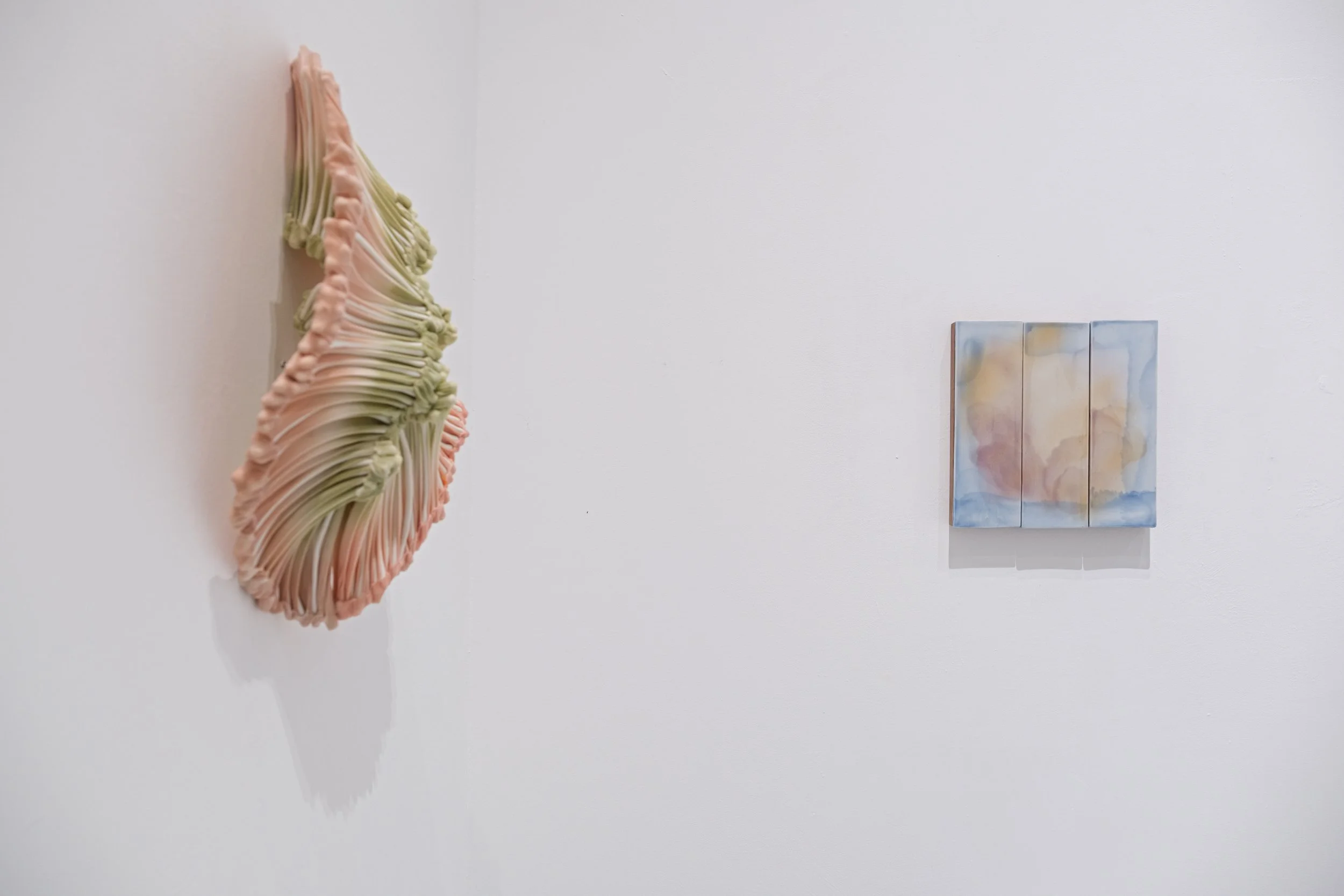
The ceramics of Lydia Soojin Park record the sedimentation of time and emotion. Works such as When the Sky Breathes, The Water Listens emerge from experimental firings at both high and low temperatures; each firing produces unpredictable reactions, allowing the artist to explore and blur the boundary between painting and ceramic glaze. Cobalt-blue pigments drift across porcelain surfaces like the faint light where the Norwegian sky meets the sea.
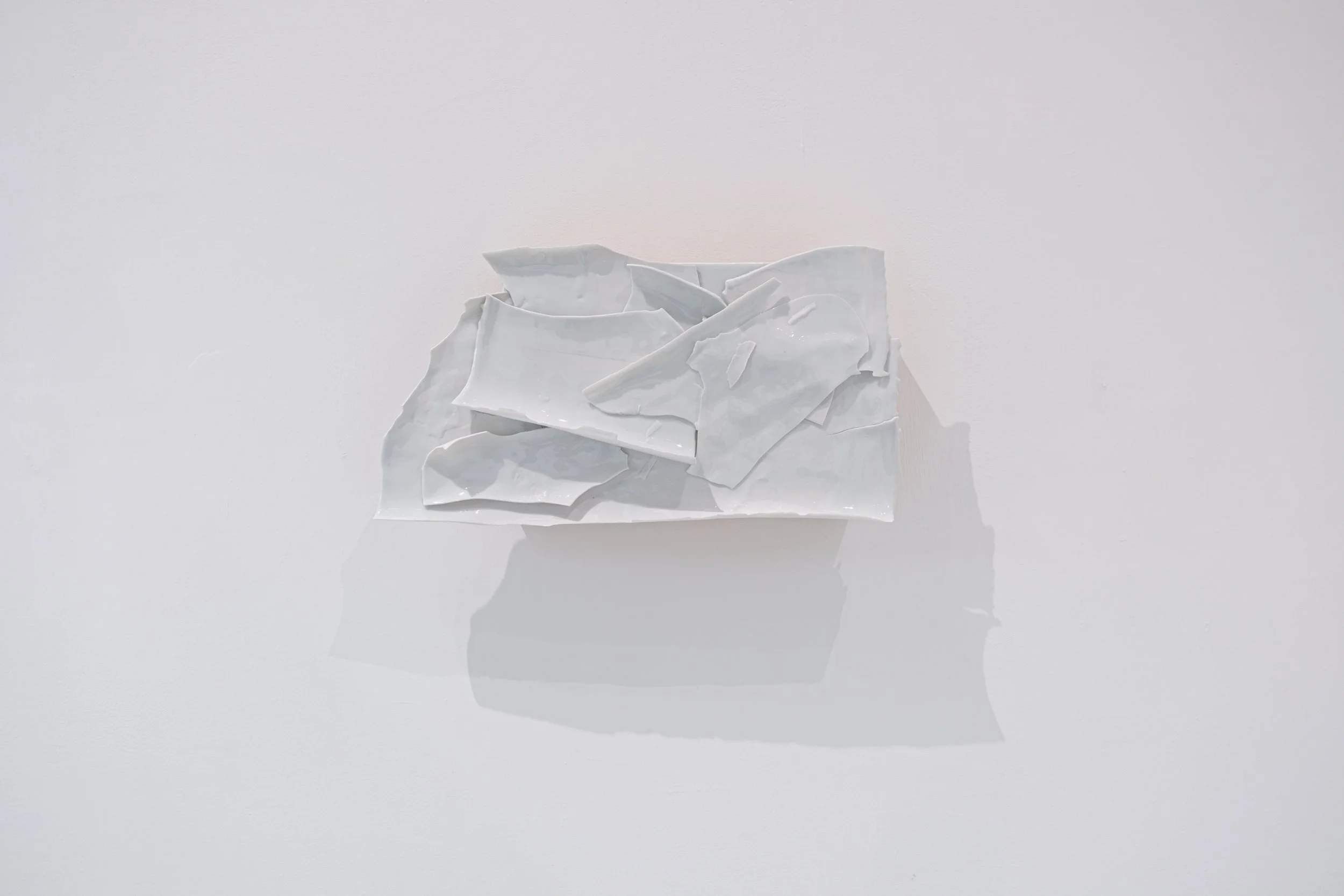
In Temporal Expansion, the artist recombines discarded porcelain shards with factory clay, refiring them into a sculptural form resembling an archive of time itself. Meanwhile, the ambiguous vessel-like shapes in Small Painting hint at the relativity of perception—what we see is not necessarily what we receive. Each work becomes a specimen of contemplation, where air, water, and light condense into a cultural landscape that lingers in memory.
Park’s works are held in major collections including the National Museum of Norway, KODE Art Museums of Bergen, the Norwegian Ministry of Foreign Affairs, the City of Oslo, and Nordenfjeldske Museum of Decorative Arts in Trondheim. In 2024 she received the Talente Prize – Meister der Zukunft in Munich.
Daniela Bergschneider ——
Searching for the boundary between beauty and repulsion with porcelain and textile.
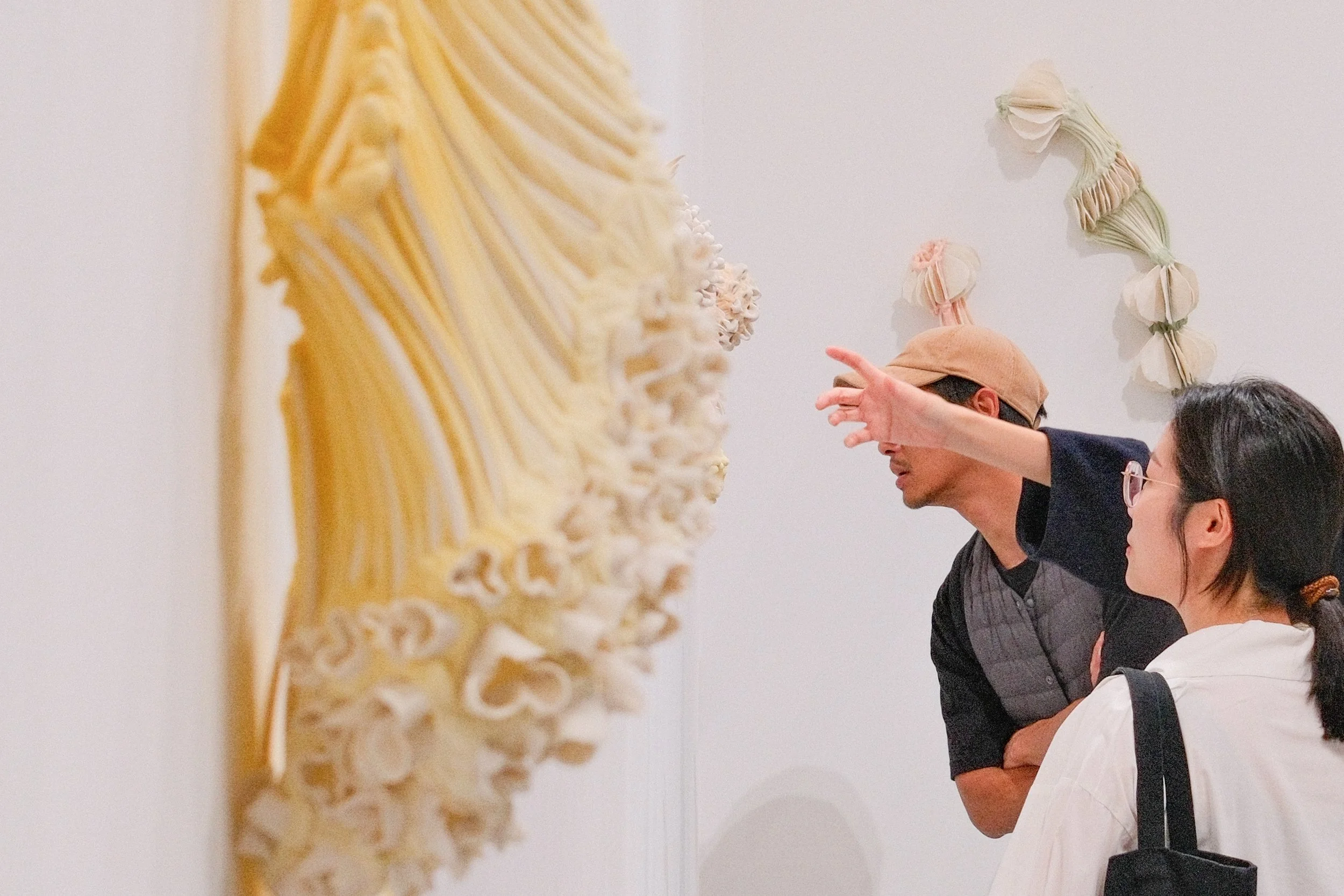
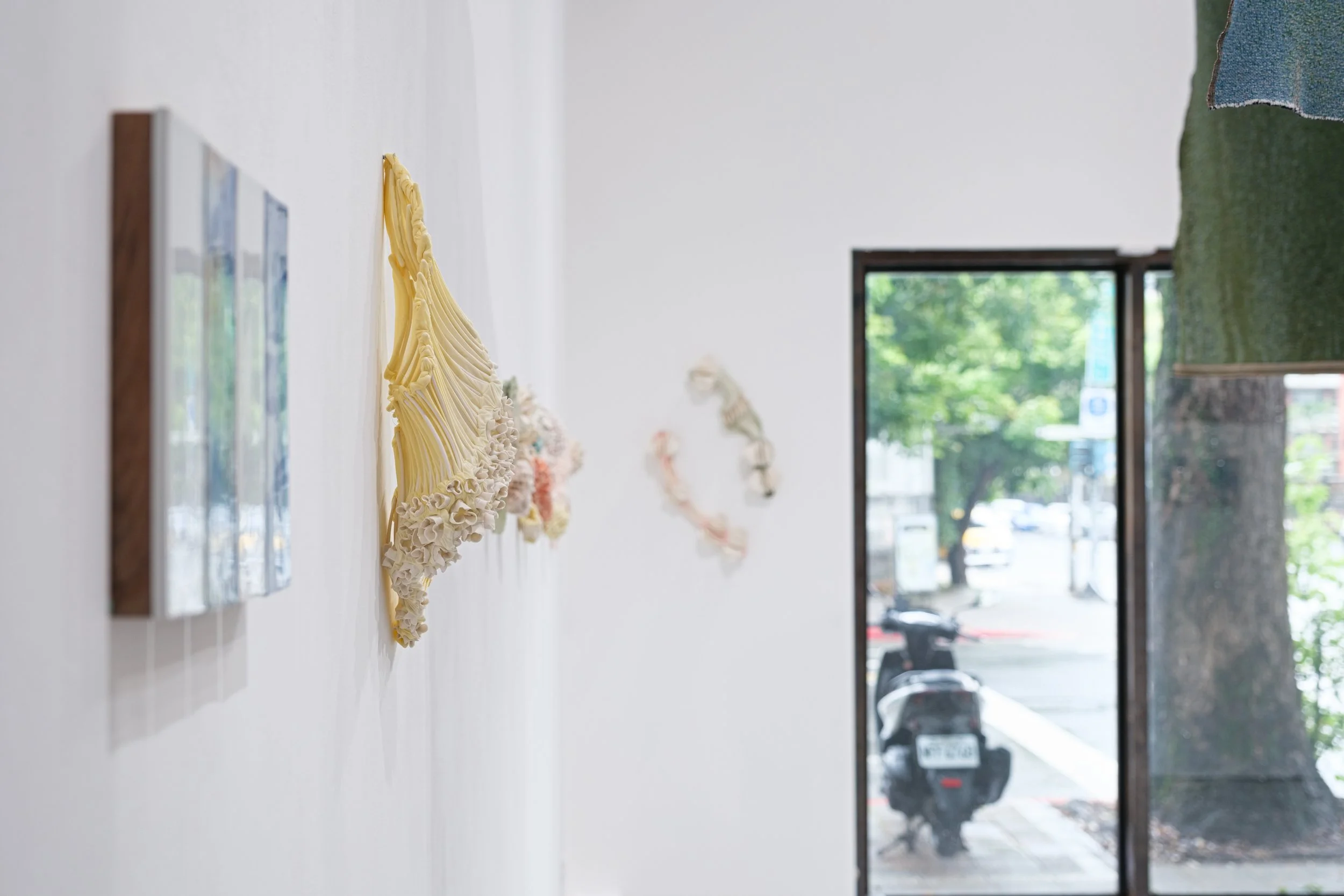
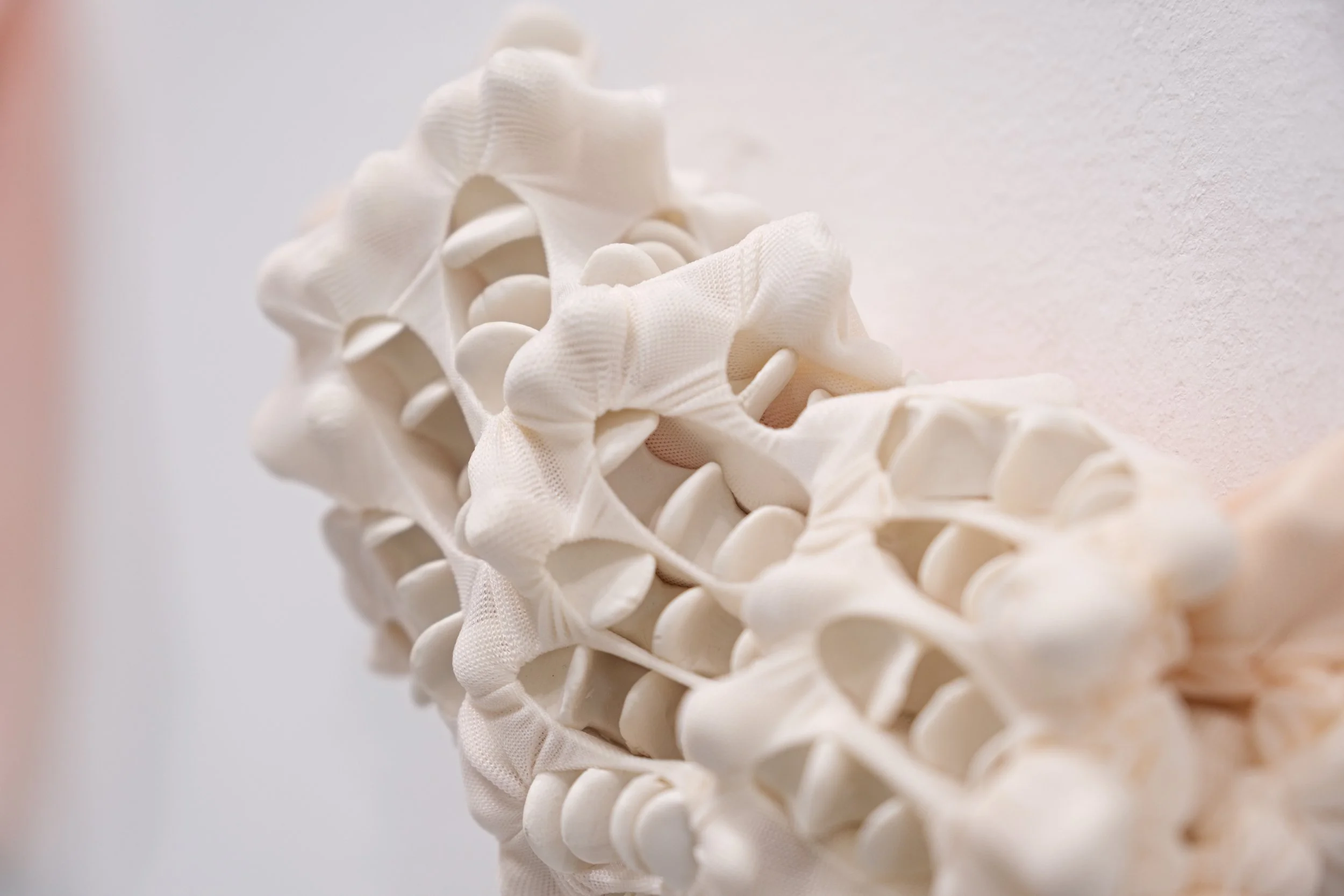
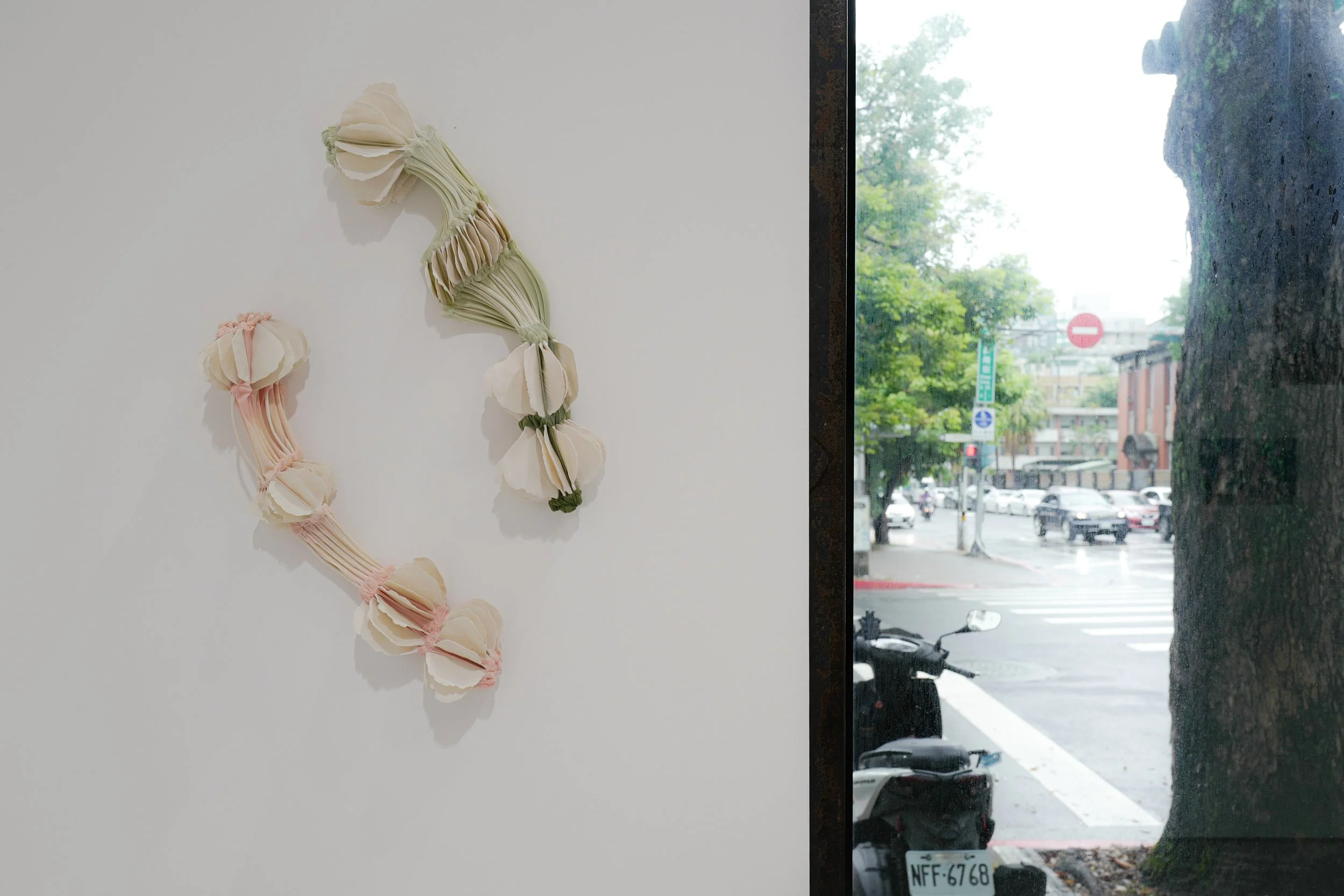
Daniela Bergschneider is adept at unsettling material perception, creating works that evoke a powerful sense of the uncanny. By stitching together cold, sharp porcelain fragments with soft, wrinkled textiles, she constructs ambiguous forms that seem to hover between organism and object, between imitation of nature and artificial experiment.
These works possess tactile qualities reminiscent of skin, organs, or deep-sea creatures, stirring a sensation that feels strangely familiar yet impossible to name. Bergschneider deliberately dissolves the boundary between “beauty” and “repulsion”, allowing the two to coexist in unstable equilibrium. When viewers are drawn closer by the works’ intricate construction, yet instinctively recoil from their fleshy, invasive organic forms, this moment of contradiction becomes precisely the tactile reflection the artist intends: our cognitive boundaries loosen, and within the fissure between illusion and reality lies the possibility of redefining what we consider real.
Bergschneider’s works are held in major collections including the National Museumof Norway, KODE Art Museums of Bergen, Nordenfjeldske Museum of Decorative Arts in TrondheimEquinor Art Programme,Textile and Clothing Association of Portugal, City of Gothenburg,Guldagergaard Ceramic Research Center in Denmark.
Tobias Kvendseth ——
To fence off the tenderness of a bullet with the vulnerable armour.
The works of Tobias Kvendseth operate as elegant visual deceptions. His practice traces the psychological aftershocks produced by social structures and cultural traditions—shame, agitation, and obedience.
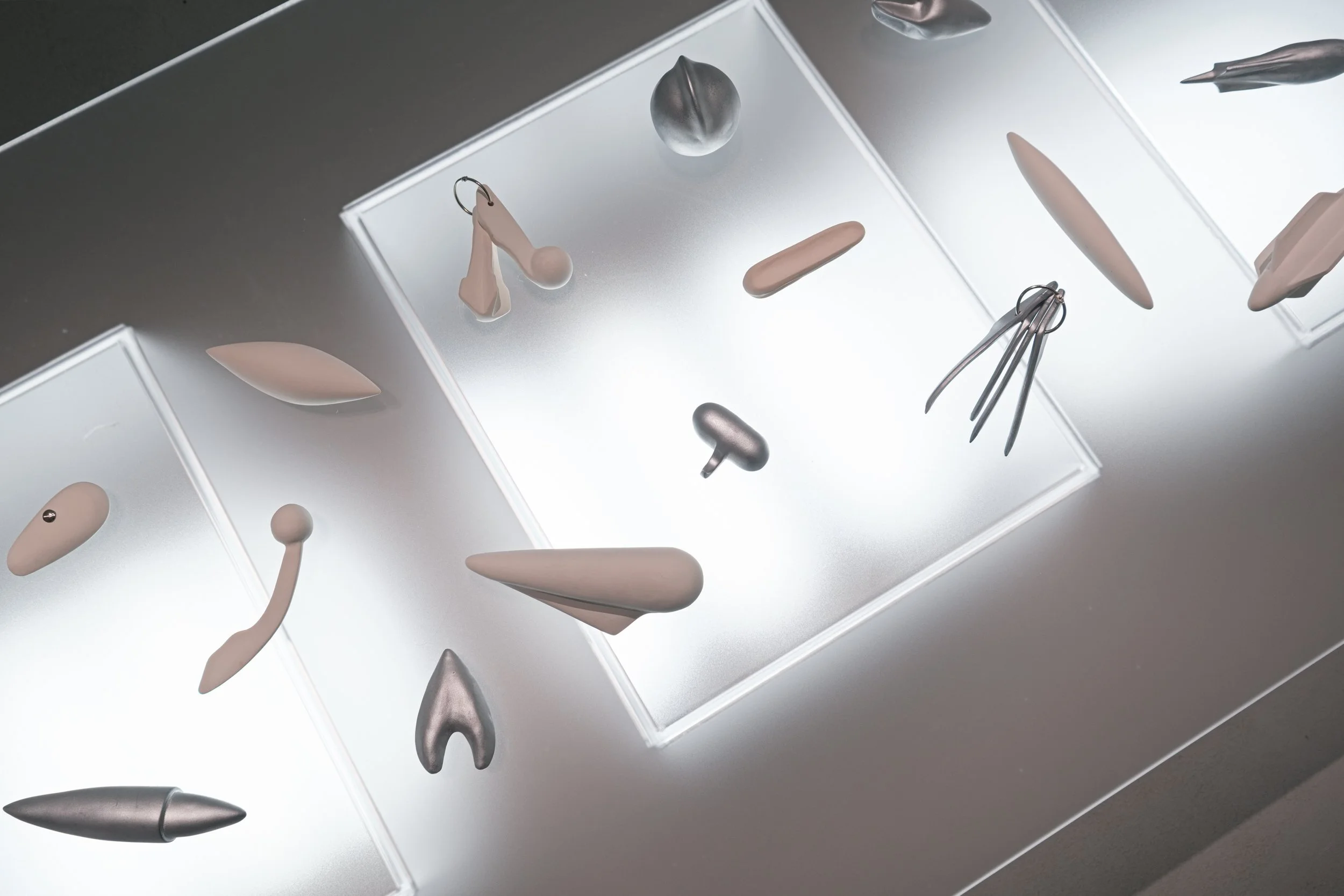
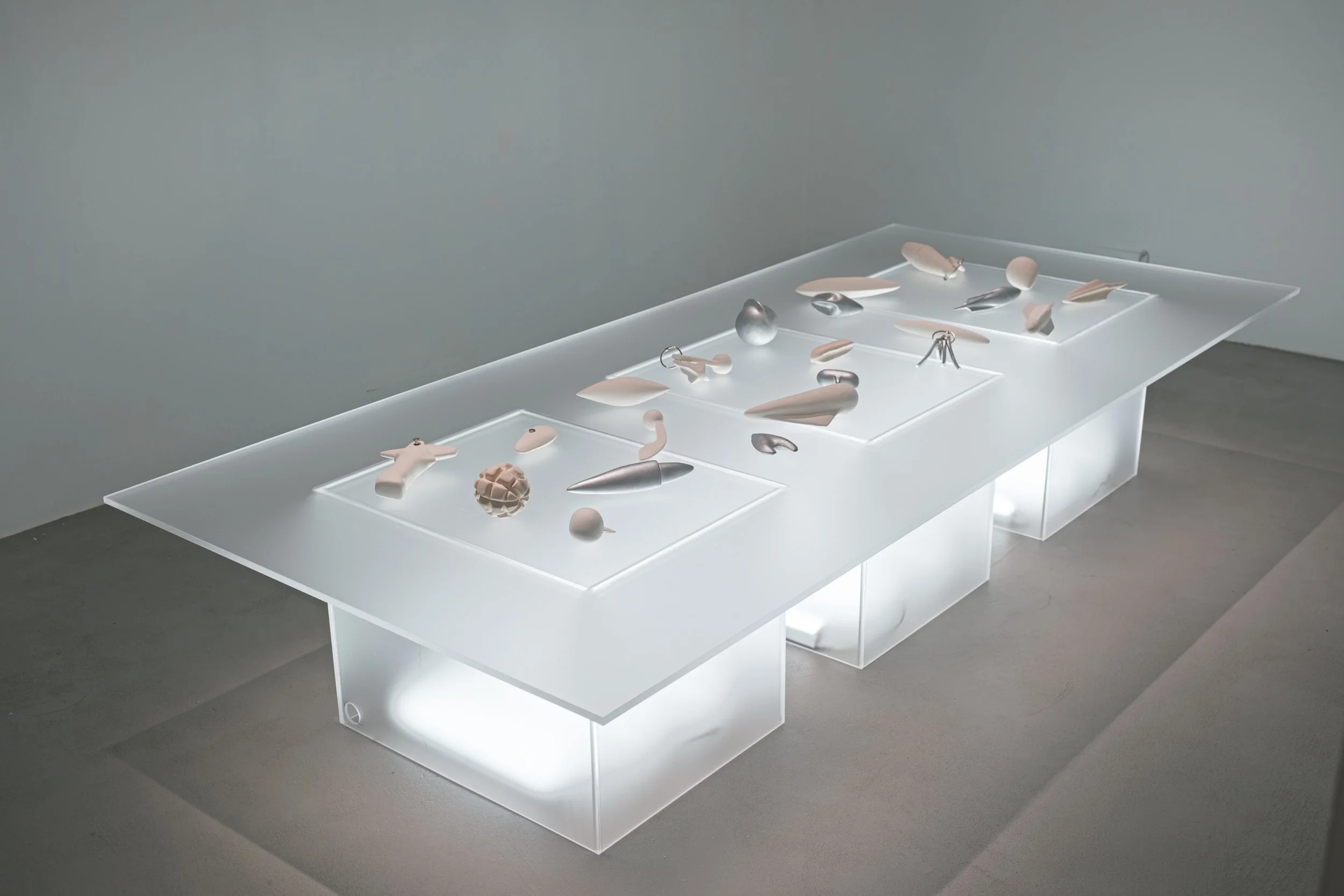
In the series Antiseeds, he observes the striking morphological resemblance between artificial weapons such as bombs or bullets and plant seeds. Both are small in scale yet charged with immense potential energy. Through this overlap of forms, Kvendseth probes the blurred boundary between benefit and harm: can human intention truly exist independently from the forms we create, or have we unknowingly become accomplices to their destructive potential?
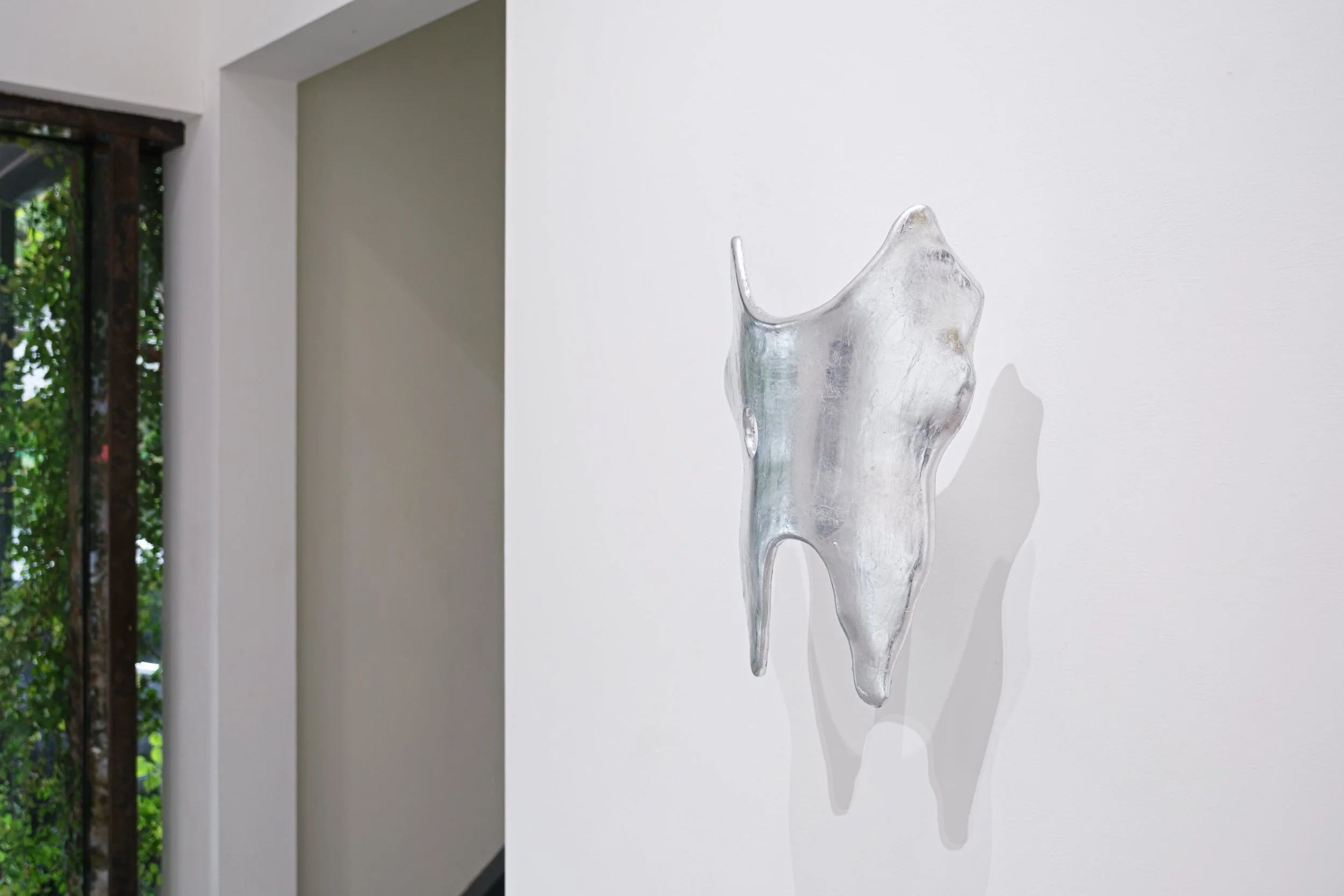
In Bryste/Briste, he exploits material properties to transform soft clay into objects that convincingly resemble heavy metallic armour. These seemingly rigid armours reveal themselves instead as dissections of shame and the protective impulse—the attempt to armour oneself against vulnerability.
Trine Lise Nedreaas ——
Our shared experience of a temporal existence in a relentless eternity.
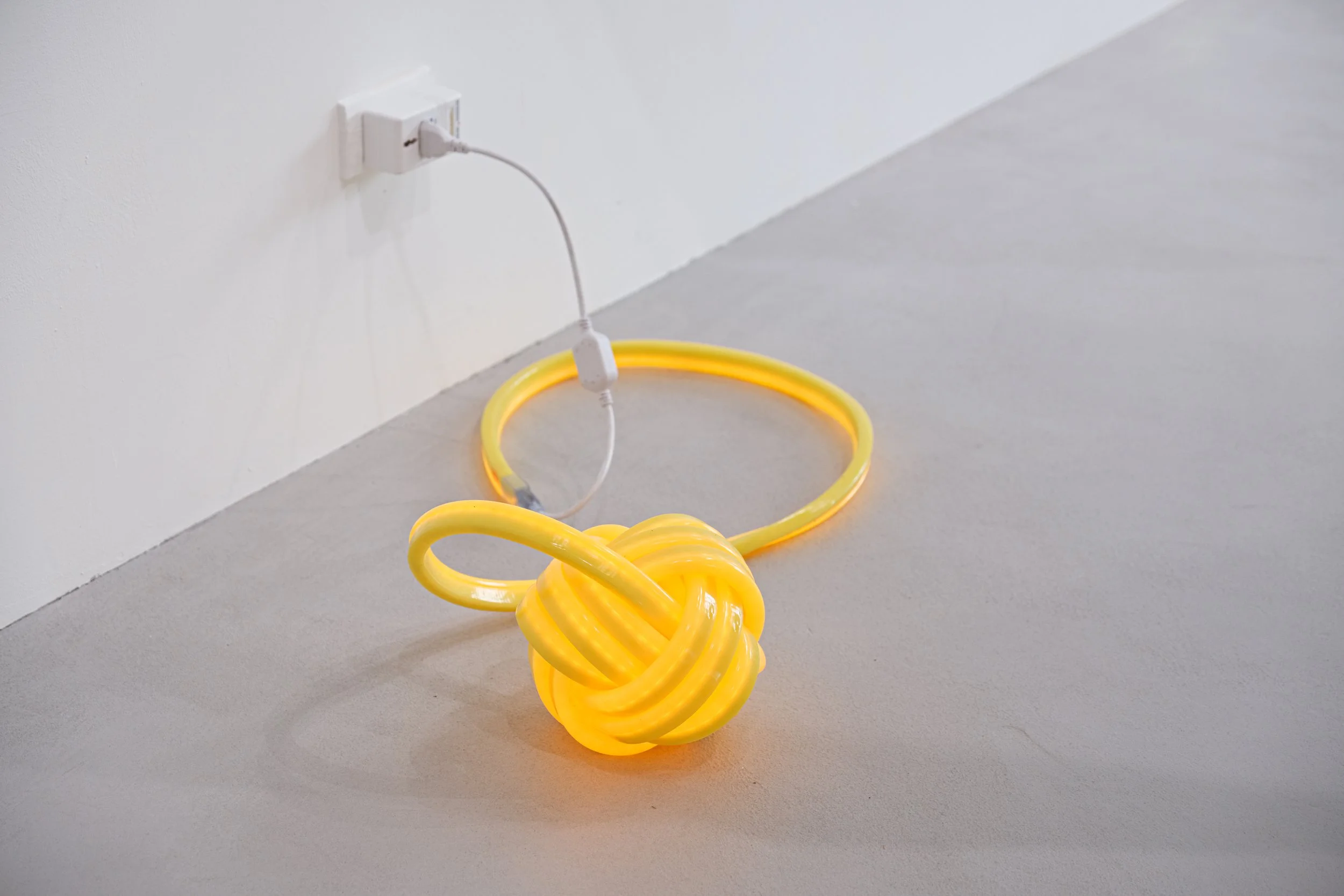
Alongside the video work Adorn, this exhibition also presents Trine Lise Nedreaas’s sculptural lamp Monkey’s Fist.
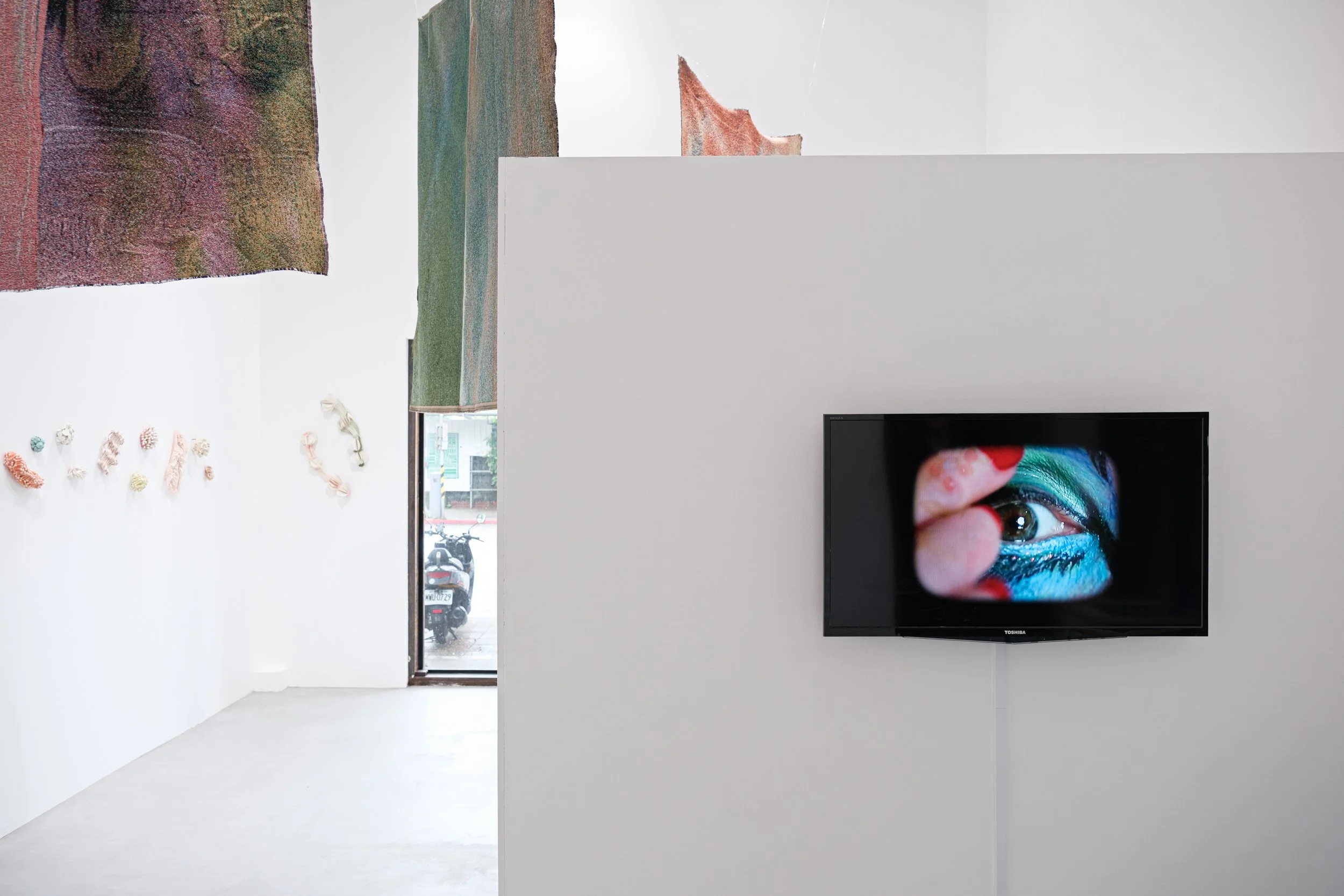
In Adorn, the uncanny appears in a form that is both unsettling and meticulously composed. The single-shot video frame is entirely occupied by a single eye and its eyelid. Here, Nedreaas extends her exploration of the screen as an interface between two gazes. The viewer is drawn to stare at the eye as its eyelid is decorated with glittering turquoise beads by carefully manicured hands painted with crimson nail polish.
The powdery texture of eyeshadow contrasts sharply with the pale hands, so markedly different that they appear to belong to separate bodies—suggesting that another person may be inflicting this delicate torment. Whether interpreted as a masochistic gesture of self-inflicted pain or an act of sadistic imposition upon another, the weight of the jewellery causes the eyelid to droop.
Yet if one reads against the apparent violence of the action, the gesture may also be understood as a dazzling transformation: the eye is reshaped into an unfamiliar, almost biological life-form.
The sculptural lamp Monkey’s Fist draws its inspiration from the traditional sailor’s knot that embodies both safety and violence. The heavy knot secures ships to the dock, yet historically sailors have also used it as a surprisingly destructive weapon.
Nedreaas’ works are held in major collections including the The National Museumof Norway, KODE Art Museums of Bergen, DNB Art Collection, Bergen municipality, Stavanger Art Museum, Albright Knox Collection in the USA, Staatliches Museum Schwerin in Germany, Neuen Berliner Kunstvereins in Berlin Germany. Private collections in countries like Norway, USA, France, Germany, Belgium, Italy.
Taiwan, as an island shaped by complex histories and layered cultural influences, has long engaged the world through openness and dialogue. Through the occasion of the tenth anniversary of Taipei Art Book Fair, this project brings a forward-looking Norwegian artistic perspective into conversation with Taiwan’s vibrant cultural landscape.